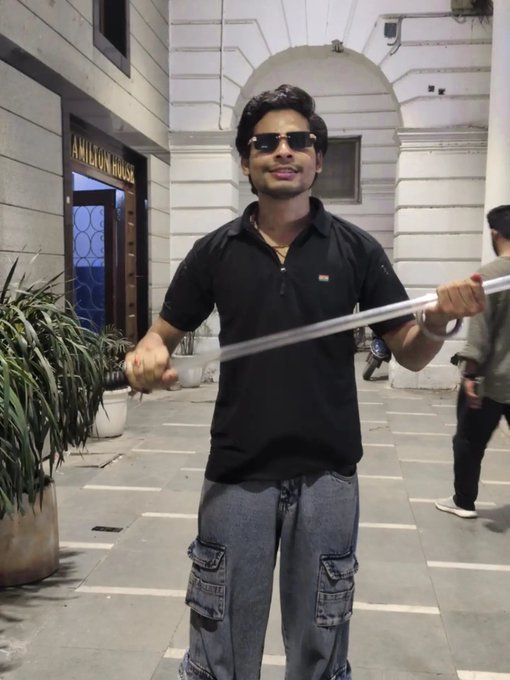
Bhardwaj, arrested in Uttar Pradesh on Friday, faces charges under the BNS, SC/ST (Prevention of Atrocities) Act and POCSO Act. Police had sought 14 days’ judicial custody.
BY PC Bureau
NEW DELHI/ September 6: A Delhi court on Sunday remanded right-wing vigilante Swatantra Bhardwaj to one day in judicial custody in connection with the alleged assault of the father of a Dalit student activist during the Cockroach Janta Party (CJP) protests at Jantar Mantar.
Duty Magistrate Anjali Singh of the Patiala House Courts passed the order after Bhardwaj was produced before her through video conferencing at her residence, according to a lawyer familiar with the proceedings.
Police had sought 14 days of judicial custody. However, as Bhardwaj was produced before the duty magistrate, the court granted custody only for one day. The request for further custody is expected to come before the court concerned on Monday.
Bhardwaj was arrested in Uttar Pradesh on Friday in connection with the case. He faces charges under provisions of the Bharatiya Nyaya Sanhita (BNS), besides the Scheduled Castes and Scheduled Tribes (Prevention of Atrocities) Act and the Protection of Children from Sexual Offences (POCSO) Act.
The case had initially been registered under Sections 115(2) and 126(2) of the BNS. Section 115(2) deals with voluntarily causing hurt, while Section 126(2) relates to wrongful restraint.
Swatantra Bhardwaj Sent to One-Day Judicial Custody
– Swatantra Bhardwaj was produced before the Patiala House Court through video conferencing (VC).
– The court has sent him to one-day judicial custody.
– Further legal proceedings in the matter are underway. https://t.co/jXqknkPoLA— Atulkrishan (@iAtulKrishan1) September 6, 2026
The case took a more serious turn after Bhardwaj allegedly claimed on social media that he had “cracked the skull” of the girl’s father. He also claimed that police had detained him for only a few hours following the incident.
Bhardwaj further claimed to have links with NDA leaders Kapil Mishra and Chirag Paswan. Paswan subsequently denied any association with him and filed a separate complaint alleging that Bhardwaj had misused his name.
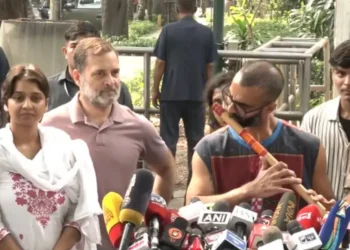
The charges against Bhardwaj were expanded after CJP leaders, accompanied by the student and her father, protested outside the Parliament Street police station demanding action in the case.
What the SC/ST Act provisions mean
The invocation of the SC/ST (Prevention of Atrocities) Act potentially makes the case considerably more serious than an ordinary assault or restraint case. The Act is intended to prevent offences targeting members of Scheduled Castes and Scheduled Tribes on account of their caste or tribal identity and provides enhanced legal safeguards and penalties for specified offences.
The exact provisions invoked in Bhardwaj’s case, however, are important because the Act does not automatically apply to every offence involving an SC or ST person. The prosecution would generally have to establish the specific ingredients of the offence charged, including any required caste-related element.
The Act also contains provisions concerning arrest, investigation and bail. Courts have repeatedly held that the statutory requirements must be satisfied in accordance with the facts and the particular offence alleged.
What the BNS charges mean
Section 115(2) of the BNS concerns voluntarily causing hurt where the circumstances specified in the provision attract the enhanced punishment. Section 126(2) concerns wrongful restraint in aggravated circumstances.
In simple terms, wrongful restraint involves preventing a person from proceeding in a direction in which they have a legal right to proceed. The precise applicability and punishment depend on the facts alleged by the prosecution.
READ: Will Supreme Court Wake Up to Bhavnagar Police Brutality?
The POCSO Act, meanwhile, is significant because of the involvement of a minor and provides a separate legal framework for offences against children. The precise POCSO provision invoked will determine the nature of the allegation and the applicable punishment.
The case has acquired political overtones because of Bhardwaj’s social-media claims regarding his alleged political connections and the subsequent denial by Paswan. The investigation will now have to establish what happened during the confrontation at the CJP protest, the nature of the injuries allegedly suffered by the victim and the precise circumstances in which the additional charges were invoked.