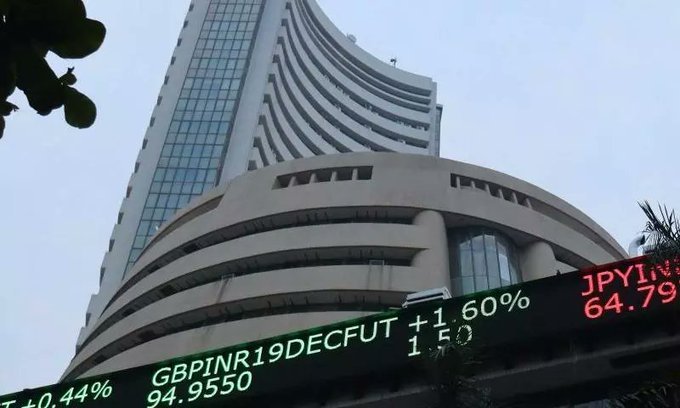
Market experts see scope for further gains, with some projecting the Nifty at 27,000-28,000 and Sensex at 87,000 over the next year. However, elevated geopolitical risks, volatile oil prices and uncertainty over foreign fund flows remain concerns.
BY PC Bureau
November 6: Sensex and Nifty staged their strongest single-day rally in seven months on Thursday, as falling crude oil prices, a decisive Democratic victory in the US midterm elections and renewed foreign investor buying lifted market sentiment. A global retreat from artificial intelligence-related stocks also helped improve the outlook for Indian equities, particularly the IT sector.
The Sensex and Nifty have now gained more than 8% over six consecutive sessions, marking their longest winning streak in a year. The rally has added approximately Rs 29 lakh crore to investors’ wealth, based on changes in the combined market capitalisation of listed companies.
The BSE Sensex surged 2,008.61 points, or 2.60%, to close at 79,310.01 on Thursday. The NSE Nifty climbed 576 points, or 2.40%, to settle at 24,536.60.
Buying was broad-based, lifting the Nifty 50 to a three-month high. The index has recovered to levels last seen in early August, when it closed at 24,570.65.
Over the six trading sessions, the Sensex has gained 6,063.98 points, or 8.27%, while the Nifty has advanced 1,837.75 points, or 8%.
Despite the sharp rebound, both indices remain lower for the year. The Nifty is down 6.1% in 2026, while the Sensex has lost 6.9%. Foreign investors have pulled a record $29 billion out of Indian equities this year, putting pressure on the rupee and intensifying demands for tax relief on equity investments.
The latest rally has raised hopes that Indian stocks could begin to recover some of the ground lost to global markets after months of underperformance. Whether the recovery can be sustained, however, will depend on foreign fund flows, corporate earnings and the global economic environment.
What is driving the rally?
Several factors have contributed to the rebound. Expectations of a possible reduction in long-term capital gains (LTCG) tax have emerged as a major source of optimism.
The Securities and Exchange Board of India (SEBI) has urged the government to consider removing LTCG tax for foreign investors. An SBI Research report has recommended abolishing the tax for all categories of investors. Finance Minister Nirmala Sitharaman has indicated that the government is willing to consider suggestions on the issue.
Expectations of tax relief have coincided with a return of foreign buying. On Wednesday, foreign institutional investors (FIIs) purchased Indian shares worth Rs 72.84 billion ($769.65 million), their largest single-day investment since October 2025.
Provisional data show that foreign investors have been net buyers of Rs 39,404 crore over 13 trading sessions since October 16. The purchases follow a prolonged sell-off that had taken foreign ownership of Indian equities to historically low levels.
Global brokerage Nomura believes India’s relative appeal could improve further as corporate earnings strengthen, valuations remain below their post-pandemic averages and external pressures ease.
Earnings have already provided support. According to Nomura, normalised profit after tax among 134 companies in its BSE 200-plus universe rose 34% year-on-year in the second quarter of FY27, beating consensus estimates by 18%.
Even after excluding oil and gas companies, profit growth stood at 29%, exceeding expectations by 5%. Most sectors are also trading below their post-pandemic average valuations, potentially offering investors more attractive entry points.
India went against the world today.
Wall Street crashed, Asia tumbled.
Sensex +1,483 to 80,793, Nifty +1.64% to 24,939.
FIIs bought ₹14,975 cr on thursday the biggest day in 6 years.
But midcaps -1.2%, smallcaps -1.7%.
Only large caps are green.
#Nifty #StockMarket https://t.co/s5RIN8Vt7s
— Swatantra (@internswat) November 6, 2026
The Democrats’ decisive victory in the US midterm elections, giving the party control of both the Senate and the House of Representatives, has added to the positive mood. The result is being viewed as a setback for President Donald Trump, whose tariff policies and decision to launch a conflict in the Middle East had weighed on Indian markets.
Investors are now hoping that a more constrained Trump administration could reduce geopolitical risks, ease trade tensions and improve the prospects for a de-escalation of the conflict with Iran.
“The US midterm verdict gave Indian equities fresh momentum, with the rally gathering pace on hopes that a more restrained Washington could pave the way for de-escalation in the Iran conflict and tariff policies. As the threat of geopolitical escalation and energy supply shocks faded, crude prices slumped, and a retreat in US Treasury yields and the dollar took further pressure off India’s inflation outlook and external accounts,” said Vinod Nair, Head of Research at Geojit Investments.
He said consistent foreign buying and encouraging second-quarter earnings had reinforced the recovery, with gains spreading beyond the frontline indices.
Falling crude prices have provided another important boost. Brent crude has declined by around 10% to approximately $94 a barrel amid hopes of progress towards resolving the US-Iran conflict.
For India, a major oil importer, lower crude prices could ease inflationary pressures, reduce the import bill and improve the current account balance. These factors had contributed to concerns among foreign investors during the earlier sell-off.
Meanwhile, semiconductor stocks and the US dollar have come under pressure amid concerns about tighter scrutiny of artificial intelligence data centres. Indian IT shares, which often move in the opposite direction to semiconductor stocks, gained 2.4% on Thursday.
READ: SC Refuses to Suspend Tejpal’s Sentence in Goa Rape Case
Can the rally last?
Market experts are broadly optimistic about the prospects for Indian equities, provided global conditions remain supportive and crude prices stay below $100 a barrel. They caution, however, that the recovery will remain vulnerable to changes in foreign fund flows and geopolitical developments.
Vatsal Bhuva, Technical Analyst at LKP Securities, said the rally appeared sustainable, supported by lower oil prices, easing US 10-year Treasury yields and the reversal in global AI and semiconductor stocks.
He said foreign investor buying and short-covering had added to the momentum, as traders unwound accumulated bearish positions. The Nifty’s decisive move back above 24,000 on Thursday had further strengthened the technical outlook.
Looking at the longer-term trend, Bhuva said the index had historically staged strong recoveries near its 50-month simple moving average, currently at 22,485. With the Nifty trading around 24,500, he sees potential targets of 27,000-28,000 over the next 12 months. For the Sensex, he expects a possible move towards 87,000-90,000.
Mayur Shah, PMS Fund Manager at Anand Rathi Advisors, described the rally as “much awaited and anticipated”. He attributed the improvement in sentiment to strong corporate earnings and supportive domestic indicators, including GST collections, automobile sales, electricity consumption and credit growth, which point to sustained investment activity.
“Global uncertainty has started to cool down after US election results. Crude oil is below $100. FIIs seem to have started returning to the Indian market. Rupee depreciation is arrested and stabilised. All these key indicators are directing the Indian market to a northward trajectory. If this continues, we probably can see Nifty and Sensex surpassing all-time highs,” he said.
Not everyone is convinced that the recovery marks a lasting shift in investor sentiment. Although foreign buying has resumed, it is too early to conclude that overseas funds have returned to Indian e