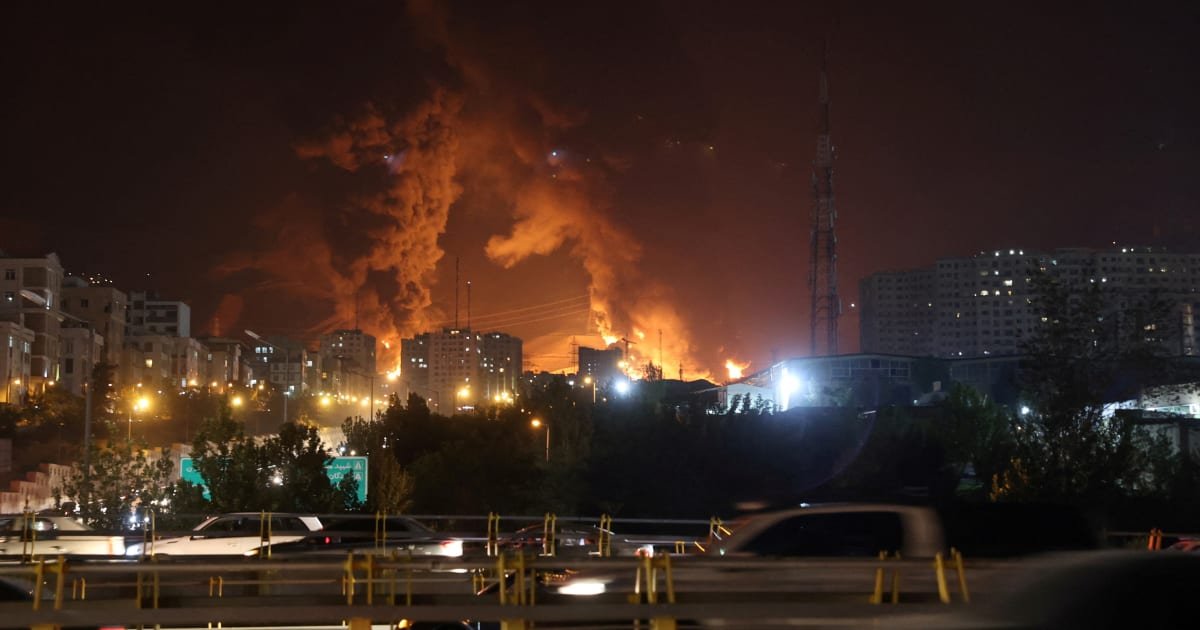
U.S. Central Command said the strikes were carried out in “self-defense” after Iran allegedly shot down an MQ-1 drone operating over international waters near the Strait of Hormuz.
BY PC Bureau
June 1, 2026: The already fragile ceasefire between the United States and Iran has come under renewed pressure following a fresh round of American airstrikes targeting Iranian military infrastructure over the weekend, raising fears that the tenuous truce could unravel amid escalating tit-for-tat exchanges in the Gulf region.
According to the U.S. Central Command (CENTCOM), American fighter aircraft carried out what officials described as “measured and deliberate self-defense strikes” against Iranian radar and drone command facilities in southern Iran after Tehran allegedly shot down a U.S. MQ-1 surveillance drone operating over international waters.
The strikes reportedly targeted a ground-control radar station along with associated command-and-control facilities in the Goruk area and on Qeshm Island, a strategically significant location near the Strait of Hormuz — one of the world’s most vital maritime chokepoints for global energy shipments.
🇺🇸|CENTCOM has officially confirmed fresh U.S. strikes on Iranian territory.
U.S. Central Command announced that American forces conducted “self-defense strikes” on Iranian radar and command-and-control sites for drones in Goruk, Iran and Qeshm Island over the weekend.… pic.twitter.com/Mell6SJnr1
— Aprajita Nafs Nefes 🦋 Ancient Believer (@aprajitanefes) June 1, 2026
“The measured and deliberate strikes occurred on Saturday and Sunday in response to aggressive Iranian actions that included the shootdown of a U.S. MQ-1 drone that was operating over international waters,” CENTCOM said in an official statement.
American military officials further accused Iran of threatening commercial shipping routes in key regional sea lanes, describing Tehran’s recent actions as part of a broader pattern of destabilising behaviour in the Gulf. The Pentagon confirmed that no U.S. personnel were injured during the latest confrontation.
Drone Incident Sparks Renewed Escalation
The downing of the MQ-1 drone appears to have served as the immediate trigger for Washington’s response. U.S. officials insisted that the unmanned aircraft was conducting routine surveillance in international airspace when it was targeted by Iranian forces.
Tehran, however, has repeatedly argued in previous incidents that U.S. surveillance assets frequently violate Iranian territorial boundaries and contribute to heightened military tensions in the region. Iranian authorities have yet to issue a full official response to the latest American strikes, though state-affiliated media condemned the operation as a “provocative act.”
The newest escalation marks the third reported breach of the uneasy ceasefire framework brokered earlier this year following months of indirect negotiations and regional diplomatic pressure aimed at preventing a broader military conflict.
In the last 48 hours, the U.S. military carried out “defensive” strikes on Iranian radar and drone command-and-control sites near Goruk and Qeshm Island. Earlier today, sirens sounded in Kuwait as Iranian opposition sources reported missile launches from Khuzestan province now. pic.twitter.com/nnHJqdnA5S
— daniel hanuka📟 🇮🇱 (@LionsOfZion_ORG) June 1, 2026
Pattern of Retaliatory Exchanges Continues
Only days earlier, U.S. forces reportedly struck what Washington described as an Iranian drone operation near the Strait of Hormuz. Iran subsequently retaliated with missile and drone attacks targeting a U.S. military base in the region.
Despite those exchanges, both governments had sought to publicly minimise the incidents, signaling that neither side wished to abandon the ceasefire entirely. Diplomatic backchannels reportedly remained active, helping prevent earlier flare-ups from spiraling into wider confrontation.
However, analysts warn that the repeated cycle of retaliation is steadily eroding the already limited trust underpinning the truce.
“The ceasefire was never a comprehensive peace agreement,” said one regional security analyst. “It was essentially a mechanism to prevent direct war while leaving the core disputes unresolved. Every military exchange increases the risk of miscalculation.”
Strategic Fault Lines Remain Unresolved
The current understanding between Tehran and Washington was designed primarily to reduce immediate military confrontation while broader disputes continued to be negotiated separately. Major issues — including Iran’s nuclear program, regional militia networks, sanctions relief, and freedom of navigation through the Strait of Hormuz — remain unresolved.
The Strait itself continues to represent one of the most sensitive geopolitical flashpoints in the world. Roughly a fifth of global oil shipments pass through the narrow waterway, making any military tension in the area a major concern for international markets and regional allies.
Military experts caution that even limited engagements involving drones, missile systems, or naval patrols carry significant escalation risks due to the close proximity of American and Iranian forces operating across the Gulf.
READ: Hundreds Injured, Mass Arrests in Paris Football Riots
International Concern Grows
The latest developments have renewed concerns among regional governments and international observers who fear that continued confrontations could destabilise energy markets and trigger a broader security crisis across the Middle East.
So far, both Tehran and Washington continue to publicly signal that they seek to avoid full-scale war. Yet the recurring pattern of military exchanges underscores how precarious the current ceasefire arrangement remains.
With tensions simmering around strategic shipping lanes and heavily militarised zones, analysts warn that another incident — intentional or accidental — could rapidly push the two adversaries toward a far more dangerous confrontation.