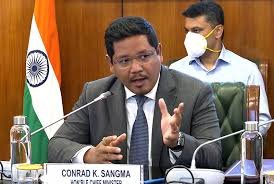
In letters to Kuki Inpi Manipur and the United Naga Council, Sangma stressed that violence and abductions cannot resolve the deeper political and ethnic challenges confronting the state.
BY PC Bureau
June 1, 2026: Amid escalating ethnic tensions and growing humanitarian concerns in Manipur, National People’s Party (NPP) President and Meghalaya Chief Minister Conrad K. Sangma has issued a strong appeal for the immediate and unconditional release of civilians reportedly being held hostage in the conflict-hit state.
In formal letters addressed to the Presidents of Kuki Inpi Manipur (KIM) and the United Naga Council (UNC), Sangma expressed deep concern over reports that six Naga men and fourteen Kuki civilians have allegedly been held captive since May 13 and 14, 2026, during the latest outbreak of inter-community violence.
Describing the situation as “deeply distressing,” Sangma warned that the continued detention of civilians risks worsening the already fragile ethnic situation in Manipur and inflicting long-term trauma on affected families and communities.
“The abduction of innocent civilians, especially women, children, and the elderly, only exacerbates the suffering and deepens the wounds between communities that have lived side by side for generations,” Sangma wrote in his appeal.
READ:
US-Iran Ceasefire Tested After Fresh American Airstrikes
Humanitarian Concerns Take Centre Stage
The Meghalaya Chief Minister framed his intervention primarily as a humanitarian appeal rather than a political statement, stressing that innocent civilians must never become instruments in ethnic or territorial disputes.
He urged both organisations to facilitate the swift and unconditional release of all hostages, regardless of their ethnic background, and called for their immediate access to medical assistance, food, shelter, and communication with their families.
Sangma also appealed for restraint from all sides, cautioning that retaliatory violence and civilian detentions would only intensify mistrust and prolong instability.
“The real challenges confronting Manipur cannot be resolved through abduction or violence. They can only be addressed through sincere dialogue, mutual understanding, and a shared commitment to peace,” he stated.
Focus on the Future of Youth
A significant portion of Sangma’s message focused on the younger generation, whom he described as the greatest victims of prolonged ethnic conflict.
He said the youth of Manipur deserve a future built on education, economic opportunity, and peaceful coexistence rather than fear, displacement, and recurring violence.
“The children and youth of every community deserve classrooms instead of conflict zones, opportunities instead of uncertainty, and hope instead of fear,” Sangma reportedly conveyed in his communication.
He urged community leaders to rise above historical grievances and prioritise the protection of innocent lives and the long-term future of the state.
Renewed Calls for Peace and Reconciliation
Reaffirming the National People’s Party’s commitment to peace, unity, and human dignity, Sangma offered his party’s full support for any initiative aimed at ensuring the safe, dignified, and transparent release and rehabilitation of all hostages.
He also called upon civil society groups, community leaders, student organisations, and ordinary citizens to reject divisive narratives and embrace dialogue and reconciliation.
“In these testing times, let us demonstrate the strength of our shared humanity and work together towards a peaceful and united Manipur,” Sangma said.
His appeal comes at a critical moment as continuing ethnic tensions, displacement, and insecurity continue to disrupt normal life across parts of Manipur. Political observers view Sangma’s intervention as an important attempt by a regional leader to introduce a neutral humanitarian voice into an increasingly volatile situation.
Whether the appeal leads to concrete de-escalation efforts remains uncertain, but many believe that humanitarian engagement and civil society mediation may be among the few remaining pathways to prevent further deterioration of the crisis.