Political tensions in West Bengal intensified dramatically after senior Trinamool Congress MP Kalyan Banerjee was injured in an attack in Hooghly district, barely a day after Abhishek Banerjee faced a violent confrontation in Sonarpur.
BY PC Bureau
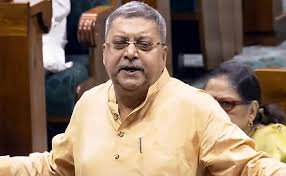
May 31, 2026 — Barely 24 hours after Trinamool Congress national general secretary Abhishek Banerjee was manhandled by an angry crowd in South 24 Parganas, another senior TMC MP came under attack in his own stronghold. Kalyan Banerjee, the four-time MP from Sreerampur, was injured on the head while visiting Chanditala in Hooghly district on Sunday morning, triggering fresh allegations of political violence and intensifying the sense of siege within the Trinamool Congress following its recent electoral defeat.
Visuals from the scene showed Kalyan Banerjee walking near a truck amid heavy crowding when an object — believed to be either a stone or a cricket ball — struck him on the back of the head. The MP immediately clutched his head and collapsed on the road as security personnel and supporters rushed to his aid. He was later seen with a white bandage wrapped around his head, addressing supporters while appearing visibly shaken and unsteady. Party leaders later confirmed that he received medical treatment and is currently stable.
The incident occurred while Banerjee was reportedly heading toward the Chanditala police station to lodge complaints regarding post-poll violence and alleged attacks on TMC workers in the region. Chanditala, which falls under his Sreerampur Lok Sabha constituency, has witnessed heightened tensions since the recent West Bengal Assembly election results that brought the BJP to power after ending the Trinamool Congress’s 15-year rule.
Eyewitnesses reported that protesters carrying black flags gathered along the route, shouting slogans of “Chor, Chor” (“thief, thief”) — the same slogans raised against Abhishek Banerjee during the Sonarpur incident a day earlier.
Speaking to reporters after the attack, Kalyan Banerjee accused the BJP of orchestrating a “planned attempt to murder” him.
READ: Invoking Christian Values, Nagaland CM Urges UNC to Secure Release of Kuki Hostages
“I had to leave my vehicle because of traffic congestion. Suddenly, 10 to 15 goons started shouting slogans and created a hostile atmosphere. They abused me continuously, but I kept walking forward. Then a stone was hurled at my head. Blood stained my kurta and pajama, and I collapsed on the road. A CRPF jawan rescued me,” he said.
He thanked the central security personnel for intervening quickly but sharply criticised the state police, alleging that they remained “silent and mute spectators” during the attack. Banerjee further claimed that “total lawlessness” now prevails in the state and accused political opponents of systematically targeting Trinamool Congress leaders and workers after the regime change.
TMC MP Kalyan Banerjee is attacked by BJP goons in the presence of central forces.
What the f*ck is happening in West Bengal? 🤯 https://t.co/bEpoj4b9ob
— Amock (@Politicx2029) May 31, 2026
The attack on Kalyan Banerjee comes just a day after Abhishek Banerjee faced a dramatic and chaotic confrontation in Sonarpur, South 24 Parganas. The Diamond Harbour MP, often seen as the second-most powerful leader in the Trinamool Congress after Mamata Banerjee, had visited the area to meet party workers and families allegedly affected by post-poll violence.
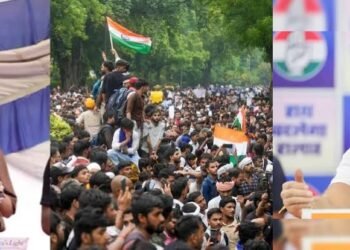
During that visit, a large crowd surrounded his convoy, shouting slogans, hurling eggs, stones, and shoes. Video footage from the incident showed security personnel placing a cricket helmet on Abhishek Banerjee to shield him as they escorted him through a hostile crowd. His white shirt was reportedly torn during the scuffle, and he later alleged that he had been physically assaulted and targeted in a “pre-planned attack.”
Abhishek Banerjee was subsequently taken to a private hospital in Kolkata, where doctors confirmed that he had sustained minor injuries. However, TMC leaders insisted the attack could have turned fatal had security personnel not intervened in time.
Former Chief Minister Mamata Banerjee reacted strongly to both incidents, accusing the BJP of encouraging violence and revenge politics following its electoral victory. Referring to the Sonarpur attack, she claimed that her nephew “could have died” had he not been wearing the protective helmet. She also alleged that there was pressure on hospitals not to treat him promptly, an accusation denied by officials.
The BJP, however, has categorically rejected all allegations of involvement in the attacks. Senior BJP leaders in Bengal described the incidents as spontaneous expressions of public anger after years of alleged corruption, intimidation, and political violence under Trinamool Congress rule.
State BJP leaders argued that ordinary people, emboldened by the political transition, are openly venting long-suppressed resentment against TMC leaders. BJP minister Agnimitra Paul remarked that the incidents reflected “the public’s anger” after “15 years of arrogance and misrule.”
Senior BJP leader Dilip Ghosh echoed a similar sentiment, stating that the people of Bengal had “suffered enough under the Banerjees” and that public outrage was now surfacing openly.
The back-to-back assaults on two of the Trinamool Congress’s most prominent faces have rattled the party at a particularly vulnerable moment. The TMC, still reeling from its historic electoral defeat, now finds itself grappling with a politically charged atmosphere in which its leaders are facing public hostility in several areas that were once considered strongholds.
Political observers say the developments reflect the deep polarisation and bitterness that have long characterised Bengal politics but appear to have intensified sharply in the aftermath of the regime change. Post-poll violence, retaliatory attacks, intimidation, and clashes between rival political workers have historically followed election results in the state, regardless of which party assumes power.
What distinguishes the current phase, however, is the public nature of the anger directed at senior TMC figures themselves. Both Abhishek Banerjee and Kalyan Banerjee were confronted not in isolated backroom incidents but in full public view, amid slogans, crowds, and viral videos that quickly dominated television and social media discourse.
The Trinamool Congress has framed the attacks as evidence of an organised campaign of intimidation designed to destabilise the opposition and silence dissent in a BJP-ruled Bengal. The BJP, meanwhile, continues to portray the incidents as spontaneous reactions from citizens frustrated by years of alleged corruption, political intimidation, and what it calls Trinamool’s culture of impunity.
As tensions continue to escalate, the Bengal administration faces mounting pressure to restore order and prevent further deterioration of the political climate. With both sides hardening their narratives and accusations, the possibility of more confrontations cannot be ruled out.
For the Banerjee family and the Trinamool Congress leadership, the incidents represent more than isolated security breaches. They symbolise a dramatic reversal of political fortunes after over a decade and a half of near-total dominance in Bengal politics.
Whether these episodes mark the beginning of sustained public backlash against the former ruling party or remain temporary eruptions in an emotionally charged post-election environment will become clearer in the weeks ahead. For now, Bengal appears to be entering yet another volatile chapter in its long and turbulent political history.