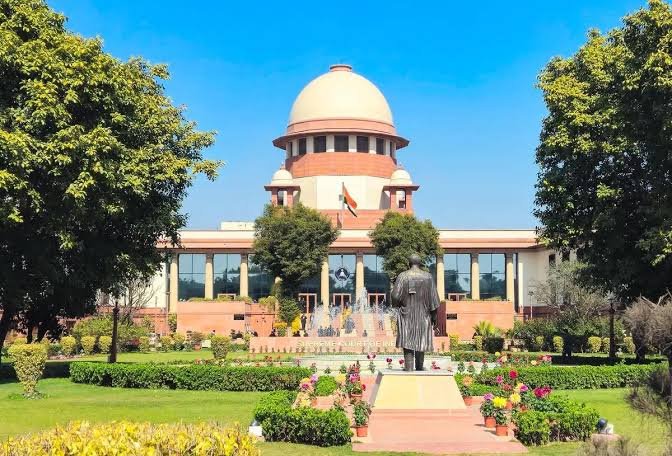
From digital learning to social media, internet access is increasingly central to Generation Alpha’s lives. The Supreme Court’s observations highlight the challenge facing parents, platforms and policymakers: protecting children from online abuse without denying them their fundamental rights and freedom.
BY PC Bureau
October 17: Supreme Court rejects blanket bans on children’s internet use, stressing that online safety and freedom must go hand in hand; calls for proportionate safeguards and stronger action against child sexual abuse material.
The Supreme Court has ruled that the right to access and use the internet is a fundamental right under Articles 21 and 19(1)(a) of the Constitution, a right that extends to every individual, including children belonging to Generation Alpha.
A bench of Justices J.B. Pardiwala and K. Vinod Chandran observed that denying children internet access altogether would be unreasonable. “Our children, irrespective of their age, enjoy the same rights,” the bench said, emphasising that protecting children and safeguarding their freedom are not mutually exclusive.
“The safety of our children and their freedom are not at odds with each other. Our children are entitled to both,” the court observed.
READ: Analysis: If All Anti-SIR Protests Are One, Where Is Rahul Gandhi?
The observations came as the court issued directions to strengthen the detection and removal of child sexual exploitation and abuse material (CSEAM) from social media and other online platforms.
Rejecting blanket bans on children’s internet use, the bench noted that such restrictions lack established effectiveness and could be disproportionate. They may also push children towards unregulated and potentially more dangerous online spaces. Age-based restrictions could further discourage children from reporting online threats if they fear punishment for violating the rules.
While ruling out a blanket prohibition, the court stressed the need for proportionate safeguards to protect children in the digital environment. Suggested measures included parental consent and oversight, a dedicated “child mode” for social media accounts, private accounts by default, restrictions on contact from unknown adults and age-appropriate content moderation.
The Union government will determine the precise details of the proposed safeguards.
The court also directed the creation of a national database to help identify and remove CSEAM across online platforms, strengthening efforts to prevent the circulation of material depicting the sexual exploitation and abuse of children.
Gen Alpha’s Right to Access Internet
The ruling raises an important question about children’s place in an increasingly digital society. For Generation Alpha, growing up without internet access is becoming increasingly difficult as education, communication, entertainment and access to information move online.
The court’s observations underline the need to balance children’s rights to information and expression with effective protection against online exploitation, abuse and harmful content. Rather than treating internet access itself as a threat, the approach favours safeguards that enable children to participate in the digital world more safely.
The emphasis is on ensuring that children can exercise their rights while parents, technology platforms and the government share responsibility for creating a safer online environment.