



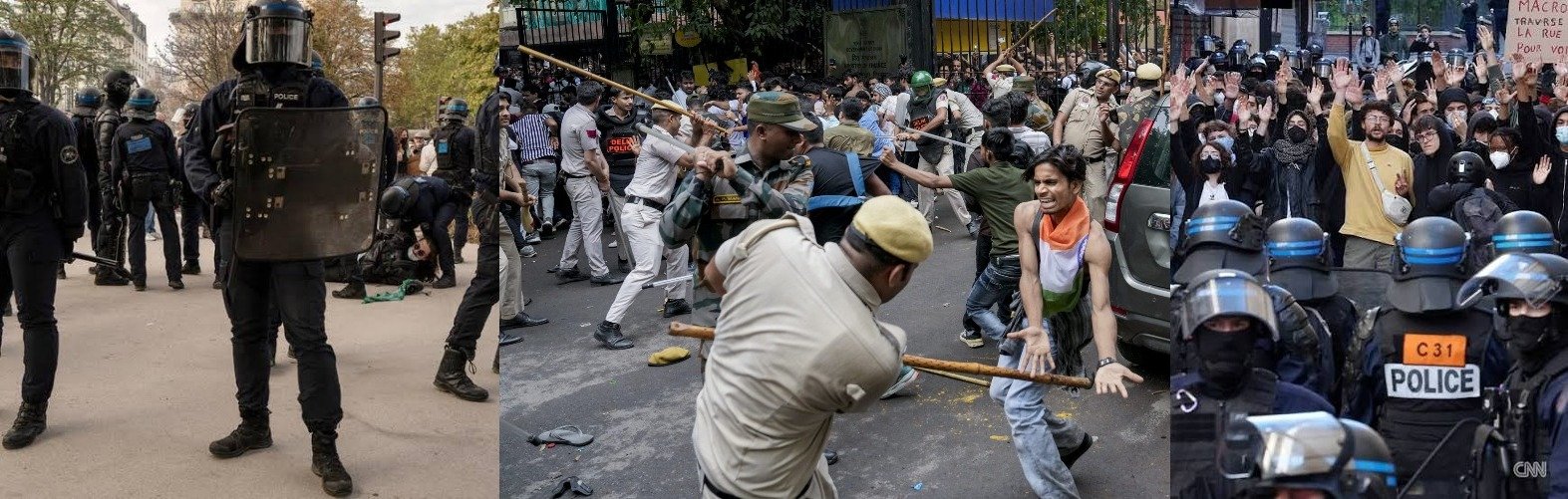
Hundreds of thousands marched across Paris, with police intervening when demonstrations turned violent. In Delhi, authorities deployed thousands of security personnel and imposed extensive restrictions to prevent a planned youth-led protest on October 10. The comparison highlights the debate over whether police should facilitate peaceful demonstrations or prevent them from taking place.
BY PC Bureau
NEW DELHI, October 18 — Hundreds of thousands of people marched across Paris on Saturday, October 17, protesting rising living costs, inequality and deteriorating public services. The authorities reported around 400 arrests nationwide. In India, a week earlier, a planned youth-led demonstration in Delhi triggered mass detentions, sweeping security restrictions, internet suspension in a designated area and disruptions to public transport.
The contrast goes beyond the arrest figures. It concerns two very different approaches to policing dissent: allowing crowds to assemble and intervening when violence occurs, versus deploying overwhelming preventive measures to stop a protest before it can take place.
Paris’ demonstrations drew an estimated 550,000 people across 110 marches, according to Interior Minister Laurent Nuñez. Organisers put the figure at 800,000. Most participants demonstrated peacefully, although serious violence, arson, looting and clashes with police occurred in several cities.
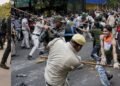
The Paris police did not simply stand aside when violence erupted. Officers used tear gas and other crowd-control measures, and people suspected of committing offences faced arrest. An investigation was also opened after a young protester suffered a devastating hand injury, reportedly involving a police grenade.
But the central distinction is that the existence of a large demonstration was not, in itself, treated as sufficient reason to shut down an entire city or prevent hundreds of thousands of people from assembling. Police confronted disorder where it occurred while the wider mobilisation continued.
That is the approach India’s policing of dissent is increasingly being challenged to justify.
In Paris, the crowd is not automatically the enemy
In many democratic settings, including France, police operations at demonstrations distinguish between peaceful participants and those suspected of violence. Officers may monitor marches, secure sensitive locations and intervene when necessary, without automatically treating everyone in the crowd as a potential offender.
This does not mean Paris policing is invariably restrained. France has a documented history of violent confrontations between police and protesters, controversial crowd-control tactics and allegations of excessive force. Saturday’s clashes are a reminder of those realities.
Yet the comparison with Delhi remains striking.
On October 10, the Cockroach Janta Party (CJP) and student organisations planned a demonstration demanding the resignation of Chief Election Commissioner Gyanesh Kumar over alleged irregularities in electoral-roll revisions. The allegations remain contested, but the organisers sought to raise questions about the integrity of the electoral process.
Delhi Police denied permission for the protest. Instead of primarily preparing to manage a peaceful assembly and respond to specific incidents, the authorities mounted an extensive preventive operation.
Reports put the deployment of Central Armed Police Forces at approximately 25,000 personnel, with the broader security mobilisation subsequently reported to have reached around 41,000. Barricades and checkpoints restricted movement, Metro stations faced entry and exit curbs, train services were disrupted, and mobile internet access was suspended in parts of central Delhi.
Protests in France have turned completely violent over the cost of living 🤯 https://t.co/V7tbV2vQTU
— Daily Loud (@DailyLoud) October 17, 2026
Businesses in affected areas also faced closure measures. The operation disrupted the daily lives of people who had nothing to do with the proposed demonstration.
Reuters reported that more than 2,000 people were detained, citing a Home Ministry official. The Indian Express subsequently reported a higher figure of more than 7,000. Although the precise total remains disputed, the scale of the detentions is clear.
In France, hundreds of thousands were able to march despite incidents of violence. In Delhi, the authorities took extraordinary steps to prevent a planned demonstration from proceeding.
Why arrest people before they have protested?
The most troubling aspect of the Delhi operation was its preventive character. People were detained in large numbers in connection with a demonstration that the authorities had already refused to permit.
The distinction between arrest and preventive detention is legally important. So is the distinction between detaining someone suspected of a specific offence and holding people simply to prevent them from joining a crowd.
A blanket approach risks punishing people for what they might do rather than establishing what they have actually done.
Police have a legitimate responsibility to prevent violence, protect public property and maintain order. But the possibility that some demonstrators may break the law cannot automatically justify treating an entire mobilisation as dangerous.
A more proportionate approach would seek to facilitate peaceful assembly, maintain routes, protect public infrastructure and isolate individuals who engage in violence. It would not begin with the assumption that the safest protest is one that never happens.
Even the Supreme Court questioned Delhi’s restrictions
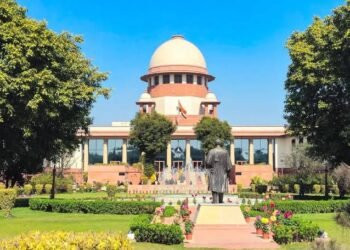
The Delhi operation also prompted judicial intervention. On October 10, the Supreme Court questioned restrictions affecting Metro and railway services, observing that a complete prohibition on essential public transport appeared excessive and directing authorities to consider regulated operations instead.
The following day, the Court directed that public transport operate normally, internet services remain unhindered subject to lawful requirements, movement within Delhi be ensured and peaceful, unarmed people not be illegally detained. It issued notices in proceedings concerning the restrictions and alleged unlawful detentions.
These were significant interventions. They reinforced the principle that public order cannot be invoked as an unlimited licence to restrict movement and peaceful assembly.
The question is unavoidable: why should ordinary commuters lose access to Metro stations, railway passengers face disruption, businesses close and internet users lose connectivity because a political demonstration is expected?
France’s nationwide protests did not produce an equivalent blanket shutdown of public transport and communications across the country simply to prevent the demonstrations from assembling.
READ: SC: Internet Access a Fundamental Right for Gen Alpha and All
Footage shows the situation in central Paris during today’s riots.
Thousands of protesters can be seen on the streets of France waving foreign flags and climbing onto statues. https://t.co/rfJU47rnqe
— Resist the Mainstream (@ResisttheMS) October 17, 2026
A democracy must tolerate the inconvenience of dissent
Article 19(1)(b) of the Indian Constitution guarantees the right to assemble peacefully and without arms, subject to reasonable restrictions under Article 19(3). The right is not absolute. Nor does it protect violence, arson or vandalism.
But neither can the state turn every anticipated demonstration into a security emergency.
A protest is often inconvenient. Roads may need traffic management, police may have to redirect crowds, and authorities may need to protect government buildings. These are normal responsibilities of public administration.
The democratic test is whether the response remains proportionate to the actual threat.
When police stand back from peaceful crowds and intervene against specific acts of violence, they recognise that assembly is a right. When authorities deploy massive forces, establish barricades, impose communications restrictions and detain people before a gathering can occur, they risk sending the opposite message: that dissent itself is a threat.
The French experience is not proof that its police always behave properly. Saturday’s massive violence, rioting, and arson and the crackdown on the protester demonstrate why police accountability matters there, too. But the scale of the mobilisation, alongside the reported arrest figures, provides a useful point of comparison with the preventive restrictions imposed in Delhi.
The issue is not whether police should act against violence. It is whether peaceful protesters should have to overcome the police before they can exercise a constitutional right.
A democracy does not demonstrate strength by keeping its streets empty of dissent. It demonstrates strength by allowing citizens to assemble, protecting those who protest peacefully and holding those responsible for violence individually accountable.
When the state treats a crowd as a threat before it has become violent, the line between maintaining public order and suppressing dissent becomes dangerously blurred.
The real test of democratic policing is not how many people can be prevented from gathering, but how confidently the state can protect their right to gather peacefully.





Comments 1