As killings, hostage-taking, attacks on security forces, and allegations of selective law enforcement continue to plague Manipur, critics argue that the state’s constitutional machinery has effectively broken down, strengthening the case for the re-imposition of President’s Rule.
By Navin Upadhyay
New Delhi, June 8: The time for excuses is over. If a government cannot protect its citizens, rescue hostages, prevent killings, or enforce the rule of law, it forfeits its claim to govern. By that measure, the Manipur government has failed.
Barely months after the restoration of an elected government and the lifting of President’s Rule, large parts of Manipur’s hill districts appear to be sliding back into violence and instability. The state is once again witnessing killings, arson, ethnic clashes, and hostage crises, while the administration looks increasingly powerless to respond. Far from restoring normalcy, the return to political rule has coincided with a dangerous deterioration in law and order.
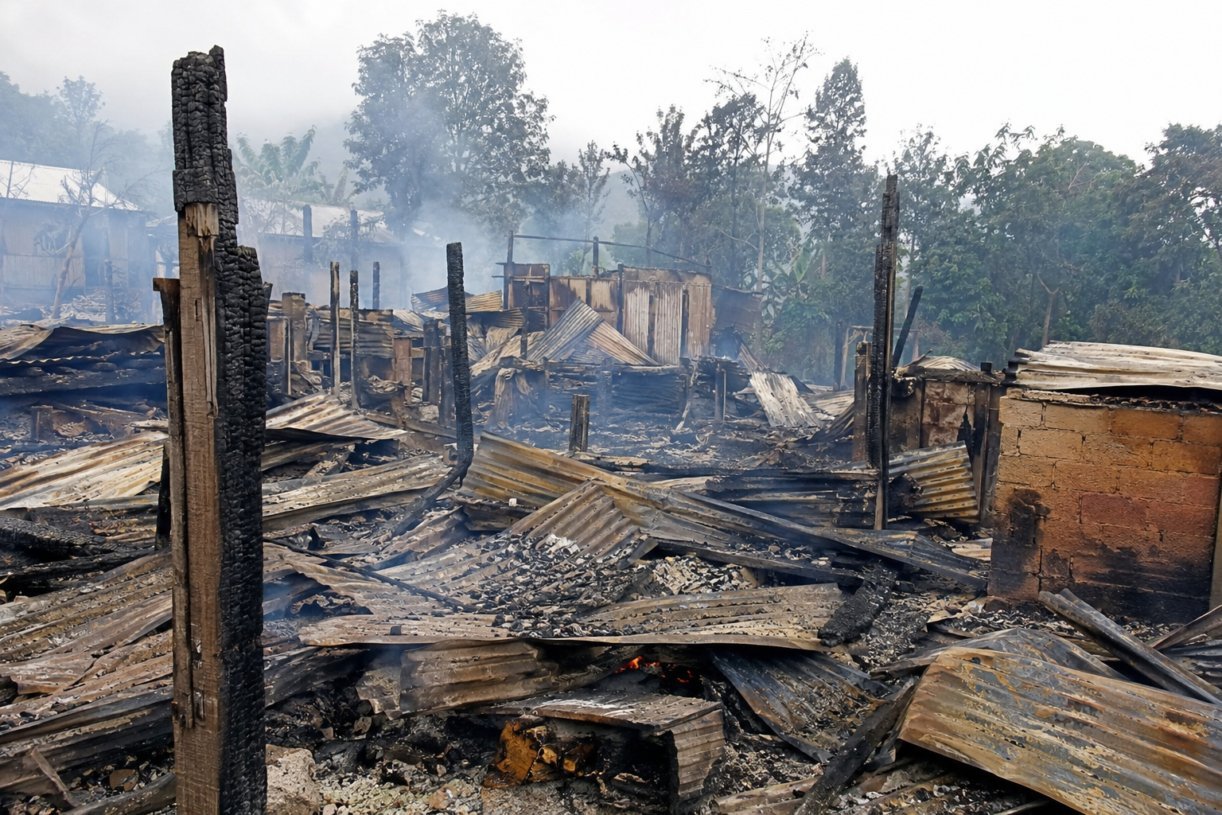
The government’s record since the lifting of President’s Rule has only strengthened the case for central intervention. In the months following the restoration of elected rule, at least two dozen people have reportedly been killed in various incidents of ethnic violence, while hundreds of homes have been damaged or destroyed in arson attacks across affected districts. Yet the state’s response has often appeared reactive, inconsistent, and inadequate.
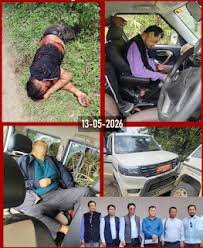
The latest violence involving Kuki-Zo and Naga groups has exposed the fragility of the state’s authority. The killing of three Baptist church leaders in Kangpokpi, the subsequent attack in Loibol village that claimed three more lives, and the continuing detention of Kuki-Zo villagers allegedly being held hostage in Senapati district have become symbols of a government struggling to exercise control over events unfolding within its own territory.

READ: Explosions Rock Tehran as Israel Launches Retaliatory Airstrikes
Critics point to what they describe as a disturbing pattern of selective enforcement by the authorities. When members of the Naga community were targeted, police acted swiftly, detaining and arresting Kuki-Zo youths—often, community leaders allege, on the basis of suspicion alone—for questioning and investigation. However, when Kuki-Zo civilians were killed, villages attacked, and homes set ablaze, victims and community organisations say the response was markedly different, characterised by delayed investigations, the absence of arrests, and little evidence of any sustained crackdown against those allegedly responsible.
Manipur love Anarchy…..
Chaos at Shokvao village in Ukhrul district, Manipur, crowds of Tangkhul Naga villagers, many women holding sticks and torches, confronting Assam Rifles security personnel…. pic.twitter.com/WHhTmd6yuO
— CMNS_Media✍🏻 (@1SanatanSatya) June 7, 2026
This perception of unequal treatment has deepened mistrust among affected communities and further eroded public confidence in the state’s ability to function as an impartial guarantor of justice, security, and the rule of law.
What makes the situation particularly alarming is not merely the violence itself, but the apparent inability—or unwillingness—of the state machinery to act decisively. Families mourn their dead, displaced villagers wait for assistance, and hostages remain in captivity while investigations crawl forward and accountability remains elusive. In several recent cases, community leaders have alleged that authorities are aware of the identities of those involved, yet meaningful action remains absent.
***
For the sake of restoring order, protecting civilians, and preventing the conflict from spiralling into an even wider ethnic confrontation, the Centre should dismiss the Manipur government and re-impose President’s Rule until peace and effective governance can be restored.
***
The deteriorating security situation is not confined to civilians alone. It has also claimed the lives of security personnel tasked with restoring peace in the conflict-ridden state. On April 10, BSF Constable Mithun Mandal of the 170 Battalion was killed while on patrol duty in the volatile Mongkot Chepu area of Ukhrul district. The jawan, who hailed from West Bengal’s Malda district, was struck by a bullet during an exchange of fire in an area already tense due to clashes between Kuki and Tangkhul Naga groups. He later succumbed to his injuries in Imphal.
His death was not merely a tragic casualty; it was a stark reminder that even central security forces are increasingly vulnerable in regions where the state’s writ is weakening. When a BSF jawan can be killed while carrying out routine security duties, it raises troubling questions about the government’s ability to maintain order and protect both civilians and security personnel.
The challenge to state authority is becoming increasingly visible across the hill districts. In Thangkhul Naga-dominated areas, local groups have repeatedly resisted the deployment and movement of security forces. On Saturday, hundreds of torch-bearing Naga women reportedly attempted to block Assam Rifles personnel from carrying out operations, leading to clashes in which at least 22 women were injured. According to reports, protesters pelted stones, hurled abuses, and physically resisted the security forces.
The incident was not an isolated one. In parts of Ukhrul, Kamjong, and adjoining districts, attempts to establish security posts, conduct operations, or facilitate the movement of personnel have frequently encountered organised resistance. In effect, armed groups, student organisations, village bodies, and community leaders increasingly appear to exercise greater influence over developments on the ground than the civil administration itself.
The continuing hostage crisis in Senapati district, the killings in Kangpokpi and Loibol, the death of a BSF jawan in Ukhrul, and the repeated obstruction of security operations together paint a deeply troubling picture. Large swathes of the hill districts are beginning to resemble zones where the authority of the state is negotiable rather than absolute. When security forces are openly challenged, hostages remain in captivity for weeks, and perpetrators of violence continue to evade accountability, it becomes difficult to argue that normal governance is functioning.
This is not the picture of a state firmly in control of its territory. It is the picture of a constitutional machinery under severe stress, struggling to enforce the rule of law and increasingly unable to guarantee the safety and security of its citizens.
Article 356 of the Constitution was created for precisely such circumstances—when a state government is unable to govern in accordance with constitutional obligations and maintain public order. If Manipur’s administration cannot guarantee basic security, uphold the law, and protect vulnerable citizens, the Centre must seriously consider whether the continuation of the present arrangement serves any useful purpose.
The restoration of democratic governance was intended to bring peace. Instead, violence has returned, public confidence has eroded, and lawlessness appears to be spreading into new areas. The Union government must confront an uncomfortable reality: the experiment has failed.
The argument for re-imposing President’s Rule is not merely about responding to past failures; it is about preventing a potentially catastrophic breakdown of law and order in the near future. The warning signs are already visible. Tensions between Kuki-Zo and Naga groups continue to escalate, mutual distrust is deepening, and fresh flashpoints are emerging across districts such as Ukhrul, Kamjong, Senapati, and Kangpokpi. The combination of unresolved killings, hostage-taking, retaliatory rhetoric, and repeated confrontations involving security forces has created a highly combustible environment.
It would take only a single major incident—a revenge attack, an armed ambush, or a large-scale clash—to trigger a wider cycle of violence that could rapidly spiral beyond the control of local authorities. Such an escalation could result in masscares, mass displacement, and the opening of yet another front in Manipur’s already fractured ethnic conflict. In these circumstances, waiting for the situation to deteriorate further before acting would be a grave mistake. The Centre must intervene before a crisis becomes a catastrophe.
The people of Manipur deserve security, justice, and a government capable of delivering both. At present, they appear to have neither.