Nemcha Kipgen’s position in the government, alongside her family connection to a key SoO group, has added another layer to the evolving political equation.
BY Navin Upadhyay
New Delhi, August 9, 2026: The Centre’s political dialogue with Kuki-Zo groups appears to have lost momentum, with just one reported formal meeting in the past three months and no publicly announced follow-up round since the April 30 discussions in New Delhi.
The prolonged gap has raised questions over the future of negotiations between the Ministry of Home Affairs and the Kuki National Organisation (KNO) and United People’s Front (UPF), the two umbrella bodies representing armed groups operating under the Suspension of Operations (SoO) framework.
The issue assumes greater significance because Kuki-Zo representatives had placed a separate administrative arrangement, including the demand for a Union Territory with a legislature, at the centre of their political negotiations with New Delhi.
The absence of another political meeting since April, coupled with the government’s increasingly visible emphasis on restoring normal movement and reconciliation in Manipur, suggests that the Kuki-Zo political question is no longer receiving the same public attention it once did.
The change comes at a crucial moment for Manipur, where the government is attempting to reopen national highways, restart passenger services and persuade communities to move towards normalcy after more than three years of ethnic conflict.
April 30 Meeting Was the Last Major Political Engagement
The April 30 meeting in New Delhi was held after an almost two-month gap in formal engagement.
The discussions were led by A.K. Ajit Lal, the Centre’s newly appointed interlocutor for Northeast peace talks and a former Intelligence Bureau officer. Officials from central agencies, security forces and the Manipur administration also participated.
The meeting covered both operational and political issues.
The first session focused on the functioning of designated camps housing SoO cadres. The sides discussed the need to rationalise and, where necessary, relocate camps to reduce friction with surrounding populations and improve security arrangements.
Kuki-Zo representatives also raised concerns about the security of their civilian population in areas where they alleged that villages had been attacked or destroyed.
But the political session was more consequential. KNO and UPF representatives argued that the violence that erupted in May 2023 had fundamentally changed the relationship between the Kuki-Zo community and the state administration. They maintained that a return to the pre-2023 political arrangement was no longer realistic and reiterated their demand for a separate administrative structure.
For the groups, the demand was linked to what they described as years of political under-representation, developmental disparities and insecurity in the hill areas.
From Political Settlement to Highway Normalcy
The most striking development since the April talks has been the government’s growing emphasis on normalisation rather than political restructuring.
On August 8, Chief Minister Yumnam Khemchand Singh visited Kangpokpi district headquarters, accompanied by Deputy Chief Minister Nemcha Kipgen and Saitu MLA Haokholet Kipgen.
Chief Minister Shri Yumnam Khemchand Singh embarks on his maiden official visit to Kangpokpi District, inaugurating vital healthcare units, critical infrastructure projects, and welfare schemes to boost regional development. 🏥✨
#Kangpokpi #Manipur #Development #Healthcare pic.twitter.com/2zga4dGjjA— District Collector & DEO Kangpokpi (@DEO_Kangpokpi) August 8, 2026
Read: Amid Manipur’s Normalcy Push, Kuki-Zo Leaders Mum on Political Demand
READ: Kuki-Zo Leaders Surrender on Highway Movement, But Nagas Harden Stand
The government announced steps towards removing blockades, restoring free movement on major highways and restarting the Imphal-Dimapur passenger bus service.
The Chief Minister’s message was centred on restoring connectivity and normal life across community lines.
Nemcha Kipgen similarly described the reopening of highways as an important step towards normalcy and appealed to civil society groups, community leaders and other influential sections to participate in reconciliation.
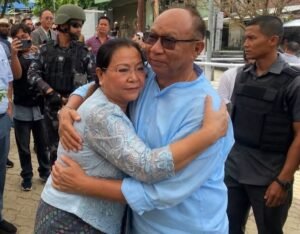
Saitu MLA Haokholet Kipgen also called on communities to leave behind the bitterness of the conflict and work towards restoring normal life.
Significantly, the public emphasis during the visit was on movement, reconciliation and normalcy, rather than the Union Territory demand or justice for the Kuki-Zo victims.
Nemcha Kipgen’s role adds another layer to the evolving equation. She represents Kangpokpi Assembly constituency and serves as Deputy Chief Minister in the Khemchand government.
Her family connection to the SoO structure has also attracted considerable political attention. Nemcha Kipgen is married to S.T. Thangboi Kipgen, who has been identified in media reports as the chairman/president of the Kuki National Front (P), one of the armed groups operating under the Suspension of Operations framework.
The relationship has fuelled speculation within political and community circles that Nemcha Kipgen’s position inside the state government could provide New Delhi and the Manipur administration with an influential channel to engage with sections of the armed Kuki-Zo leadership. Critics fear that such access could eventually be used to persuade or pressure SoO groups to moderate, postpone or abandon their demand for a separate political settlement