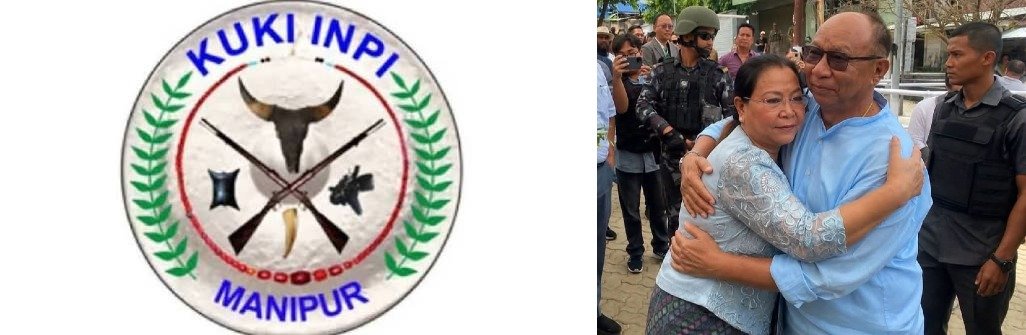
Kuki Inpi Manipur said it would neither dilute nor compromise the Kuki people’s demand for Separate Administration for temporary political engagements.
BY PC Bureau
August 9, 2026: The political fault lines within the Kuki-Zo community have widened after the Kuki Inpi Manipur (KIM), the apex traditional body of the Kukis in Manipur, publicly rejected Chief Minister Yumnam Khemchand Singh’s visit to Kangpokpi, declaring that the engagement with local civil society organisations did not carry the community’s collective mandate.
In a statement issued on Sunday, KIM said it was neither a party to nor involved in the Chief Minister’s visit to Kangpokpi on August 8. According to the organisation, the visit was undertaken at the invitation of certain district-level civil society organisations and had neither the authorisation nor the endorsement of KIM.
The clarification is politically significant because the visit was presented as an important step towards reconciliation and the restoration of normal movement in a district that has remained at the heart of the Kuki-Zo conflict since May 2023.
KIM, however, sought to draw a clear distinction between administrative engagement and political settlement, warning that participation by individual organisations could not be interpreted as acceptance of the government’s approach by the wider Kuki community.
KIM said it strongly objected to the Chief Minister’s engagement with the district-level organisations while the Kuki-Zo political movement for Separate Administration remained unresolved.
“The visit was undertaken at the invitation of certain district-level Civil Society Organisations (CSOs) of Kangpokpi and not at the invitation, direction, authorisation, or mandate of KIM. KIM therefore strongly objects to such engagement, particularly in the face of the Kuki people’s movement for Separate Administration,” the statement said.
READ: Mamata Faces Violent Protest, Mud and Stones Hurled at Her Vehicle
The organisation maintained that the actions of individual civil society groups should not be construed as representing the collective position or consent of KIM or the Kuki people. “The actions of the concerned district CSOs must not be construed as representing the collective position, consent, or mandate of KIM or the Kuki people. KIM will not compromise, dilute, or barter away the political aspirations and collective interests of the Kuki people for temporary engagements, personal interests, or political expediency,” it said.
It further declared that the Kuki community’s political aspirations would not be compromised, diluted or traded away for what it described as temporary engagements, individual interests or political expediency.
The statement was issued by D. David Haokip, Assistant Secretary, Information and Publicity, Kuki Inpi Manipur.
KIM urged the Kuki public to remain vigilant and united, stressing that isolated engagements or unilateral initiatives could not override what it regards as the community’s collective political mandate.
The KIM statement came a day after a markedly different political scene unfolded in Kangpokpi.
Chief Minister Khemchand, accompanied by Deputy Chief Minister Nemcha Kipgen and Saitu MLA Haokholet Kipgen, visited the district headquarters on August 8 and spoke about reopening highways, restoring public transport and bringing normalcy back to the state.
Kipgen publicly embraced the Chief Minister during the visit, an image that carried considerable political symbolism after more than three years of ethnic division.
The Deputy Chief Minister also appealed to civil society organisations, community leaders and other influential sections to participate in reconciliation.
Haokholet Kipgen similarly urged communities to move beyond the bitterness of the conflict and work towards restoring normal life.
But the public messaging from the KIM could hardly have been more different. While the Chief Minister’s visit projected reconciliation and normalisation, KIM’s response reaffirmed that the political question at the heart of the Kuki movement remains unresolved.
A notable aspect of the Kangpokpi programme was the absence of any public reiteration of the principal Kuki-Zo political demands during the event.
There was no public announcement concerning the demand for a separate administrative arrangement, including the Union Territory proposal that Kuki-Zo representatives have pursued in negotiations with the Centre.
Nor did the public statements surrounding the visit focus on demands for accountability for the violence of May 3, 2023, or other grievances that have remained central to the Kuki-Zo political narrative.
Instead, the emphasis was on opening roads, restoring movement and encouraging communities to begin the
The Nemcha Kipgen Factor
The conspicuous role played by Nemcha Kipgen during the Chief Minister’s Kangpokpi visit adds another dimension to the controversy.
Kipgen is not simply a district-level political figure. As Deputy Chief Minister, she is now part of the state government that KIM and other Kuki-Zo organisations have previously criticised. Her participation in the Khemchand government’s outreach therefore carries significance beyond the symbolism of a public embrace.
The Kangpokpi visit has therefore highlighted a growing divide between Kuki-Zo leaders participating in the constitutional political system and organisations insisting that the community’s mandate remains centred on Separate Administration.
A Broader Question of Representation
The dispute exposes a problem that could become increasingly important as the government seeks to restore normalcy: who speaks for the Kuki-Zo community?
The state government can engage elected representatives.
The Centre has its established channels with the KNO and UPF under the SoO framework.
Civil society organisations operate at both the district and broader community levels.
And KIM, along with the Kuki-Zo Council and other bodies, claims to articulate the collective political aspirations of the community.
These positions do not always coincide.
A New Fault Line Within the Kuki-Zo Movement?
The developments also point to a potentially significant new fault line.
On one side are elected representatives and local organisations willing to engage with the Manipur government and support efforts to restore normal movement.
On the other are community bodies such as KIM that insist that engagement with the state government cannot come at the expense of the demand for Separate Administration.
The disagreement does not necessarily mean that the Kuki-Zo community has abandoned its political demand. Rather, it highlights competing approaches over how that demand should be pursued and who has the authority to negotiate on behalf of the community.
KIM’s latest statement makes one point unmistakably clear: the public gestures of reconciliation witnessed in Kangpokpi on August 8 should not be interpreted as a collective Kuki-Zo acceptance of the existing political arrangement.
As the Manipur government presses ahead with highway reopening and reconciliation, the real test will be whether it can distinguish between restoring normal movement and securing a political settlement.
For KIM, the two remain fundamentally different questions.