June 8, 2026: The fragile calm in the Middle East appeared to unravel on Monday as Israel launched a fresh wave of airstrikes deep inside Iran, targeting locations in the country’s central and western regions after Tehran fired missiles toward Israeli territory. The latest exchange has reignited fears of a wider regional conflict, threatening ongoing diplomatic efforts led by Washington and other mediators to prevent the Israel-Iran confrontation from spiralling into a full-scale war.
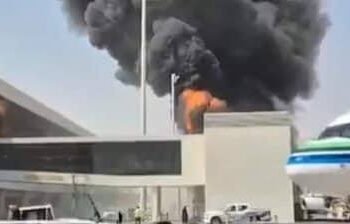
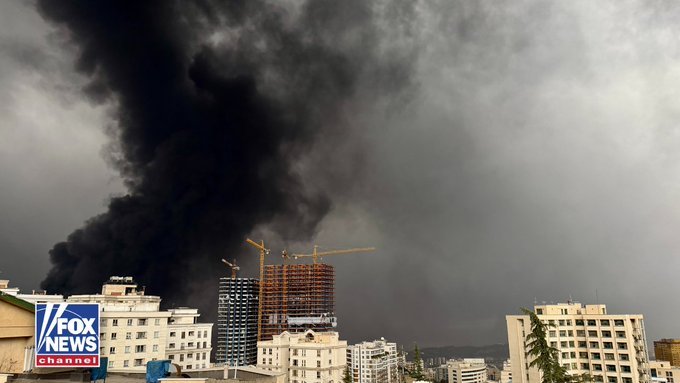
According to Iran’s state-run IRNA news agency, at least two powerful explosions were heard in Tehran, while additional blasts were reported in Isfahan, Karaj and Tabriz. In response to the strikes, Iranian authorities shut down airspace around Tehran’s Imam Khomeini International Airport, the country’s main international gateway.
Tehran also escalated its rhetoric, warning that all American military installations in the Gulf region would be regarded as legitimate targets if Israeli attacks continue, according to Reuters.
READ: Ladakh LG to Escort Sacred Buddha Relics Back from Mongolia
The Israeli operation came after Iran launched its first missile attack on Israel since a fragile ceasefire was reached in early April. Tehran said its action was linked to Israel’s strike on Beirut’s southern suburbs on Sunday, an attack carried out despite reported appeals from Washington for restraint.
JUST IN:
Israel has carried out attacks on Tehran, Karaj, Tabriz, & Kermanshah. The final moments of the Iranian regime have arrived. pic.twitter.com/ZEogrHMn5S
— Jessica Asia (@Asia2003ok0) June 8, 2026
Iranian officials did not immediately provide details about the targets hit or the extent of damage caused by the Israeli strikes. However, Iran’s paramilitary Revolutionary Guard claimed Israel used air-launched ballistic missiles during the operation.
In a brief statement, the Israeli military said, “A short while ago, the Israeli Air Force struck military targets belonging to the Iranian regime in western and central Iran,” without offering further specifics.
Meanwhile, air raid sirens sounded across several parts of Israel as Iranian missiles approached. The Israeli military said it intercepted multiple incoming projectiles from at least three separate barrages, while CNN reported that at least ten ballistic missiles had been shot down.
The renewed hostilities have further complicated already fragile negotiations between Iran and the United States. Reports indicate that US President Donald Trump has urged Israeli Prime Minister Benjamin Netanyahu to avoid further retaliation and allow diplomatic channels to remain open.
According to Axios, Trump told Netanyahu that a military response risked undermining ongoing efforts to stabilise the region and advance negotiations with Tehran. A senior US official also reportedly said Washington had not given Israel a “green light” for its earlier strike on Beirut.
Iran had previously warned that any attack on Beirut could reignite a broader Middle East conflict, even as mediators, including Pakistan, sought to revive stalled talks between Tehran and Washington.
Israel’s strike on Beirut occurred only days after Lebanese and Israeli officials participated in US-backed ceasefire discussions. The attack reportedly hit a residential building, killing two people and injuring 20 others, according to Lebanon’s Health Ministry.
As tensions mount across multiple fronts—from Iran and Israel to Lebanon and Hezbollah—fears are growing that the region could once again be on the brink of a prolonged and devastating conflict.