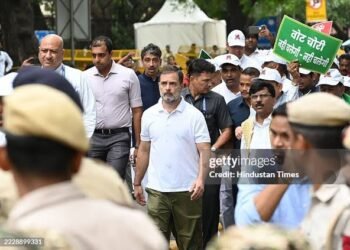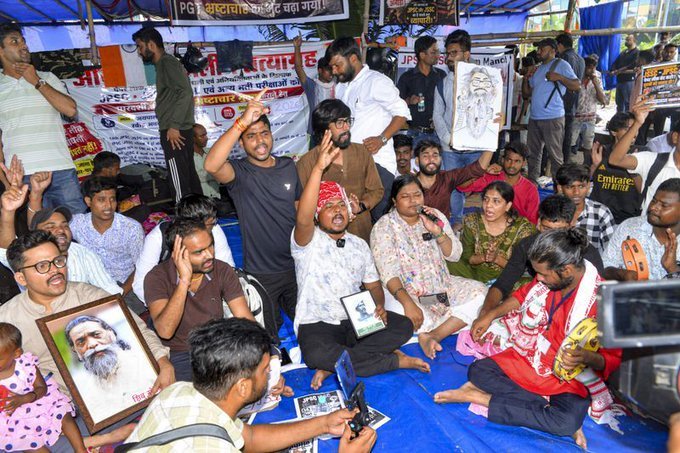
Students are demanding more than cancellation of the examination. Their charter includes a CID probe into suspect examinations, a state testing agency, greater transparency in recruitment and recognition of tribal and regional languages as qualifying papers.
BY PC Bureau
August 9, 2026: The Hemant Soren government is actively considering the cancellation of the 14th Jharkhand Public Service Commission (JPSC) Civil Services Examination, as a student agitation over alleged irregularities in recruitment examinations entered its 15th day on Sunday.
The government has scheduled another round of negotiations with protesting students on Sunday, hoping to break a deadlock that has persisted despite several rounds of talks.
Rural Development Minister Dipika Pandey Singh confirmed that cancellation of the 14th JPSC examination is under active consideration.
“Students are indeed demanding a cancellation, a matter the government is currently considering,” she told ANI.
Singh said the government was sympathetic to the concerns of aspirants and was examining proposals aimed at overhauling the recruitment system. A special committee has been constituted to study the grievances raised by students, while Chief Minister Hemant Soren is being kept informed of the discussions.
“Students have come up with very good suggestions and genuine concerns, and the government is ready to resolve those,” she said.
Sixth Round of Talks on Sunday
The latest negotiations were scheduled after the government held several separate meetings with student organisations on Saturday.
According to PTI, four rounds of discussions were held with organisations including the NSUI, Jharkhand Chhatra Manch and Adivasi Chhatra Sangh. These followed an earlier meeting with the JPSC-JSSC Reforms Manch, the principal organisation leading the agitation.
The government has already held five rounds of discussions without reaching a settlement. A sixth round has now been scheduled for around noon on Sunday, following a detailed briefing of the Chief Minister on the developments on Saturday evening.
The government negotiating team includes ministers Dipika Pandey Singh, Sudivya Kumar, Chamra Linda and Sanjay Prasad Yadav.
The administration has described the talks as constructive and said it is examining the students’ demands.
Protest Leaders Accuse Government of Trying to Divide Movement
The JPSC-JSSC Reforms Manch, however, has accused the government of attempting to fragment the agitation by holding separate discussions with different student organisations.
“This is political manoeuvring. It is trying to create a divide among students and divert attention. But all students are united,” Reforms Manch leader Ravindra Paswan said at a press conference at Jaipal Singh Munda Stadium, where students have been protesting since July 25.
Paswan said the Reforms Manch had already submitted its complete charter of demands during Friday’s meeting and questioned the need for separate negotiations with different organisations.
The government has rejected the suggestion that the meetings are intended to divide the protesters, maintaining that it is engaging with as many stakeholders as possible before taking decisions on recruitment reforms.
What the Students Are Demanding
The agitation has expanded beyond the cancellation of a single examination.
Students are demanding sweeping reforms in the functioning of both the Jharkhand Public Service Commission (JPSC) and the Jharkhand Staff Selection Commission (JSSC).
Among their principal demands are:
- Cancellation of the 14th JPSC Civil Services Examination;
- A CID inquiry within 90 days into examinations suspected of irregularities;
- Creation of a dedicated state testing agency on the lines of the National Testing Agency;
- Greater transparency and accountability in the examination and recruitment process; and
- Recognition of tribal and regional languages as qualifying papers in the relevant examinations.
Higher and Technical Education Minister Sudivya Kumar said the government had also created a dedicated email address through which aspirants and other stakeholders could submit suggestions on examination reforms.
Government Under Pressure as Protest Widens
The agitation has attracted participation from several student and political organisations.
The All India Students’ Association (AISA) has established a platform at the protest venue and said it supports the principal demands of the demonstrators.
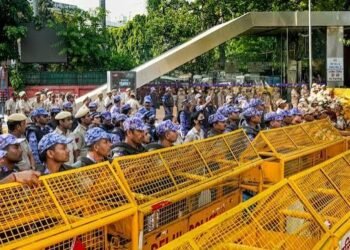
The ABVP, meanwhile, has organised its own campaign and earlier clashed with police near the Chief Minister’s residence. The organisation has announced a separate march to the Jharkhand Assembly on August 11.
The main protesters have threatened to intensify their agitation if Sunday’s negotiations fail.
They have announced a march towards the Assembly on August 10, putting additional pressure on the government to reach an agreement before the deadline.
Arrests and Examination Controversy
The agitation comes against the backdrop of a wider controversy surrounding alleged irregularities in JPSC examinations.
Nineteen people have so far been arrested in connection with alleged examination-related irregularities, while former JPSC chairperson L Khiangte has been questioned several times as part of the investigation.
The arrests and continuing inquiries have strengthened demands from students for an independent examination of the entire recruitment system rather than investigations limited to individual cases.
The protesters argue that repeated controversies have eroded the credibility of the state’s competitive examination process and created uncertainty for thousands of aspirants who spend years preparing for government jobs.
READ: Dharmendra Pradhan Breaks Silence on Resignation, Says Gen Z Was Misled
Protesters Hold Torchlight March
On Saturday, protesters also marked the death anniversary of martyr Nirmal Mahto with a flashlight procession from the protest venue to Albert Ekka Chowk.
The march was used to reiterate their demands and demonstrate that the agitation would continue despite the government’s renewed attempts at negotiation.
The protest has now entered its third week, turning the examination controversy into a broader confrontation over the credibility of Jharkhand’s recruitment system.
Sunday Talks Could Be Decisive
The government’s decision to actively consider scrapping the 14th JPSC examination represents a potentially significant movement towards the protesters’ principal demand.
But cancellation alone may not be enough to end the agitation.
Students are seeking institutional reforms extending across JPSC and JSSC, along with an investigation into examinations they believe were compromised.
The government, meanwhile, must balance the immediate demand for cancellation against the administrative and legal consequences of scrapping a major competitive examination.
Sunday’s negotiations could therefore prove decisive.
If the government offers a concrete roadmap on cancellation, investigation and recruitment reforms, the two sides could move towards de-escalation. If the talks fail once again, the planned Assembly marches on August 10 and 11 could turn the examination dispute into a larger political confrontation.
For the Soren government, the challenge is no longer simply to persuade students to end their protest. It is to restore credibility to a recruitment system whose legitimacy has become the central issue of the agitation.