Fresh US-Iran hostilities have rattled global markets and heightened security concerns across the Middle East. With Tehran claiming attacks on US bases and threatening shipping through the Strait of Hormuz, international calls for an immediate ceasefire are growing louder.
BY PC Bureau
July 13: Three US soldiers were killed after Iran launched a barrage of ballistic missiles on American military facilities in Kuwait on Monday, dramatically escalating the regional conflict as Tehran widened its retaliation against recent US airstrikes.
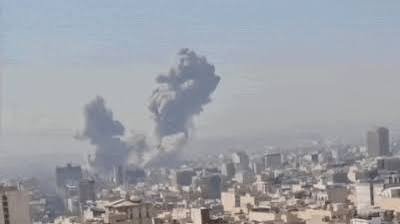
Massive plumes of black smoke were seen rising from the targeted base after what Iranian media described as three ballistic missiles struck an American ATACMS (Army Tactical Missile System) launcher. Kuwaiti authorities confirmed “material damage” from the barrage, though they did not immediately disclose the full extent of the destruction or officially confirm casualties.
The strikes formed part of Iran’s expanding military campaign against US forces across the Gulf. Tehran also claimed missile and drone attacks on American-linked military installations in Bahrain and Jordan, describing the operation as an “eye-for-an-eye” response to fresh US attacks on Iranian military infrastructure.
According to Iran’s Islamic Revolutionary Guard Corps (IRGC), the attacks targeted Ali Al-Salem Air Base and Ahmed Al-Jaber Air Base in Kuwait, damaging fuel storage facilities, Patriot air-defence batteries and radar systems. Iranian media also claimed strikes on Sheikh Isa Air Base in Bahrain and Prince Hassan Air Base in Jordan, although Washington has not independently verified the reported damage.
READ: Explained: Why India’s Christian Churches Are Worried About the New FCRA Rules
In a major escalation, Tehran simultaneously announced the closure of the Strait of Hormuz, saying Iranian naval forces had halted vessel movements and intercepted ships operating on what it called “unauthorised routes.” The narrow waterway carries nearly 20 per cent of global oil and LNG shipments, making it one of the world’s most strategically important maritime chokepoints. The move immediately heightened fears of a global energy shock.
The United States responded with another wave of precision strikes on Iranian military assets. US Central Command (CENTCOM) said fighter aircraft, naval forces and attack drones targeted Iranian air-defence systems, missile launchers, drone facilities, coastal radar installations and fast attack boats. Iranian media reported explosions in Bandar Abbas and Qeshm Island, saying at least one person was killed and four others injured.
3 US SOLDIERS KILLED in Iran STRIKES on Kuwait
Massive BLACK SMOKE rises after American ‘ATACMS MISSILE system’ HIT by ‘3 BALLISTIC MISSILES’
Kuwait confirms ‘MATERIAL DAMAGE’ from barrage pic.twitter.com/pyylsfzJXp
— Tarique Hussain (@Tarique18386095) July 13, 2026
The confrontation has put Gulf states on high alert. Bahrain activated missile warning sirens, Kuwait reported intercepting additional incoming projectiles, while Jordan confirmed that several Iranian missiles landed inside its territory without causing casualties. The United Arab Emirates said its air-defence systems intercepted aerial threats before they entered its airspace. Qatar condemned the attacks as a “dangerous escalation,” while Oman lodged a formal protest with Tehran over reported drone activity.
Explained: Why India’s Christian Churches Are Worried About the New FCRA Rules
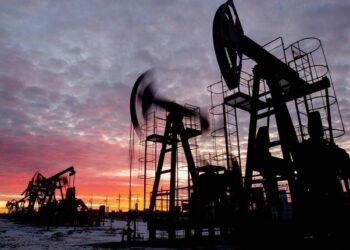
The worsening conflict rattled global energy markets. Brent crude rose more than 3 per cent to $78.35 a barrel, while West Texas Intermediate (WTI) climbed to $73.62, reflecting concerns that prolonged disruption in the Strait of Hormuz could severely impact global oil supplies.
The United Nations renewed its call for an immediate ceasefire as Oman and Qatar continued diplomatic efforts to prevent a broader regional war. Iran, meanwhile, accused Washington of violating the UN Charter and warned that any country allowing its territory to be used for attacks on Iran could become a “legitimate target,” signalling that the confrontation may widen further.