BY PC Bureau
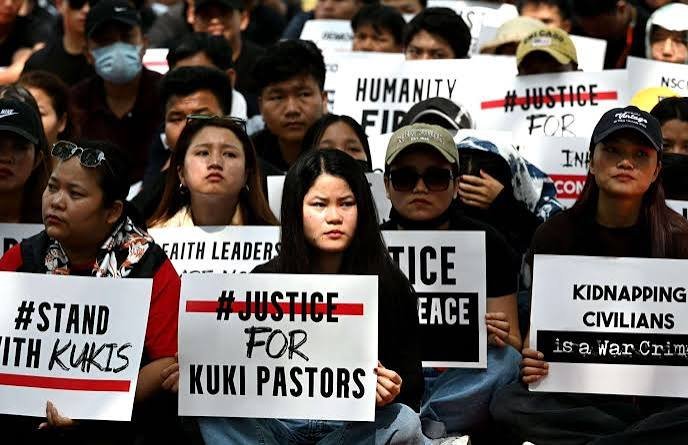
July 13, 2026: Two months after the brutal ambush that claimed the lives of three respected Kuki-Thadou Baptist church leaders and their driver in Manipur’s Kangpokpi district, no arrests have been publicly announced in this high-profile case.
The victims—Rev. Dr. Vumthang Sitlhou, Rev. Kaigoulun Lhouvum, Pastor Paogoulen Sitlhou, and their driver—were returning from a peace conference in Churachandpur on May 13, 2026, when unidentified gunmen opened fire on their vehicles. They were widely respected church leaders who had devoted themselves to promoting peace and reconciliation amid Manipur’s prolonged ethnic conflict.
The National Investigation Agency (NIA) took over the probe in June, underscoring the seriousness of the case and the possibility that organised militant networks or a wider conspiracy may have been involved. Yet, as of mid-July 2026, there has been no public announcement of arrests or major investigative breakthroughs.
That raises uncomfortable questions. In a state already scarred by violence, why has such a sensitive attack on prominent peace-builders not resulted in visible progress?
Allegations and the Investigation
Several Kuki organisations, including the Kuki Inpi Manipur and KOHUR, have alleged that a Naga militant faction—the Zeliangrong United Front (ZUF-Kamson faction)—may have been responsible, possibly in coordination with other armed elements. These allegations have not been confirmed by the NIA or any other investigating agency, and no organisation has been officially named as an accused in the case.
The ambush occurred along a sensitive stretch of road in the hill districts, and its timing—coming soon after efforts at Kuki-Naga reconciliation—has prompted questions about motive. Whether those questions ultimately prove relevant remains for investigators to determine.
Manipur’s security forces have repeatedly demonstrated their ability to mount swift intelligence-based operations. Joint teams of the Manipur Police, CRPF, Army and central agencies regularly conduct cordon-and-search operations across the hill districts. Given those capabilities, the absence of any publicly known breakthrough in such a high-profile case inevitably invites scrutiny. Is the investigation being hampered by difficult terrain, a lack of reliable witnesses, or operational challenges? Or are the complexities of Manipur’s ethnic conflict making the investigation unusually difficult?
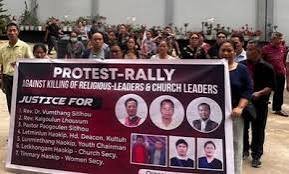
Contrasting Arrests Raise Questions
The absence of arrests has also revived a broader debate over consistency in law enforcement.
Take, for instance, the arson attack on Kanto Sabal village in Imphal West, where security forces swiftly arrested two Kuki-Zo suspects. Yet, in several incidents involving the burning of dozens of Kuki-Zo homes across villages in Ukhrul and Senapati districts, no arrests have been publicly announced.
A similar contrast is cited in recent killings. Security forces recently arrested two suspects in connection with the killing of six Naga hostages. However, no arrests have been publicly announced in connection with the killings of at least 15 Kuki-Zo civilians over the past three months.
Critics within the Kuki-Zo community argue that these contrasting responses have fuelled perceptions of uneven enforcement, with cases involving Kuki-Zo suspects often seeing swift action, while investigations into attacks on Kuki-Zo civilians appear to move more slowly.
This is not to suggest that law enforcement targets only one community. Security agencies have, at different times, arrested members of Meitei organisations, including Arambai Tenggol, and have pursued cases involving multiple armed groups. Nevertheless, in a deeply polarised state, perceptions of unequal urgency can be as damaging as unequal treatment itself.
READ: Explained: Why India’s Christian Churches Are Worried About the New FCRA Rules
Justice Must Be Consistent
Manipur’s multi-layered conflict—encompassing Meitei, Kuki-Zo and Naga dimensions—makes policing extraordinarily difficult. Local police face allegations of ethnic bias, while central forces are accused by different communities of either excessive force or inadequate action. NIA investigations are designed to be methodical, but prolonged silence in a case of such significance risks eroding public confidence.
Questioning the lack of arrests is not about shielding any community or prejudging the outcome of the investigation. It is about demanding the consistent application of the rule of law. If investigators find evidence implicating any militant group or individuals, they must pursue those leads with the same urgency applied in every other serious criminal case. Equally, arrests based solely on suspicion, without sufficient evidence, undermine public confidence and the credibility of the justice system.
The killing of church leaders who dedicated themselves to peace should not become another unresolved chapter in Manipur’s conflict. The state urgently needs impartial investigations, effective witness protection and greater transparency in cases that carry profound public significance. Without visible investigative progress and, where warranted, arrests, the Kangpokpi killings risk becoming yet another symbol of impunity in a conflict that has already claimed too many lives.
The families of the victims, the church community and the people of Manipur deserve more than condolences. They deserve answers—and justice.