For Morocco, migration serves as both an economic safety valve and a major source of remittances. Millions of euros sent home annually by Moroccans living abroad support families and contribute significantly to the national economy.
BY PC Bureau
Every few years, dramatic images emerge from Europe’s southern frontier: hundreds of people scaling border fences, families wading through the sea toward Ceuta, or overcrowded boats struggling across the Strait of Gibraltar. The latest surge in late July 2026, when tens of thousands of migrants attempted to enter the Spanish enclave of Ceuta in one of the largest border movements in recent memory, once again thrust the Spain-Morocco migration corridor into the global spotlight.
Yet the Ceuta crisis was not an isolated event. It was the latest manifestation of a migration pattern that has shaped relations between Morocco and Spain for decades. Geography, economics, history and politics combine to make the narrow stretch separating Africa and Europe one of the world’s busiest migration routes. While governments have periodically succeeded in reducing irregular crossings through tighter cooperation, the underlying pressures remain largely unchanged.
A Border Unlike Any Other
Few international frontiers are as unique as those between Morocco and Spain.
Spain’s autonomous cities of Ceuta and Melilla sit on the northern coast of Africa, making them the European Union’s only land borders with the African continent. Barely 14 kilometres of water separate Morocco from mainland Spain across the Strait of Gibraltar, while the Atlantic route connects Morocco and West Africa to Spain’s Canary Islands.
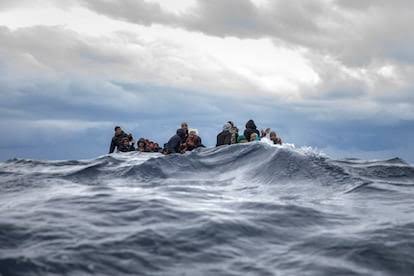
This remarkable geography creates multiple migration routes. Some migrants attempt to swim around border breakwaters. Others scale the heavily fortified fences surrounding Ceuta and Melilla. Thousands risk dangerous sea crossings aboard overcrowded inflatable boats or wooden vessels operated by human-smuggling networks.
Unlike many migration corridors that involve long overland journeys, Europe is literally visible from Morocco’s northern coast.
That proximity has shaped migration patterns for generations.
A Well-Established Community
Migration between Morocco and Spain is far from new.
Large-scale labour migration began in the latter half of the twentieth century as Spain’s expanding economy demanded workers in agriculture, construction, tourism and domestic services. Over time, temporary migration evolved into permanent settlement as workers brought their families, established businesses and acquired Spanish citizenship.
Today, more than one million people born in Morocco live in Spain, making them the country’s largest African-born community and one of its biggest foreign-origin populations overall. Hundreds of thousands have become Spanish citizens, while many others continue to hold Moroccan nationality.
Communities with Moroccan roots are now firmly embedded across Catalonia, Andalusia, Madrid, Murcia and Valencia.
This established diaspora has created powerful family and community networks that continue to attract new migrants seeking opportunities already secured by relatives and friends.
Why People Continue to Leave
Economic opportunity remains the single most important driver.
Despite significant economic reforms, Morocco continues to face high youth unemployment, regional disparities and limited employment opportunities in many rural areas. For thousands of young Moroccans, particularly those with limited educational opportunities, Europe represents the prospect of stable employment and significantly higher incomes.
Spain, meanwhile, faces demographic challenges of its own.
An ageing population and labour shortages have sustained demand for migrant workers in agriculture, hospitality, elder care and construction. Moroccan workers have become particularly important in seasonal farming operations across southern Spain, while others occupy permanent positions in manufacturing, transport and services.
Legal migration channels continue to exist through seasonal employment schemes, family reunification and residence permits.
However, these pathways remain insufficient for many aspiring migrants, prompting some to undertake dangerous irregular journeys.
The Politics of Migration
Migration across the western Mediterranean is shaped as much by diplomacy as by economics.
Relations between Madrid and Rabat have periodically fluctuated between close cooperation and diplomatic tension. Those political shifts often produce immediate consequences at the border.
When relations improve, Moroccan authorities typically intensify border controls, dismantle smuggling networks and cooperate closely with Spanish security agencies.
When relations deteriorate, migration pressures have sometimes increased dramatically.
Following the restoration of diplomatic ties in recent years, Spain recorded a substantial decline in irregular arrivals during 2025. Enhanced intelligence sharing, joint maritime patrols and stronger enforcement reduced crossings along several major routes, particularly toward the Canary Islands.
The overall trend suggested that coordinated border management could significantly curb irregular migration.
The events of July 2026, however, demonstrated how quickly those gains can be reversed.
The Ceuta Surge
The late-July influx into Ceuta represented one of the most dramatic migration episodes in recent European history.
Within hours, tens of thousands of migrants converged on the border. Some entered through land crossings while others swam around coastal barriers using inflatable tubes and improvised flotation devices.
Spanish authorities deployed military personnel and additional police units as reception facilities quickly exceeded capacity.
Moroccan security forces attempted to stem the flow using crowd-control measures, while emergency services responded to multiple drownings and injuries.
Although many migrants voluntarily returned to Morocco within days, the episode exposed the vulnerability of Europe’s southern frontier and raised fresh questions about the sustainability of existing migration policies.
Humanitarian and Political Challenges
Migration presents a dilemma with no easy solutions.
For Spain, Moroccan migration provides valuable labour that supports key sectors of the economy while helping offset demographic decline. At the same time, sudden mass arrivals place enormous pressure on reception centres, healthcare systems, asylum procedures and local governments, particularly in Ceuta and Melilla.
Europe faces major migration surge as over 50,000 cross into Spain’s Ceuta in 24 hours.
🇲🇦 Over 50,000 Moroccans crossed into the Spanish-controlled enclave of Ceuta, increasing the city’s population by nearly 60%. Large crowds are also moving toward the Spanish-controlled…
— Suppressed News. (@SuppressedNws1) July 31, 2026
For Morocco, migration serves as both an economic safety valve and a major source of remittances. Millions of euros sent home annually by Moroccans living abroad support families and contribute significantly to the national economy.
Yet every dangerous crossing also carries immense human costs.
Hundreds of migrants have lost their lives attempting to reach Spain over the past decade. Smuggling organisations continue to exploit vulnerable people, charging exorbitant fees for perilous journeys across increasingly dangerous routes.
Children travelling alone remain among the most vulnerable, often arriving traumatised and requiring long-term protection.
READ: Tahir Hussain, 4 Others Get Life Term for IB Officer Murder
The INVASION of Spain is unfolding right before our eyes 🇪🇸🚨
Prime Minister Pedro Sanchez’s government policies are actively encouraging massive waves of migration from Africa into Spain.
The Spanish territory of Ceuta – an enclave bordering Morocco near the Strait of… pic.twitter.com/w8i0JR04yR
— Predictivemoney (@Predictivemoney) July 30, 2026
Beyond Border Security
The recurring crises illustrate that migration cannot be managed through border enforcement alone.
Spain and Morocco have strengthened surveillance technology, expanded joint patrols and increased intelligence cooperation. These measures have reduced irregular arrivals at various points over recent years.
However, enforcement addresses symptoms rather than causes.
Economic disparities, demographic pressures, climate-related challenges, regional instability and persistent labour demand in Europe continue to generate migration pressures that no border fence can entirely eliminate.
Expanding legal migration pathways, improving employment opportunities in Morocco and strengthening development cooperation may ultimately prove more sustainable than relying exclusively on security measures.
A Permanent Feature of the Mediterranean
The July 2026 Ceuta crisis was exceptional in scale, but it reflected a much larger reality.
Migration across the western Mediterranean has become a permanent feature of relations between Morocco and Spain. Geography ensures that Europe remains tantalisingly close. Economic inequalities continue to encourage movement. Established migrant communities create powerful social networks that sustain future migration.
As long as these structural factors persist, periods of calm are likely to alternate with sudden surges.
The challenge for both governments is not to eliminate migration—a virtually impossible objective—but to manage it safely, legally and humanely. That will require sustained diplomatic cooperation, expanded legal avenues for mobility, stronger action against smuggling networks and long-term investment in economic development on both sides of the Strait of Gibraltar.
The images from Ceuta may fade from the headlines, but the forces driving people across one of the world’s shortest—and most politically sensitive—sea crossings are unlikely to disappear anytime soon.