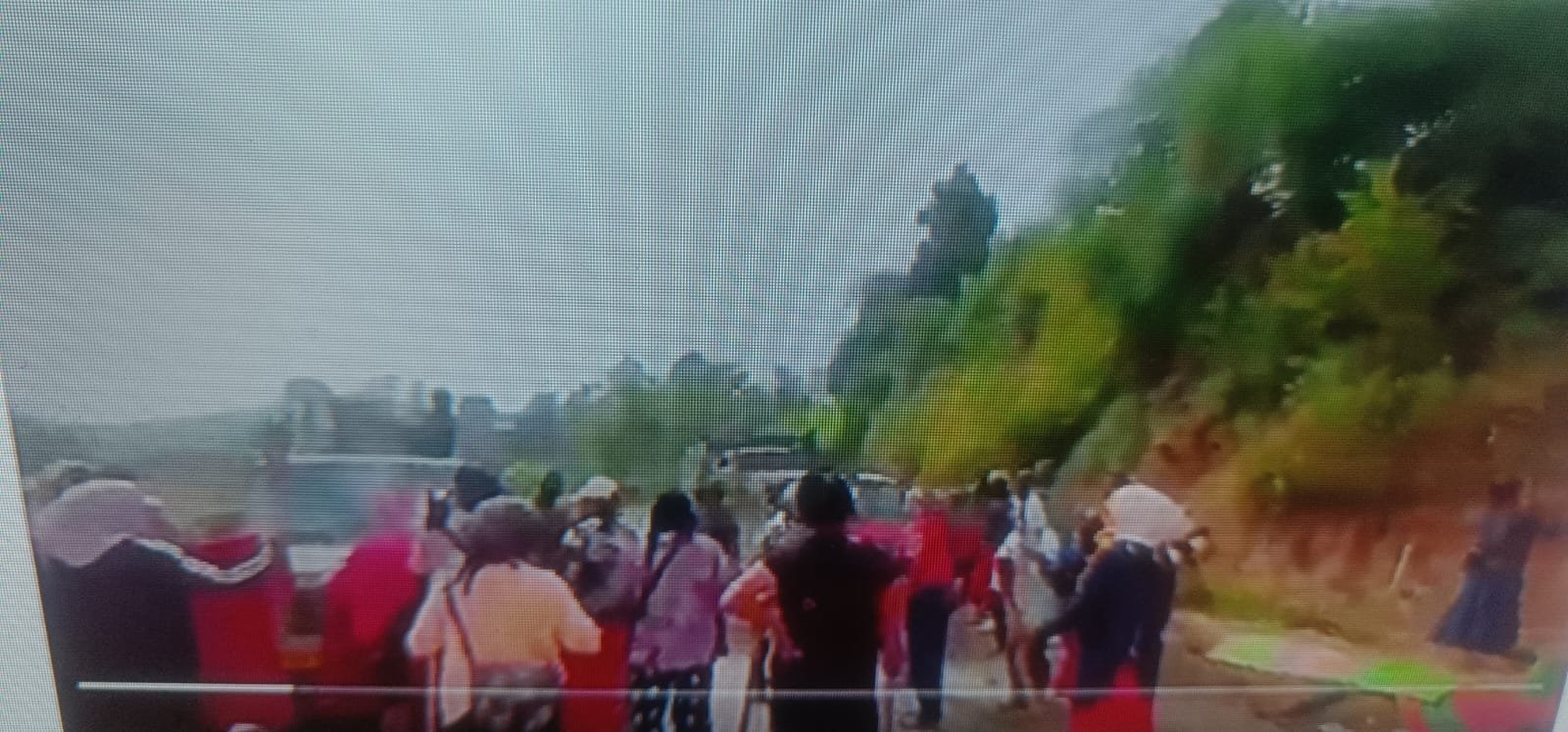
Sunday’s confrontation in Ukhrul is the latest in a series of standoffs where local organizations are using human chains to halt security operations. With ethnic violence escalating, the dispute over village consent threatens to create dangerous blind spots for peacekeepers.
BY PC Bureau
June 7, 2026: In another example of recurring standoffs between the Assam Rifles and Tangkhul Naga women, at least 22 Meira Paibis (women torch-bearers) were injured on Sunday afternoon during a confrontation in the Ukhrul district.
The clash occurred at New Haven (under Shokvao village) and Finch Corner (under Shangshak village) when hundreds of torch -bearing women protesters physically attempted to prevent security forces from maintaining their positions in the area.
While local Naga organizations have framed the incident as legitimate resistance against an “unauthorized” outpost, this recurring tactic of using women as human shields to obstruct security operations is becoming a serious impediment to peace in a region already reeling from ethnic bloodshed.
READ: Ladakh LG to Escort Sacred Buddha Relics Back from Mongolia
READ: 731 Dead Since May 2023: The Grim Reality of Manipur’s Relief Camps
Naga Bodies’ Condemnation
The Working Committee of the Tangkhul Naga Long (TNL) has condemned what it described as the “excessive use of force” by Assam Rifles personnel against Tangkhul Naga civilians during a series of confrontations at New Haven, Finch Corner, and Shokvao village in Manipur’s Ukhrul district on Sunday.
In a statement, the organisation alleged that Assam Rifles personnel acted against women protesters who were staging a peaceful demonstration against the establishment of what they termed an unauthorised military outpost at New Haven, an area claimed to fall under the jurisdiction of Shokvao village.
According to TNL, the women had gathered to demand the withdrawal of security personnel from the site, arguing that the outpost had been established without the consent or approval of the village authorities.
The organisation alleged that tensions escalated when security personnel attempted to disperse the protesters. It claimed that Assam Rifles troops fired multiple rounds from automatic weapons, used tear-gas shells, and carried out baton charges against unarmed women and civilians at different locations.
TNL stated that several people, including elderly women and student activists, sustained injuries during the confrontation. According to the organisation, more than 22 injured women were admitted to Ukhrul District Hospital, with some reportedly in serious condition.
Among its allegations, TNL claimed that Colonel Sunil Singh Lunthi, Commanding Officer of the 40 Assam Rifles Battalion stationed at Shangshak, personally led a baton charge against women protesters at Finch Corner. The organisation described the alleged action as “despicable” and inconsistent with the standards expected of a professional paramilitary force.
Criticising the conduct of the security personnel, TNL argued that the actions attributed to the Assam Rifles were at odds with its long-standing slogan, “Friends of the Hill People.” The organisation further alleged that Sunday’s events reflected a pattern of heavy-handed treatment of civilians and raised concerns about the protection of democratic rights in the region.
“Today’s incident, along with many similar incidents in the past, compels us to ask whether Manipur and India are under military rule. Where are the people’s representatives and the popular government?” the statement said.
The organisation demanded accountability for the alleged violence and called on the authorities to ensure justice for those injured. It also urged the government to respect the rights, dignity, and democratic aspirations of the Tangkhul people while addressing issues related to security deployments in civilian areas.
The incidents have triggered concern across Ukhrul district, with civil society organisations and community leaders closely monitoring developments.
Meanwhile, the Tangkhul Katamnao Long Imphal (TKLI), the apex Tangkhul students’ body based in Imphal, also condemned what it described as the “unprofessional and excessive use of force” by personnel of the 40 Assam Rifles during the confrontation at New Haven on Sunday afternoon.
TKLI expressed solidarity with the injured protesters and called for an impartial inquiry into the circumstances surrounding the incident.
The Katho Katamnao Long (Katho Students’ Union), Katho Long, and the Katho Women Coordination Committee (KWCC) had jointly condemned the establishment of a temporary Assam Rifles outpost at New Haven.
In a press communiqué issued on June 4, the three organizations claimed the outpost was set up without consulting or obtaining permission from the village authority of Shokvao, terming it a violation of the Manipur (Village Authorities in Hill Areas) Act, 1956. They further alleged that despite repeated requests, the 40th Assam Rifles Battalion (Shangshak) refused to withdraw.
On June 6, the groups issued a strong warning demanding the immediate vacation of the outpost and holding the Assam Rifles responsible for any untoward incidents. Local sources emphasized that women were deliberately placed at the forefront “to stop them from carrying out activities within our jurisdiction.” The organizations insist their opposition is not against security arrangements per se, but against what they perceive as a disregard for local consent and village authority.
Manipur love Anarchy…..
Chaos at Shokvao village in Ukhrul district, Manipur, crowds of Tangkhul Naga villagers, many women holding sticks and torches, confronting Assam Rifles security personnel…. pic.twitter.com/WHhTmd6yuO
— CMNS_Media✍🏻 (@1SanatanSatya) June 7, 2026
A Regular Pattern of Obstruction
This is far from an isolated protest. Tangkhul Naga women have repeatedly blocked the Assam Rifles and other security forces from entering or operating in their areas. Road blockades, physical confrontations, and “human chain” tactics have become standard practice whenever security forces attempt to increase their presence in Ukhrul.
Such actions effectively create de facto “no-go zones” for Indian security forces, even as the region descends into chaos.
Security Presence is Critical in the Current Crisis
The need for a robust and impartial security deployment could not be more urgent. In the past few weeks, scores of civilians have been killed in fresh ethnic clashes across the Kangpokpi and Ukhrul districts.
In such an explosive atmosphere—where armed groups from both communities operate and civilians are frequently caught in the crossfire—neutral security forces like the Assam Rifles are essential to prevent further mass killings and displacement.
What the Ukhrul Standoff Reveals
The latest confrontation has once again brought into focus a difficult question facing Manipur’s hill districts: Where does village authority end, and the state’s security responsibilities begin?
At the center of the dispute is the temporary Assam Rifles outpost established at New Haven. Local organizations, including student, women’s, and community bodies, argue that the security post violates the provisions of the Manipur (Village Authorities in Hill Areas) Act, 1956 because it lacked the village authority’s consent. This dispute culminated in Sunday’s clashes when women protesters attempted to prevent security personnel from operating in the area, leaving several injured.
What Does the Village Authorities Act Actually Say?
The Manipur (Village Authorities in Hill Areas) Act, 1956, provides a framework for the administration of villages in the hill districts. It empowers village authorities to oversee matters such as:
- Local governance
- Management of community resources and village lands
- Sanitation
- Certain customary functions
While the Act recognizes the importance of traditional institutions and grants village authorities a significant role in local administration, the legislation does not explicitly confer upon village authorities the power to approve, veto, or regulate the deployment of military, paramilitary, or police forces by the state or the Union government.
Security deployment falls under broader constitutional and statutory powers exercised by the state and central governments, particularly in areas affected by conflict, insurgency, or public disorder. As a result, while village authorities may legitimately object to decisions affecting local land, property, or community interests, the legal basis for preventing security forces from establishing operational positions remains open to question.
This dispute is unfolding against a backdrop of renewed violence in parts of Manipur’s hill districts. Recent weeks have witnessed deadly clashes, village attacks, and heightened tensions between communities in the Kangpokpi-Ukhrul region. In such circumstances, security agencies argue that deployment decisions are driven by operational assessments intended to prevent further violence, protect civilians, and maintain law and order.