BY PC Bureau
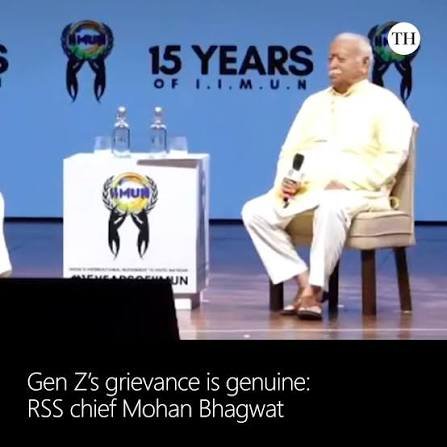
New Delhi, August 6: RSS chief Mohan Bhagwat on Thursday struck a markedly different tone from several BJP leaders who had branded student protesters as “anti-national” during the recent nationwide agitation over the alleged NEET paper leak. Calling Generation Z “apne log” (our own people), Bhagwat urged society and governments to engage with young people through dialogue rather than suspicion, saying their concerns deserve to be heard in a democracy.
His remarks have drawn attention because they stand in sharp contrast to statements made during the month-long protests led by the Cockroach Janta Party (CJP) at Delhi’s Jantar Mantar. While BJP Bihar president Nitin Nabin had described the protesters as “anti-national” and members of the “tukde tukde gang,” similar sentiments were echoed by several BJP ministers, MPs and party spokespersons. A section of television news channels and commentators also projected the movement as politically motivated rather than a genuine expression of student anger over examination irregularities.
Against that backdrop, Bhagwat’s comments represented a significantly more conciliatory approach from the ideological head of the Rashtriya Swayamsevak Sangh (RSS).
Speaking at the youth conference titled “The Role of Youth in Uniting the World, the Indian Way” in Mumbai, Bhagwat said:
“If the Gen Z is agitating, they certainly aren’t anti-nationals; they are our own people, our next generation.”
VIDEO | Mumbai: On being asked about protests and concerns that protesters may be labelled “anti-national”, RSS chief Mohan Bhagwat, while addressing Gen Z and Gen Alpha, says, “…I want to make it clear that if Gen Z engages in any agitation, they are not anti-national. They… pic.twitter.com/XWU9coSnTg
— Press Trust of India (@PTI_News) August 6, 2026
He said the first response to youth unrest should be understanding rather than condemnation.
“With this sense of belonging, along with dialogue, I said a sense of belonging is needed. A relationship is needed. That is our relationship. Its recognition is needed.”
A Different Approach to Youth
Bhagwat argued that young Indians should not be viewed with mistrust simply because they question authority or organise protests.
“I won’t say that Gen Z should not protest, but in a democracy there are ways of going about it,” he said.
Rather than dismissing demonstrations as disruptive, he described protest itself as a democratic instrument.
“Protest is also a form of dialogue. We are sitting here and talking; if things are understood this way, it’s fine. Otherwise there will be a debate between us. If you are in some difficulty, or I am in some difficulty, and it is in your hands or my hands to resolve it, and it isn’t happening, then I will shout.”
The statement was interpreted by many as an acknowledgement that public protest becomes legitimate when institutional dialogue breaks down.
“I Trust Gen Z”
Bhagwat also offered an unusually strong endorsement of India’s younger generation.
“I feel that the new generation—Gen Z and Gen Alpha—is more honest than our current generation, and they genuinely respond to appeals regarding patriotism and service.”
He went even further by declaring:
“If you ask me to trust blindly, I’ll trust Gen Z.”
The comments stood in contrast to narratives that frequently portray student movements as being manipulated by political interests or anti-national elements.
Young India Wants Answers
Reflecting on generational change, Bhagwat said today’s youth are fundamentally different from earlier generations because they seek reason rather than unquestioning obedience.
“When we were at the age of Gen Z, the nature of our generation was such that we would accept what the elders said. We wouldn’t question. Now Gen Z and Gen Alpha ask questions; they want logical answers.”
His remarks suggested that institutions and political leaders must adapt to a generation that expects transparency, accountability and reasoned explanations.
Admission That Systems Can Fail
Asked whether timely dialogue could have prevented the recent confrontation between students and authorities, Bhagwat acknowledged that failures within institutions often trigger public unrest.
“When something that shouldn’t happen does happen, then there must be a mistake somewhere; that’s why it happens.”
He added:
“Whose it is, what it is, that’s a different matter. But there has been a deficiency. It will be fixed, it should be done—that’s what I believe.”
Though he did not directly refer to the NEET controversy, his remarks were widely interpreted as recognising that governments and institutions must examine their own shortcomings instead of merely blaming protesters.
On Police Action
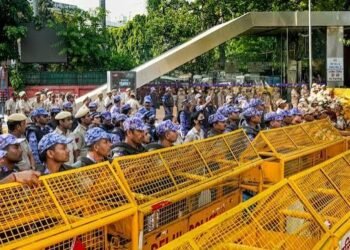
Bhagwat refrained from commenting directly on the police use of pellet guns, tear gas and lathi-charge against students at Delhi’s Jantar Mantar on July 20, saying he lacked complete information.
“I need to look into the reasons behind this situation; I don’t have the complete information yet.”
He continued:
“I will have to examine the details to determine exactly where things went wrong. I cannot say right now what happened or how it happened—even I don’t know what is right or wrong in this matter.”
READ: Ladakh Celebrates 7 Years as UT with Grand Festivities
Background of the Protests
The RSS chief’s remarks come less than two weeks after one of the country’s largest student agitations in recent years.
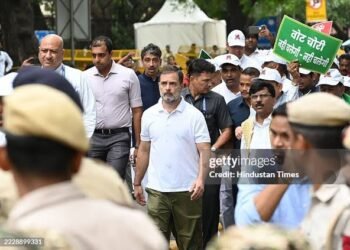
The Cockroach Janta Party-led protests against the alleged NEET paper leak continued for over a month, drawing students from across India to Delhi’s Jantar Mantar. The movement demanded accountability for examination irregularities, compensation for affected students and systemic reforms in recruitment and entrance examinations.
The agitation intensified after police action against demonstrators attempting to march to Parliament on July 20. The protests eventually culminated in the resignation of Union Education Minister Dharmendra Pradhan following sustained public and political pressure.
Throughout the agitation, many ruling party leaders maintained that the protests had been hijacked by political forces. Critics, however, argued that branding young demonstrators as “anti-national” ignored the genuine anxieties of students whose careers had been affected by repeated examination controversies.
Political Significance
Bhagwat’s intervention is politically significant because it offers an alternative framework for engaging with India’s youngest voters. More than half of India’s 1.4 billion population is below the age of 35, and Generation Z is expected to emerge as one of the most influential voting blocs in the 2029 general election.
By describing protesting youth as “our own people” rather than adversaries, Bhagwat underscored the importance of dialogue, empathy and democratic engagement.
His remarks have also reignited debate within political circles over whether governments should respond to youth movements through persuasion and institutional reform rather than confrontation and labels.
Whether Bhagwat’s message signals a broader shift within the Sangh Parivar or remains an individual intervention, it has introduced a distinctly different voice into the ongoing conversation on youth dissent, democratic protest and the relationship between the state and India’s next generation.