The FCRA Amendment Bill has sparked debate in India and abroad, with church bodies seeking safeguards for their institutions while the Centre maintains that the legislation is intended to strengthen regulatory oversight and not target any religious community.
BY PC Bureau
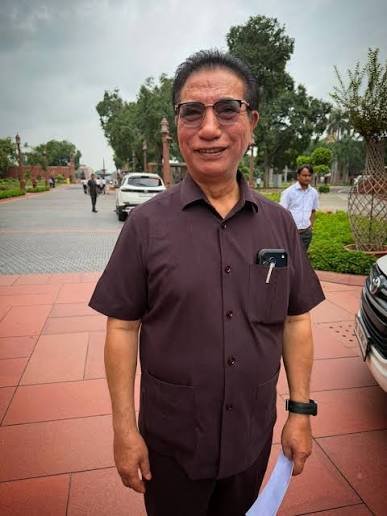
New Delhi, August 6: Amid mounting concern among Christian organisations over the proposed Foreign Contribution (Regulation) Amendment Bill, 2026, Mizoram Chief Minister Lalduhoma on Thursday led a high-level delegation to meet Union Home Minister Amit Shah, seeking safeguards against provisions that church groups fear could affect properties built with foreign contributions over several decades.
The delegation, which included Rev. John Raldosanga, Chairman of the Mizoram Kohhran Hruaitu Committee (MKHC), and Rev. Lalhmangaiha, General Secretary of the Council of Churches in Mizoram (CCM), submitted a joint memorandum outlining the concerns of churches and Christian institutions regarding the proposed legislation.
Following the meeting, Lalduhoma said Shah had given a categorical assurance that the proposed law would not contain any retrospective provision, addressing what had emerged as the biggest point of contention.
“The Home Minister assured me that the retrospective clause will not be there,” Lalduhoma told reporters.
He added that Shah indicated the government is expected to introduce the Bill in the Lok Sabha on August 12, after incorporating the proposed changes.
Relief for Christian Organisations
The assurance is likely to bring significant relief to churches and faith-based organisations across the country, particularly in the Northeast and Kerala, where thousands of educational institutions, hospitals, orphanages and social service organisations have historically received foreign contributions under the Foreign Contribution (Regulation) Act (FCRA).
Many church leaders had expressed apprehension that the proposed amendments could enable the government to assume control over assets created through foreign donations if an organisation’s FCRA registration had lapsed or was not renewed.
The meeting with the Mizoram delegation comes shortly after representatives of the Catholic Bishops’ Conference of India (CBCI) also met Amit Shah over the issue. Following that interaction, the Ministry of Home Affairs similarly assured church leaders that the law would not operate retrospectively.
VIDEO | Delhi: On FCRA (amendment) bill, Mizoram CM Lalduhoma says, “We raised six issues with him. Out of those, he (Amit Shah) assured me that this bill will not have retrospective effect. As for the remaining points we raised, he said he would respond to them in writing and… pic.twitter.com/unWOJwoW9B
— Press Trust of India (@PTI_News) August 6, 2026
What Triggered the Controversy?
The controversy centred on a new chapter proposed in the amendment Bill dealing with organisations whose FCRA registration ceases to exist.
Under the proposed Section 14B, an FCRA registration would be treated as having “ceased” if an organisation failed to apply for renewal, its renewal application was rejected, or its registration expired.
Section 16A proposed that once an FCRA certificate ceased, foreign contributions and assets created from those contributions would vest in an authority designated by the Central Government. If the organisation subsequently secured a fresh or renewed registration, the assets could be restored. Otherwise, the designated authority could permanently retain or transfer the assets in accordance with law.
The provision that generated the greatest concern was Section 16B, which proposed extending the new framework to assets that had already vested under the earlier law before the amendment came into force.
Church groups argued that, when read together with Sections 14B and 16A, the clause could potentially affect organisations whose FCRA registrations had expired years earlier, even if they had since stopped receiving foreign funds and were operating entirely on domestic donations.
The government has maintained that such an interpretation was never the intention of the legislation and has now indicated that the retrospective element will be removed.
READ: Bhagwat’s Message on Gen Z Contrasts BJP’s ‘Anti-National’ Narrative
Political Significance
The issue has assumed considerable political significance for the BJP as it seeks to strengthen its outreach among Christian communities, particularly in Kerala and the Northeastern states.
Churches remain among the largest providers of education, healthcare and social welfare services in several Christian-majority regions, with many institutions established decades ago using legally received foreign contributions under the FCRA framework.
Concerns that these assets could come under government control had triggered widespread anxiety among church leaders, prompting multiple delegations to seek clarification from the Centre.
International Attention
The proposed legislation has also drawn international attention.
U.S. Republican Congressman Riley Moore recently criticised the Bill, calling it “a clear attack against Christians.” In posts on social media, Moore alleged that the proposed amendments could allow the Indian government to take over churches and religious charities, warning that the legislation, if enacted in its original form, could adversely affect India-U.S. relations.
The Indian government has rejected such interpretations, maintaining that the Bill is intended to strengthen regulatory oversight of foreign-funded organisations and not to target any religious community.
With the government now indicating that the retrospective provision will be dropped, Christian organisations are expected to closely watch the final text of the Bill when it is introduced in Parliament next week.
While the Home Minister’s assurance has eased immediate concerns, church leaders said they would continue examining the proposed legislation to ensure that institutions built over decades through legitimate foreign contributions remain fully protected under the amended law.