BY PC Bureau
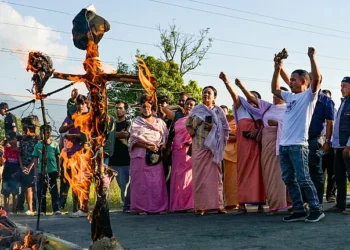
April 17, 2026 — Fresh violence and widespread protests continued to grip Manipur on Thursday evening following the April 7 mortar or rocket attack in Bishnupur district that claimed the lives of two young children of a BSF jawan, as demonstrators defied prohibitory orders and raised strong slogans demanding the removal of central security forces from the Imphal Valley.
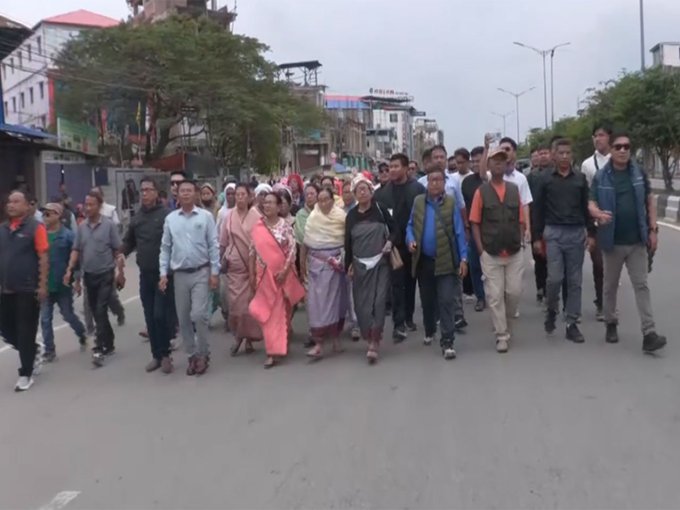
On the evening of April 16, thousands of protesters, including large numbers of women from Meira Paibis groups, organised a massive torch rally (Meira rally) that began around 7 pm at Singjamei in Imphal West district. Defying curfew and prohibitory orders, the procession marched over two kilometres toward Chingamathak, an area near key government installations such as the Chief Minister’s residence and police headquarters.
READ: Ladakh’s Apricot Exports Mark Big Global Boost
READ: Iran Rejects Trump’s Uranium Transfer Claim
Protesters raised emotional slogans, including “Go back Central Force” and “Long live Manipur,” while demanding the immediate arrest of those responsible for the Bishnupur blast. Many expressed frustration over perceived security lapses and the conduct of central forces in the valley. The rally, largely led by Meitei civil society organisations, reflected a broader and sustained campaign in recent weeks calling for the withdrawal or replacement of central paramilitary forces (such as CRPF and BSF) with state police personnel in valley areas.
As the crowd grew and refused to disperse despite appeals from security personnel, the situation escalated. Forces resorted to baton charges and multiple rounds of tear gas to control the gathering. In response, some protesters allegedly pelted stones, leading to clashes. At least five individuals suffered minor injuries and breathing difficulties from tear gas exposure and were hospitalised. Reports also emerged of vehicles being damaged or set ablaze amid the chaos.
Protests in #Manipur turned violent last night, with clashes between demonstrators and security forces.
Protesters took to the streets to protest the recent explosion that killed two children. pic.twitter.com/hpVt5fpbgB
— Siraj Noorani (@sirajnoorani) April 17, 2026
Sustained Campaign Against Central Forces
Over the past weeks, Meitei civil society organisations and protesters have launched a sustained agitation against the presence of central forces in the Imphal Valley. They allege that these forces have failed to effectively prevent attacks originating from adjacent hill areas and, in some instances, have acted in ways that have alienated local populations—particularly after CRPF firing during earlier protests near the Bishnupur incident site, which resulted in civilian casualties.
In response to these demands, the Manipur government (under Chief Minister Yumnam Khemchand Singh) has indicated it is considering a gradual replacement of some central forces in peripheral valley areas with state security personnel. This move has drawn sharp criticism from Kuki-Zo civil society groups, who argue that central forces provide necessary neutrality and that any withdrawal could jeopardise peace in buffer and hill zones. The contrasting positions have further highlighted the deep ethnic and perceptual divides in the state.
Protests have persisted across valley districts for over a week, with repeated defiance of curfews, road blockades, and occasional arson incidents. The latest torch rally marks a notable escalation, as demands now explicitly include sending back central forces alongside calls for accountability in the children’s deaths.
Night after night, protests continue in #Manipur. How long are the #Meiteis expected to tolerate the rocket shelling that kills children even in their homes while sleeping?
When will the Govt act?#KukiBabyKillers#KukiEngineeredManipurViolence@PMOIndia… https://t.co/hfDlhS8a7X pic.twitter.com/uhrjgE7SeZ
— BeeThangjam (@beethangjam) April 16, 2026
Fragile Peace Under Strain
The developments have once again laid bare the fragile security situation in Manipur, where ethnic violence between Meitei and Kuki-Zo communities has simmered since the outbreak in May 2023, resulting in significant loss of life and displacement. While efforts at reconciliation and dialogue continue under the current administration, incidents like the April 7 shelling—combined with competing narratives around responsibility and security failures—risk reigniting broader unrest.
Civil society groups, opposition leaders, and affected families continue to press for transparent investigations, improved border security, and restoration of public trust. The NIA probe is expected to provide clarity on the perpetrators, but much will depend on whether the state can address both immediate justice concerns and the deeper grievances over the role and deployment of security forces.
The tragic incident in Tronglaobi Awang Leikai near Moirang saw a military-grade projectile strike the residence of Oinam Mangalngamba, a Border Security Force (BSF) personnel posted in Bihar. The blast killed his five-year-old son and five-month-old daughter, while their mother sustained critical injuries. The attack has fueled deep anger, particularly among Meitei communities in the valley, with protests highlighting both demands for swift justice against the perpetrators and growing resentment toward central forces.
Security agencies recovered a launcher from the area and arrested suspects allegedly linked to the United Kuki National Army (UKNA), though the group has denied responsibility. The National Investigation Agency (NIA) is now probing the case on the orders of the state government.
As of now, authorities have increased deployments in sensitive areas and imposed stricter restrictions, yet the situation remains highly volatile. The coming days will be critical in determining whether the unrest can be contained or if it spirals further amid heightened emotions and polarised demands.