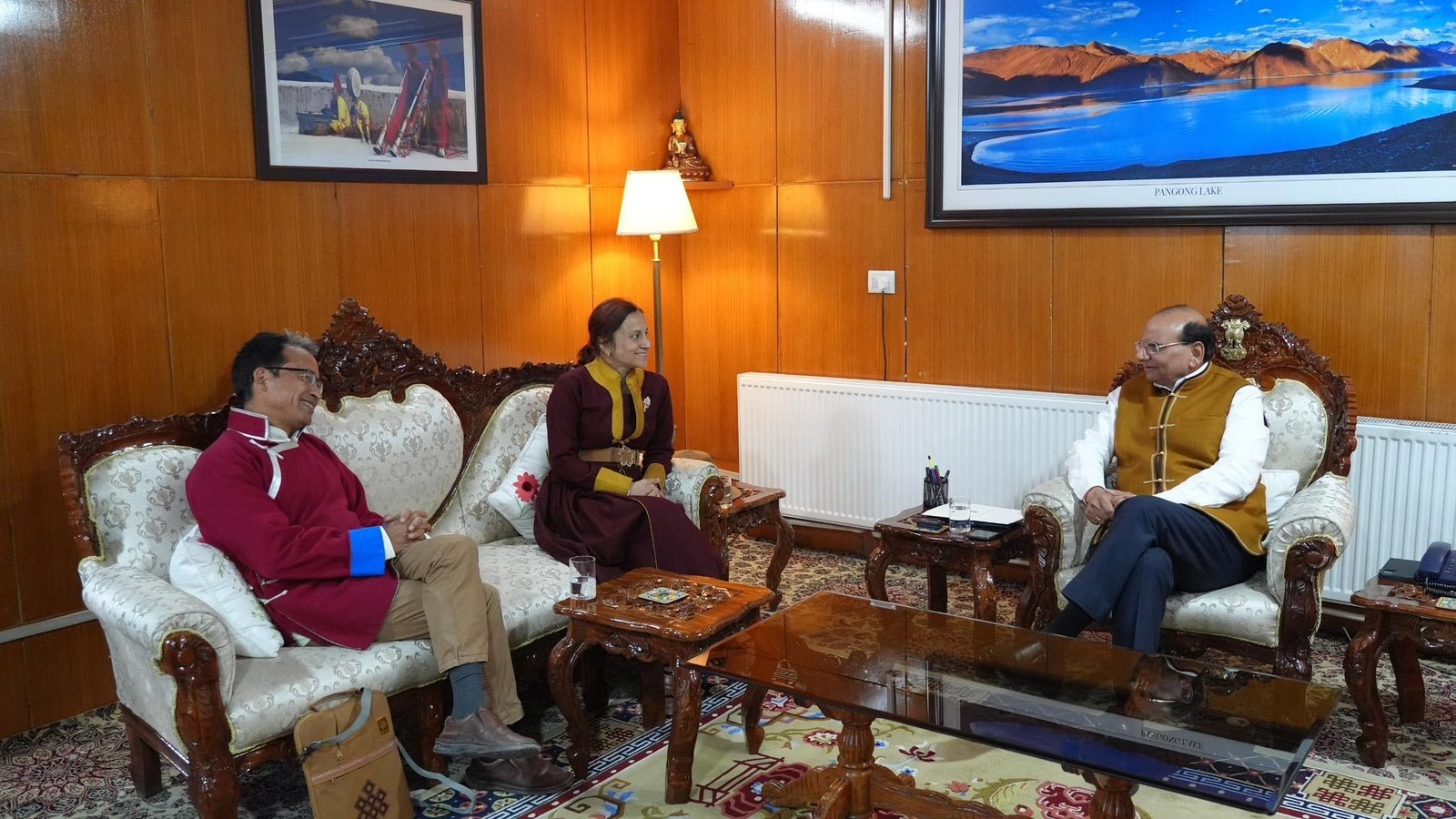
Wangchuk said his meeting with the Ladakh Lieutenant Governor was cordial and friendly, contradicting the tone of Saxena’s later public remarks on social media.
By PC Bureau
NEW DELHI: Climate activist and education reformer Sonam Wangchuk on Thursday strongly rejected Ladakh Lieutenant Governor VK Saxena’s claim that he was “unsure” about the origins and motivations of the online Cockroach Janta Party (CJP) movement, asserting instead that he proudly considers himself an “honorary cockroach.”
The remarks came days after Saxena shared a post on X following a meeting with Wangchuk, his wife, and Himalayan Institute of Alternatives Ladakh (HIAL) co-founder Gitanjali J Angmo.
In the post, the Ladakh LG claimed he had cautioned Wangchuk against “weaving a misleading and provocative narrative” and stated that the activist had acknowledged that comparing Ladakh with Manipur was an “error of judgment.” Saxena further said Wangchuk appeared unsure about the origins of the Cockroach Janta Party movement and had agreed to revisit his stand after examining its background and alleged motivations.
However, Wangchuk sharply disputed the LG’s version of events, describing the meeting as cordial and friendly and saying its tone was completely different from the public statement later issued on social media.
“The LG Ladakh invited us for a meeting over a cup of tea. We spent nearly an hour in a cordial and friendly atmosphere discussing his initiatives, our work, and possibilities of collaboration,” Wangchuk told PTI.
According to Wangchuk, the discussion did touch upon his recent comments comparing Ladakh with Manipur and his support for the CJP movement, but there was no warning, reprimand, or confrontation during the interaction.
MY CLARIFICATION…
to statements made by Lieutenant Governor of Ladakh regarding his warning to me to refrain from making comments on #CockroachJantaParty
The meeting and the LG’s tweet happened on 26th evening, yet I avoided reacting to the post that evening. But next morning… pic.twitter.com/dMiAco5lHy— Sonam Wangchuk (@Wangchuk66) May 28, 2026
“One hour after we left, we were surprised — and not pleasantly — to see that he had tweeted in a tone as if he had censured us or cautioned us,” he said.
The Magsaysay Award winner suggested that the public messaging may have been politically motivated and aimed at satisfying expectations from higher authorities.
“I thought this was maybe to please some boss somewhere in Delhi who had instructed him to call me up and say such things, but the meeting was none like this — only the tweet was,” he remarked.
Wangchuk said he intentionally refrained from reacting immediately because he viewed the episode as “childish behaviour,” choosing instead to respond only after the remarks began appearing widely in media reports.
He also strongly rejected Saxena’s assertion that he had described his comparison between Ladakh and Manipur as an “error of judgment.”
“I don’t think it is an error of my judgment. I still totally stand by it,” Wangchuk said, clarifying that he had merely suggested the comparison may have been “avoidable” in the prevailing political climate.
“Avoidable is very different from an error of judgment,” he added.
The activist also denied claims that he had distanced himself from the Cockroach Janta Party movement or expressed doubts about its origins.
According to Wangchuk, the LG had alleged during the meeting that the movement was influenced or funded by foreign powers, including organisations linked to George Soros, as well as entities from Pakistan and Bangladesh. Wangchuk said he neither endorsed nor accepted those allegations.
“I never said I was unsure of the origins and would revisit my stand that way,” he asserted.
Recalling the conversation, Wangchuk said he found the allegations ironic given his own past experiences under government scrutiny.
“Inside me, I was laughing at this story that he was telling the person who was jailed under NSA with exactly such stories. You are supplying the same story to the person who was subjected to these,” he said.
Wangchuk argued that governments should not feel threatened by satirical or creative forms of protest and should instead engage with the underlying public concerns being raised.
“I’m a huge admirer of Cockroach Party, and I remain the same. I stand by what I said — that I am an honorary cockroach and I support it,” he said.
At the same time, Wangchuk clarified that he had merely expressed openness to examining any evidence placed before him regarding the origins or funding of the organisation, stressing that willingness to review information should not be interpreted as withdrawal of support.
He also appealed to CJP founder Abhijeet Dipke — whom he referred to as the “cockroach-in-chief” — to publicly release audience analytics and financial details to address allegations surrounding the movement.
Dipke, whose satirical Cockroach Janta Party social media campaign has evolved into a wider online protest movement, had earlier rejected allegations that the platform enjoyed substantial foreign backing.
In a series of posts on X, Dipke shared analytics data claiming that more than 94 per cent of the movement’s audience originated from India, dismissing allegations that the campaign was dominated by Pakistani or foreign users.
READ: Iran Retaliate After Fresh US Strikes Near Strait of Hormuz
Wangchuk said such data should be made public to settle the controversy.
“If it is an Indian youth initiative with foreign following, I become an even bigger admirer and supporter,” he said.
“Even if 70 per cent are from India and the rest are spread across several countries, it makes India a vishvaguru at least in creative protests,” he added.
In his earlier post, Saxena had stressed the importance of maintaining “an air of positivity” in Ladakh, warning that prolonged protests and politically charged campaigns could adversely affect tourism and economic activity in the Union Territory.
The controversy comes shortly after talks were held between Ladakh representatives and a Ministry of Home Affairs subcommittee regarding long-standing demands related to constitutional safeguards, statehood, and protection of land and jobs.
In previous interviews, Wangchuk had warned that Ladakh risked heading toward divisions similar to those witnessed in Manipur if grievances remained unresolved, though he later acknowledged that recent talks had helped improve the atmosphere.