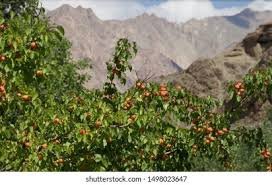
The deal marks a major jump from just 1,500 kg exported over the past two years, signalling a breakthrough for local farmers.
BY PC Bureau
April 16, 2026 — In a major push to boost Ladakh’s horticulture sector, the Union Territory administration has signed a landmark Memorandum of Understanding (MoU) with Lulu Group International to export 1,000 metric tonnes of high-quality apricots to global markets this season.
The agreement—facilitated by APEDA and the Ministry of Food Processing Industries—was signed in Leh in the presence of Lieutenant Governor Vinai Kumar Saxena. Officials described the deal as a transformative leap, especially when compared to the modest 1,500 kg exported over the past two years combined.
At the heart of the export push are Ladakh’s prized, GI-tagged apricot varieties—“Raktsey Karpo” and “Halman.”
What are GI-tagged apricots?
Geographical Indication (GI) tagging recognises products that originate from a specific region and possess unique qualities linked to that geography. Ladakh’s apricots, grown in high-altitude conditions with distinct soil and climate, are known for their exceptional sweetness, rich flavour, and nutritional value. The GI tag helps protect their identity while enhancing market value globally.
READ: Amit Shah Assures South: No Loss of Seats in Delimitation
READ: Pope Slams ‘Tyrants’ Spending Billions on Driving Wars After Tussle with Trump
Under the MoU, Lulu Group will procure apricots directly from local farmers and manage the entire value chain—from harvesting and processing to packaging, logistics, and international marketing. This end-to-end system is expected to significantly reduce post-harvest losses, a long-standing challenge due to limited infrastructure and manual handling.
Speaking on the initiative, LG Saxena said the agreement would unlock Ladakh’s untapped agricultural potential while ensuring better returns for farmers. He highlighted that the move would not only improve incomes but also elevate Ladakh’s global brand as a source of premium produce.
The administration is also working on broader export strategies.
Ladakh’s Apple Export Plans
Saxena revealed that discussions are underway with international buyers to export Ladakhi apples, signalling a wider effort to position the region as a hub for high-quality fruits. Plans are also in place to develop modern processing units locally to minimise wastage and add value within the region.
In addition, the UT administration is preparing to launch a dedicated e-commerce platform—similar to major marketplaces—to enable farmers to directly access domestic and global buyers.
Officials say the apricot deal could be a game-changer for Ladakh’s economy. By shifting post-harvest responsibilities to a global player, farmers can focus on cultivation while securing stable and remunerative prices. The initiative is also expected to encourage expansion of orchards and adoption of better farming practices.
With this agreement, Ladakh’s signature apricots are set to enter international markets at scale—marking a significant step in bringing the region’s unique agricultural heritage to the global stage.