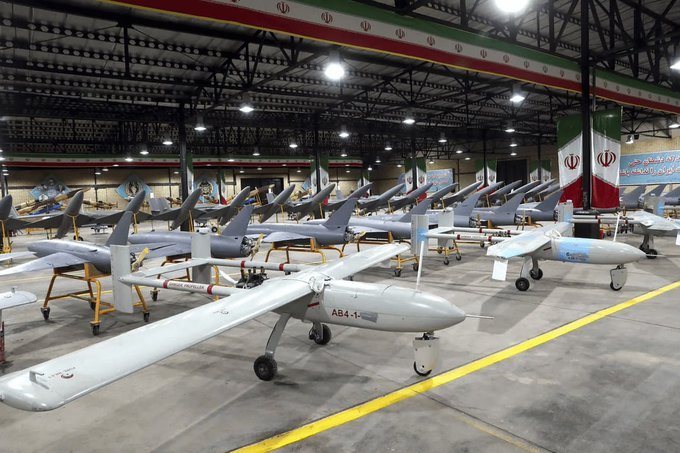
The surge in Iran’s drone capabilities has “disrupted enemy defense equations,” with officials claiming improved precision in missile targeting, as reported by Fars News Agency.
BY C Bureau
Iran has sharply ramped up its drone production since the outbreak of the US–Israeli war in June 2025.
Deputy Chief of Staff of the Iranian Armed Forces, Brigadier General Alireza Sheikh, stated on Thursday that Iran has significantly expanded its drone capabilities, according to a report by Fars News Agency. He said the country increased the production rate of attack drones tenfold over a seven-month period following the conflict.
Sheikh added that Iran’s advancements in drone technology have altered the “enemy’s defense equations,” claiming that the improvements have enabled pinpoint missile strikes to hit targets with high accuracy.
In recent years, Iranian military experts and technicians have made notable progress in developing a wide range of indigenous defense equipment, contributing to what officials describe as growing self-sufficiency in the weapons sector. Authorities have repeatedly emphasized that Iran will continue to strengthen its military capabilities—including missile and drone programs—while maintaining that these efforts are purely defensive and not open to negotiation.
The senior commander also said the Iranian Armed Forces are preparing for future contingencies by drawing lessons from past conflicts. Highlighting what he described as “very extensive” strategic achievements, Sheikh stated that Iran has effectively created “a new literature” in the field of defense and security.
READ: Iran Rejects Trump’s Uranium Transfer Claim
The remarks come amid heightened regional tensions and an ongoing arms buildup across West Asia, where drones have increasingly become a central element of modern warfare. Military analysts note that unmanned systems are being used not only for surveillance but also for precision strikes, significantly reshaping battlefield dynamics.
Iran’s expanding drone programme has drawn close attention from Western and regional powers, many of whom view it as a key component of Tehran’s deterrence strategy. At the same time, Iranian officials continue to frame these developments as essential for national defense, particularly in light of evolving security challenges and past military confrontations.