For voters who have already missed one election because their names were excluded, a hearing one day before another poll may come too late. The controversy highlights the gap between a legal remedy and a remedy that arrives in time to matter.
BY PC Bureau
NEW DELHI, September 28: “These are only by-elections, that’s all.”
The remark by Chief Justice of India Surya Kant on Monday may have been made in the narrow context of the Supreme Court’s listing schedule. But in the context of West Bengal’s Special Intensive Revision of electoral rolls, it raises a larger question: what does a remedy mean if a voter cannot obtain it before the next election at which the voter is entitled to cast a ballot?
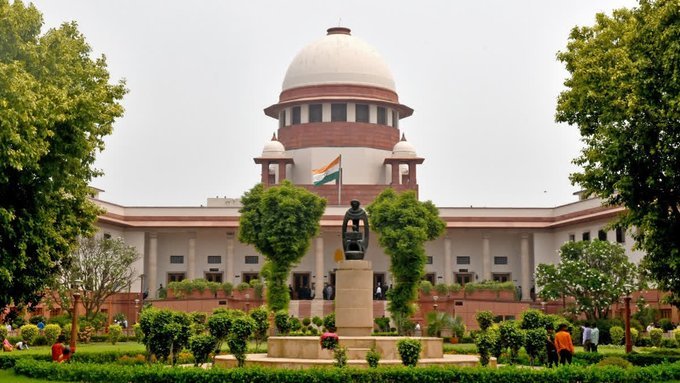
The Supreme Court on Monday was asked to urgently hear a pending SIR matter concerning appeals against voter exclusions before polling in the Nandigram and Rejinagar Assembly constituencies on October 6. The counsel told a Bench headed by CJI Surya Kant, with Justices Joymalya Bagchi and V. Mohana, that more than 18,000 appeals were pending and that some of the affected voters had already been unable to vote in the earlier Assembly election.
The matter had earlier been expected to come up on September 29 but was showing on the cause list for October 5 — one day before polling. The Bench declined to advance the hearing and said the case would remain listed for October 5.
That sequencing is the real issue.
The Court was not being asked, at least in the reported exchange, to decide thousands of individual appeals itself or to order that every excluded person be restored to the electoral roll without scrutiny. The request was for an earlier hearing of a case concerning the functioning and pendency of the appellate mechanism created in the wake of the SIR exercise.
The distinction matters because the SIR process itself was structured around the availability of a remedy for people whose names were excluded.
A by-election is still an election
There is, of course, a procedural difference between a general Assembly election and a by-election. A by-election fills a vacancy in a particular constituency; it does not determine the composition of the entire House.
But for a voter whose name has been removed from the electoral roll, the immediate constitutional question is much simpler: is that person entitled to vote in that constituency on polling day?
Article 326 provides for elections to the Lok Sabha and State Legislative Assemblies on the basis of adult suffrage, subject to statutory qualifications and disqualifications. The Representation of the People Act and election rules provide the machinery through which that entitlement is exercised.
Nothing in the constitutional scheme suggests that a citizen’s franchise becomes intrinsically less significant because the election is held to fill a vacancy rather than to constitute the entire House.
That does not mean every voter excluded from the roll has a valid claim. It means that the statutory and judicial mechanisms for determining those claims need to operate with sufficient speed for the remedy to have practical value.
The 18,000 figure is only one part of a much larger problem
The number cited in Monday’s hearing — more than 18,000 pending appeals — should not be presented as the total SIR backlog in West Bengal.
The statewide numbers are vastly larger.
According to an Election Commission affidavit reported by LiveLaw, 38,31,429 appeals had been filed before SIR appellate tribunals. Of these, 22,21,118 were appeals by people whose names had been deleted or excluded, while about 16.10 lakh challenged inclusions in the electoral roll.
A subsequent ECI disclosure put the number of appeals still pending at more than 37 lakh, with only about 1.26 lakh disposed of at that stage.
The backlog is particularly significant because the appeals are not merely administrative representations. They are part of the appellate mechanism associated with the SIR process and were being heard by tribunals established pursuant to directions of the Supreme Court.
The Court has itself been monitoring the functioning of these tribunals. In August, it sought detailed data from the ECI on pending appeals and was told that the overwhelming majority remained undecided.
The significance of the earlier election
The counsel’s submission on Monday contained another important element: the affected voters had already missed the earlier Assembly election.
That changes the character of the problem.
For someone whose name was wrongly excluded and whose appeal remained undecided through one election, a second unresolved election is not simply another period of waiting. It potentially means the person is prevented from voting in two successive electoral events while the legal remedy remains pending.
The Supreme Court has previously said that removal from the electoral roll does not, by itself, mean loss of citizenship. In the SIR proceedings, it has also recognised the ECI’s authority to conduct the revision while setting out the limits of the Commission’s role in examining citizenship-related questions.
That makes the appellate stage particularly important. An exclusion from the roll may be lawful or unlawful; the point of an appeal is to determine which.
A remedy that arrives after polling
This is where the October 5 listing presents an obvious practical difficulty.
If a matter concerning excluded voters is heard on October 5 and polling takes place on October 6, the Court could still issue directions. But the available time to implement any order affecting electoral rolls would be extremely limited.
A hearing before polling and a hearing immediately before polling are therefore not necessarily equivalent in practical terms.
That is not an argument that courts must alter their schedules every time an election approaches. Nor does it establish that the Supreme Court was legally required to advance this particular case.
It does, however, raise a legitimate institutional question: when an electoral remedy is time-sensitive, should the calendar of the court be considered separately from the calendar of the election?
That question becomes more significant when the affected people have already missed one election.
The Court’s own record makes the timing harder to ignore
The Monday development comes against a background in which the Supreme Court has repeatedly been confronted with the enormous scale of the SIR appellate backlog.
On August 25, the Court sought data on pending appeals after being told that nearly 38 lakh appeals were before the tribunals. At that hearing, the Court was also told that appeals against exclusion needed priority.
The data subsequently furnished to the Court showed a striking asymmetry in the cases already decided.
A Right to Information response cited by Bar & Bench showed that, out of the appeals decided by August 7, 75,443 resulted in voters being restored to the electoral roll, while 7,339 resulted in exclusion. In other words, more than 91 per cent of the decided appeals resulted in inclusion. Those voters had not been able to vote in the Assembly election while their names were absent from the rolls.
That figure does not prove that all excluded voters were wrongly removed. Nor does it establish that the pending appeals will produce the same result.
But it does establish something important: the appellate process has already resulted in tens of thousands of exclusions being reversed.
That makes timely disposal more than a bureaucratic exercise.
The problem is not whether every exclusion is valid
There is a danger in turning this issue into a simple contest between “genuine voters” and “illegal voters”.
The electoral roll has to contain eligible voters and exclude those who do not meet the statutory conditions. The ECI has the legal responsibility to maintain the rolls, and tribunals must examine individual cases on evidence.
But the converse is equally important: an eligible voter wrongly excluded has a legally recognised interest in having that mistake corrected.
The existence of an appellate tribunal is supposed to provide that safeguard.
The question is therefore not whether every appeal deserves to succeed. It is whether an appeal can be decided quickly enough to matter.
If the answer is no, the appellate mechanism risks becoming a remedy that operates retrospectively — restoring a name after the election in which the citizen sought to vote has already passed.
‘Only by-elections’ is the wrong measure of the individual grievance
The Supreme Court’s reported remark should also be understood in context. The Bench did not say that the franchise itself was legally unimportant. It declined to advance a hearing and retained the October 5 listing.
But judicial language matters, particularly in an election case involving citizens who say they have already lost one opportunity to vote.
From the institutional perspective, Nandigram and Rejinagar may indeed be only two by-elections among India’s many electoral contests.
From the perspective of an individual voter whose name has disappeared from the roll, however, the election is not “only” anything.
It is the election in which that person either votes or does not.
READ: Campus Unrest: LPU Suspends Classes, Defers Mid-Term Exams
The larger SIR question
The West Bengal SIR controversy has increasingly moved beyond the initial question of how electoral rolls should be revised. It now includes a second question: how effectively can excluded citizens obtain a remedy?
The Supreme Court has upheld the ECI’s authority to conduct SIR while also supervising aspects of the process and the appellate machinery. It has sought data from the Commission, examined the functioning of tribunals and been presented with evidence showing a huge backlog.
The Court has also declined, at an earlier stage, to prescribe a rigid timeline for disposal by the appellate tribunals.
That approach may reflect the practical difficulty of judicially managing millions of individual cases.
But elections impose their own deadline.
A tribunal can decide an appeal after three months, six months or a year. A polling day cannot be postponed indefinitely while a voter waits for that decision.
That is the central tension exposed by Monday’s hearing.
The issue is not whether the Supreme Court should decide elections. It should not.
It is whether the legal system can provide an effective remedy before the electoral event for which that remedy matters.
For the voter whose name has been wrongly deleted, the distinction between a general election and a by-election may have constitutional significance only in textbooks. At the polling station, the question is the same:
Is my name on the roll, and can I vote?
If the answer is no because an appeal remains undecided, the importance of that appeal does not become smaller because the election is “only” a by-election. It becomes more urgent.