The Centre told the Court that the government would receive no money from the charge and that about 96% of merchant UPI transactions would remain unaffected. The new framework is scheduled to take effect from October 15.
BY PC Bureau
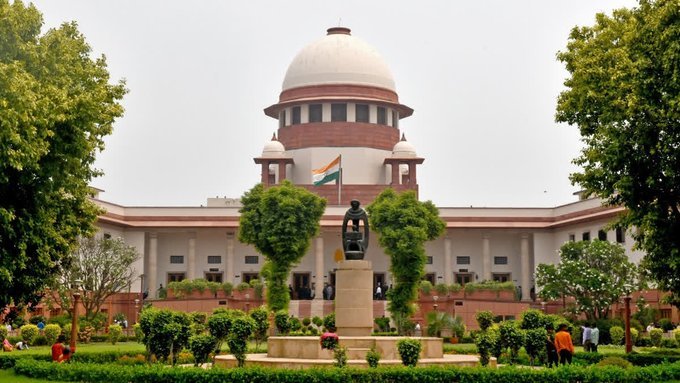
NEW DELHI, September 28: The Supreme Court on Monday declined to stay the Centre’s decision to introduce Merchant Discount Rate (MDR) on specified UPI person-to-merchant transactions above ₹2,000, but directed the Union government to file an affidavit setting out the legal basis for the levy.
A Bench headed by Chief Justice of India Surya Kant and comprising Justices Joymalya Bagchi and V. Mohana was hearing a writ petition filed by advocate Anjan Datta challenging the Centre’s September 14 notification and the MDR framework announced the following day.
The new regime is scheduled to take effect from October 15. Under it, a 0.4% MDR will apply to specified person-to-merchant UPI transactions above ₹2,000, subject to a cap of ₹300 for transactions of ₹75,000 and above. Certain essential and thin-margin sectors will attract a flat ₹5 charge on transactions above ₹2,000.
Appearing for the Centre, Additional Solicitor General N. Venkataraman told the Bench that around 96% of merchant transactions would remain outside the levy. He said the charge was neither a tax nor a fee and would not result in any revenue accruing to the government.
“We need these facts on affidavit. It’s more of a technical issue,” CJI Surya Kant said.
Justice Bagchi pressed the government on the legal character of the levy.
“Is it a tax or a fee? If not a fee, what is the executive basis for making this expropriation? What is the service?” he asked.
The ASG rejected the description of the levy as expropriation, submitting that the MDR would operate as a settlement charge within the payment ecosystem rather than as a government collection. Banks, he said, incur costs in processing electronic transactions, while credit and debit card payments already carry such charges.
Justice Bagchi also referred to Section 269SU of the Income Tax Act, which requires specified businesses above the prescribed turnover threshold to provide facilities for electronic payments. The Bench sought clarity on the legal character of the receipt generated through the transaction, who receives it and the statutory source for imposing the charge.
READ: SIR-Hit Bengal Voters Seek Remedy, SC Says ‘Only By-Elections’
The Court issued notice to the Centre, the Reserve Bank of India and the National Payments Corporation of India (NPCI), but declined the petitioner’s request for an interim stay.
The petitioner has argued that the new regime could ultimately increase costs for consumers if businesses pass on the MDR. The plea also questions the statutory basis and manner in which the new framework has been introduced.
Under the notified framework, person-to-person UPI transfers remain free irrespective of the amount. Merchant payments up to ₹2,000 are also outside the MDR regime, while specified small merchants continue to receive zero-MDR treatment. Capital-market transactions have been assigned a separate MDR of 0.02%, subject to a ₹300 cap.
The Finance Ministry has said merchants should not pass the MDR on to consumers, while UPI providers have been barred from imposing platform or hidden charges on users. The government has maintained that the new framework is intended to support the financial sustainability of the UPI ecosystem rather than generate revenue for the exchequer.
The legal question before the Supreme Court, however, is narrower: whether the executive has adequate statutory authority to alter the existing zero-charge regime for specified UPI transactions and impose the new MDR framework.