The Supreme Court has proposed constituting special courts to conduct day-to-day trials in criminal cases arising from the 2023 Manipur ethnic violence, expressing concern over delays in investigations and directing agencies to complete pending probes within a reasonable time.
BY PC Bureau
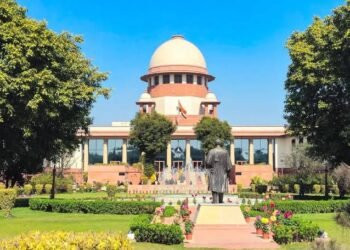
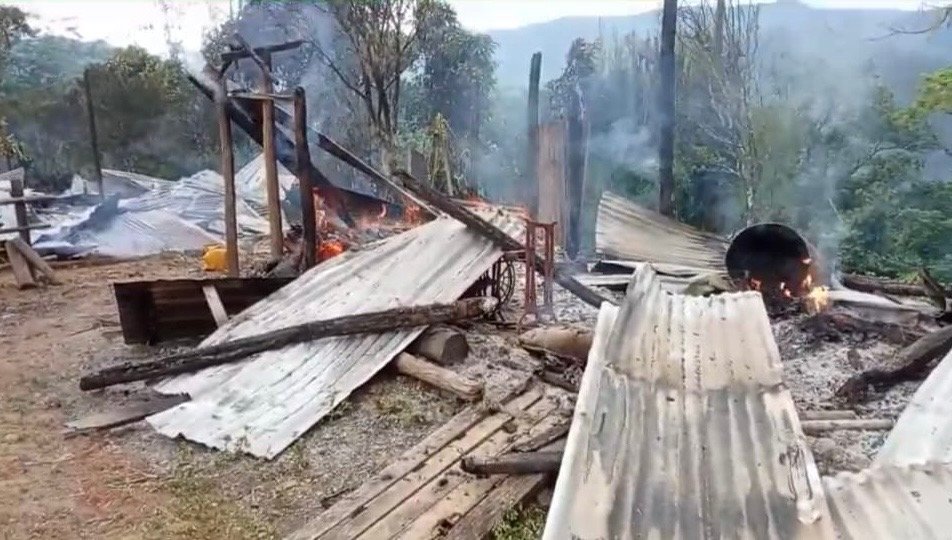
New Delhi, July 24, 2026: The Supreme Court on Friday proposed setting up special courts to conduct day-to-day trials in criminal cases arising from the ethnic violence that rocked Manipur in 2023, expressing concern over the slow pace of investigations and the large number of cases yet to reach trial.
A Bench comprising Chief Justice of India Surya Kant, Justice Joymalya Bagchi, and Justice V. Mohana said investigations into the violence must be completed within a reasonable time despite the challenges faced by the investigating agencies.
The Court was hearing a batch of petitions relating to the Manipur violence and reviewed status reports submitted by the Central Bureau of Investigation (CBI), multiple Special Investigation Teams (SITs), and former Maharashtra Director General of Police Dattatray Padsalgikar, who was appointed by the apex court to monitor the investigations.
Taking note of the progress made so far, the Bench observed that while the investigations involved exceptional logistical and security challenges, delays could not continue indefinitely.
“Pending investigations must be completed within a reasonable time,” the Court observed.
Proposal for Special Courts
To expedite the judicial process, the Bench indicated that it was considering the creation of dedicated special courts, in consultation with the State of Manipur and the High Courts of Manipur and Gauhati, to hear the cases on a day-to-day basis.
“We tentatively propose to constitute special courts with the concurrence of the State of Manipur and the High Courts of Manipur and Gauhati so that trials can be taken up on a day-to-day basis,” the Bench said.
The Court noted that the proposal would become effective only after investigating agencies completed pending probes and filed charge sheets without further delay. It directed the State government to extend full cooperation to the CBI and SITs in completing the investigations.
Thousands of Cases Still Pending
According to the status reports placed before the Court, the CBI has filed charge sheets in 21 cases, while investigations are continuing in 11 other cases. Closure reports have been accepted in three cases, and four more investigations are still underway.
The SITs, which are handling the bulk of the violence-related cases, are probing 3,020 FIRs across eight districts of Manipur. They have so far filed charge sheets in 301 cases, but trials have commenced in only 10.
The Court also noted that investigators are expected to examine 2,924 witnesses, underscoring the enormous scale of the criminal proceedings arising from the ethnic clashes.
CBI Lists Investigation Challenges
The CBI informed the Court that several factors had slowed the investigations, including the relocation of witnesses, lack of cooperation stemming from mistrust among communities, language barriers, and difficulties in collecting digital evidence because prolonged internet shutdowns had disrupted access to electronic records.
While acknowledging these difficulties, the Bench stressed that such challenges could not justify indefinite delays.
Victims to Receive Charge Sheets Within a Week
The Court also dealt with complaints that families of victims had not yet received copies of charge sheets despite earlier judicial directions.
Senior advocate Vrinda Grover informed the Bench that several families of those killed during the violence were still awaiting the documents.
Observing that earlier directions had not been fully implemented, the Court instructed legal aid counsel to immediately coordinate with the offices of the Chief Justices of the Manipur and Gauhati High Courts to ensure that charge sheets are supplied to victims or their legal representatives within one week.
Additional Solicitor General Aishwarya Bhati clarified that the Court’s previous directions applied only to victims and their lawyers, and not to public interest litigants or civil society organisations, given the sensitive nature of the criminal proceedings.
Missing Persons and Places of Worship
The Bench also heard an application filed by the International Meitei Organization, which sought a CBI probe into the disappearance of around 30 persons during the violence. The Court directed the organisation to approach the Chief Justice of the Manipur High Court, who could decide whether the matter should be entrusted to an SIT or another appropriate investigative mechanism.
READ: Opinion | Shielding Pradhan Could Be Modi’s Biggest Political Gamble
Separately, advocate Sharukh Alam, appearing for an organisation representing Christian churches, informed the Court that several churches and places of worship destroyed during the violence had not yet been rebuilt and that some sites were allegedly facing encroachments.
Responding to the submissions, Chief Justice Surya Kant observed that the authorities had prioritised reconstruction of homes for displaced families, remarking that providing people with shelter was the immediate humanitarian priority before rebuilding religious structures.
The Court directed the CBI, SITs and the Court-appointed monitoring officer to file fresh status reports before the next hearing. It also asked the Additional Solicitor General to prepare a consolidated list of all FIRs in which investigations are pending or charge sheets have been filed, saying the information would help determine how many special courts would be required to ensure speedy trials.