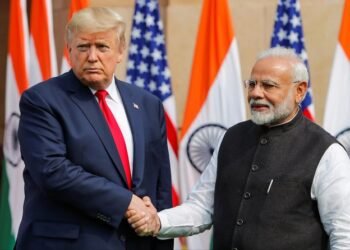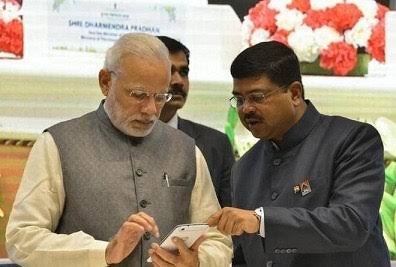
The Modi government’s late-night assurances, proposed legal reforms and outreach to protesters have failed to blunt the nationwide NEET agitation, with the resignation of Union Education Minister Dharmendra Pradhan remaining the movement’s central demand.
BY Navin Upadhyay
July 24, 2026: Three months ago, the NEET-UG 2026 paper leak looked like another examination scandal that would eventually fade into India’s crowded news cycle. Today, it has evolved into something far larger—a generational movement questioning not just the integrity of competitive examinations but the accountability of those entrusted with safeguarding them.
The Narendra Modi government’s response tells its own story.
For weeks after the controversy erupted, Prime Minister Narendra Modi remained conspicuously silent. Then, almost overnight, the silence gave way to urgency. Within days came repeated public statements, a midnight video message promising the “strictest action,” assurances of fast-track courts, and a proposed anti-paper-leak law. Governments do not suddenly change their communication strategy unless they recognise that the political ground beneath them is shifting.
The shift was not prompted by the Opposition. It was forced by students.
Even activist Sonam Wangchuk’s decision to end his 26-day hunger strike after receiving assurances from Union ministers did not diminish the movement. If anything, it demonstrated that the agitation had outgrown any one individual. The centre of gravity remained where it had always been—among lakhs of students who believe their future was compromised and who continue to insist that accountability begins with the resignation of Union Education Minister Dharmendra Pradhan.
That demand has become the government’s biggest dilemma.
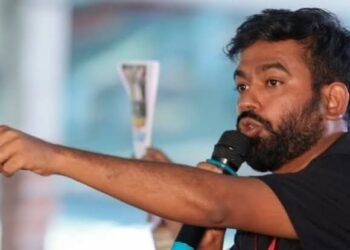
Message of Abhijit Dipke ho everyone,
At Jantar Mantar 📍 pic.twitter.com/wl0N71xJVv
— Cockroach Janta Party (@CJP_for_India) July 24, 2026
From the BJP’s perspective, sacrificing a senior Cabinet minister under pressure from street protests carries obvious political risks. It may appear as an admission of failure and encourage future agitations demanding ministerial resignations.
Yet politics is rarely about choosing between good and bad options. It is often about choosing the less damaging one.
Every passing day raises the cost of protecting the minister.
The movement is no longer confined to Jantar Mantar. It has spread to Patna, Mumbai, Odisha, Mizoram and several university campuses. It has attracted support from parents, teachers, lawyers, retired judges, public intellectuals, film personalities and sporting icons. What began as outrage over a paper leak is steadily becoming a referendum on governance, accountability and the value India places on merit.
Perhaps the most striking feature of this movement is not merely its spread but the government’s response inside educational institutions.
बिहारी है भाई पुलिस से डिमांड कर रहे हैं आप लोग बढ़िया व्यवस्था नहीं किये हैं ,,
ई सब मौसीया वाला ससुराल में आया है व्यवस्था की खोज रहा है
अयं sir, Tear Gas का व्यवस्था नहीं है !
Bihar वालो को Patna Protest में मजा नहीं आया क्योंकि पुलिस की तरफ से तैयारी सही नहीं थी ,,
Modi… pic.twitter.com/rOfFiQx3Fk
— Ranjan Singh (@RanjanSinghh_) July 23, 2026
Across several IITs, central universities and higher educational institutions, students have reported receiving advisories warning them against participating in demonstrations, travelling to Jantar Mantar or even posting messages sympathetic to the protests on social media. Some institutions have reportedly reminded students of disciplinary rules governing political activity, while others have cautioned against circulating content related to the agitation.
Whether these advisories stem from administrative caution or unofficial pressure, their cumulative effect has been unmistakable.
An atmosphere of fear has been created.
Students have been made to believe that expressing solidarity—even online—could invite consequences. The message has been clear: stay away from the protests, remain silent and avoid becoming visible.
Yet something remarkable has happened.
READ: Sonia Gandhi Accuses Centre of Repression, Calls for Accountability
Generation Z has refused to buckle.
Unlike previous student movements that were often geographically confined, today’s protests are digitally networked. Attempts to suppress physical gatherings have only pushed conversations onto social media, encrypted messaging platforms and university networks. Every advisory issued by an institution has become another subject of debate. Every warning has strengthened the perception among young people that dissent itself is under scrutiny.
This generation has grown up documenting everything.
Videos of police action, photographs of injured students and personal testimonies travel across platforms within minutes. Attempts to control the narrative through administrative directives increasingly collide with a digital ecosystem where information moves faster than institutions can contain it.
That explains why the government’s communication strategy changed so dramatically.
The midnight address by the Prime Minister was significant not merely for what it promised but for what it acknowledged without saying so explicitly—that the government recognises the political potency of student anger.
There are historical lessons here.
Governments rarely lose elections because of one scandal. They lose when a single issue begins symbolising a larger pattern.
For many young Indians, NEET is no longer simply about one leaked paper.
It represents years of expensive coaching, enormous parental sacrifice, relentless competition and an education system where one examination determines the trajectory of an entire life. When that examination loses credibility, the damage extends beyond admissions. It strikes at faith in merit itself.
The government’s subsequent actions—fresh examinations, arrests, promises of computer-based testing from 2027 and a proposed anti-paper-leak law—are substantial administrative measures. But they address the mechanics of the problem, not its politics.
The politics revolves around accountability.
For the protesters, the question is straightforward: if the system failed under the Education Minister’s watch, who bears responsibility?
The government appears to believe that institutional reforms will eventually eclipse demands for political accountability.
That assumption may prove costly.
The BJP has traditionally enjoyed considerable support among first-time voters by projecting itself as the party of aspiration, opportunity and meritocracy. Alienating precisely that demographic could have consequences extending well beyond this controversy.
The danger for the government lies not in one protest at Jantar Mantar but in its potential convergence with broader youth anxieties over unemployment, shrinking opportunities and the growing cost of education. Once these issues merge into a single political narrative, containing them becomes infinitely harder.
Protecting Dharmendra Pradhan may preserve Cabinet stability in the short term.
But if that decision convinces millions of students that accountability is negotiable while their futures are not, the government may ultimately pay a far bigger political price.
Sometimes, the cost of defending one minister exceeds the cost of replacing him.
The Modi government still has time to decide which bill it would rather pay.
Says Abhijit Dipke: “Modi ji, I once again request you to accept Dharmendra Pradhan’s resignation. Otherwise, the issue will not remain limited to Dharmendra Pradhan’s resignation alone; it will become a demand for your resignation as well.”