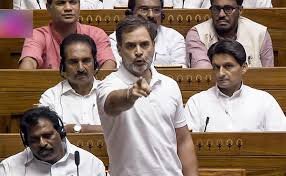
The remark, made without explanation during the debate, led to disruptions in the House and sharp reactions from ruling party members questioning its relevance.
BY PC Bureau
New Delhi, April 17: A political controversy erupted in the Lok Sabha on Friday after Leader of the Opposition Rahul Gandhi made a cryptic reference to the “puzzle of number 16” during a debate on the Women’s Reservation and delimitation bill, triggering sharp reactions from the treasury benches and speculation beyond Parliament.
Gandhi’s remarks came while he was criticising the government’s move to link women’s reservation with delimitation, which he alleged could reshape India’s electoral map. In the course of his speech, he referred obliquely to a “puzzle” involving the number 16, without elaborating further, leading to confusion and interruptions in the House.
READ: Tripura Tribals Reject BJP, Tipra Motha Party Sweeps TTAADC Polls
The comments sparked immediate political reactions, with ruling party members questioning the relevance of the remark to the ongoing legislative debate. The presiding officer intervened to maintain order as brief protests broke out.
Subsequently, Congress sources indicated that Gandhi’s reference to the “number 16 puzzle” was linked to reports circulating internationally about the alleged deletion of 16 sensitive files connected to Jeffrey Epstein. However, no official confirmation has emerged regarding such deletions.
Is Rahul Gandhi’s Number “16” remark linked to reports of 16 Epstein files disappearing from the DOJ site, including a Trump photo?@RahulGandhi #rahulgandhi #parliament pic.twitter.com/9JwcR772aY
— Saurav Singh (@SauravS_13) April 17, 2026
The clarification added a new dimension to the controversy, even as government sources dismissed the reference as irrelevant and accused the Opposition of introducing unrelated issues into a critical legislative discussion.
The episode comes amid an already heated debate over the proposed constitutional amendment on women’s reservation and delimitation, with the Opposition alleging that the move could alter political representation, while the government maintains it is aimed at enhancing women’s participation in governance.