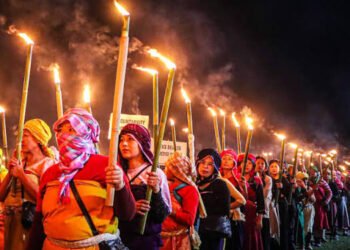
While the Election Commission’s exercise aims to improve electoral accuracy, critics warn that applying standard verification procedures in a state still reeling from ethnic violence could deepen mistrust and fuel allegations of disenfranchisement.
By Navin Upadhyay
June 5, 2026: The Special Intensive Revision (SIR) of electoral rolls currently underway in Manipur is intended to strengthen electoral integrity by ensuring that voter lists are accurate, updated, and free from duplication. With a qualifying date of July 1, 2026, the exercise involves extensive house-to-house verification by Booth Level Officers (BLOs), followed by the publication of draft electoral rolls on July 5, a period for claims and objections, and the release of final rolls on September 6.
Under normal circumstances, such an exercise would be widely welcomed as a necessary step to reinforce democratic credibility. In present-day Manipur, however, where communities remain deeply divided after the ethnic violence that erupted in May 2023, the exercise carries risks that extend far beyond routine electoral administration. Unless handled with exceptional sensitivity, the SIR could leave behind a legacy of disenfranchisement, deepen ethnic mistrust, and further weaken confidence in public institutions.
Displacement and the Challenge of Verification
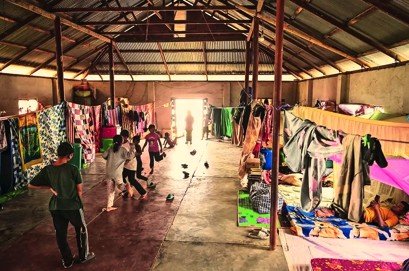
More than three years after the outbreak of violence between Meitei and Kuki-Zo communities, displacement remains one of Manipur’s most pressing humanitarian challenges. Official figures indicate that nearly 60,000 people continue to live away from their homes, many of them in relief camps. Thousands more have relocated to neighboring states such as Mizoram and Meghalaya.
For many displaced families, returning home remains impossible. Entire villages have been destroyed, homes remain uninhabitable, and buffer zones continue to separate communities. In such circumstances, the SIR’s central requirement—verification at an elector’s ordinary place of residence—creates a significant practical problem.
READ: Trump Claims US-India Trade Balance Has Shifted, Says America Is ‘Making a Lot of Money’
READ: Fresh Violence Rocks Manipur; Three Kuki Civilians Killed, Village Torched
Booth Level Officers cannot verify homes that no longer exist, nor can they easily reach voters who have been forced to relocate hundreds of kilometers away from their original constituencies. For internally displaced persons (IDPs), particularly those living in relief camps, the risk of exclusion from the electoral process becomes real and immediate.
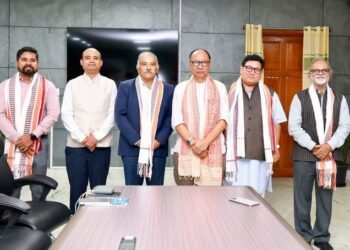
Several civil society organizations have already expressed concern that the exercise could disproportionately affect displaced populations unless special provisions are introduced. The Kuki Organisation for Human Rights Trust (KOHUR), in a memorandum submitted to the Chief Election Commissioner, warned of the possibility of large-scale voter deletions if conventional verification methods are applied without modification. Kuki Inpi Manipur has similarly called for either a temporary suspension of the exercise or the implementation of special arrangements for displaced voters.
The Threat of Disenfranchisement
Legally, displacement does not strip a citizen of voting rights. Section 20 of the Representation of the People Act, 1950, recognizes that forced absence from one’s residence does not automatically alter an individual’s electoral eligibility.
Yet legal protections alone may not be sufficient.
Many displaced families have lost essential documents during the violence. Aadhaar cards, voter identification cards, property records, and other forms of proof were destroyed when homes were burned. Reconstructing these records takes time, and many affected individuals continue to face bureaucratic hurdles.
The compressed timeline of the SIR further compounds the challenge. If voters are omitted from draft rolls, they may have limited opportunity to correct errors before the final list is published.
The result could be the effective disenfranchisement of thousands of citizens—not necessarily through deliberate exclusion, but through administrative shortcomings. Such an outcome would have consequences far beyond electoral statistics. In a state already fractured by competing narratives of victimhood and insecurity, large-scale deletions would almost certainly be interpreted through an ethnic lens.
Electoral Administration and Ethnic Politics
Few issues are as politically sensitive in Manipur as questions of identity, migration, and demographic change.
Public discourse is already shaped by competing claims regarding indigeneity, illegal immigration, and demographic security. Allegations of cross-border migration from Myanmar have become a recurring feature of political debate, while communities simultaneously seek recognition of their historical and constitutional rights.
Against this backdrop, any significant alteration to electoral rolls risks becoming politically explosive.
If large numbers of displaced Kuki-Zo voters are removed from the rolls, many may view the exercise as an attempt at bureaucratic exclusion. Conversely, if safeguards are perceived as inadequate, other groups may question the integrity of the revision process. Either perception would deepen mistrust and reinforce existing divisions.
The danger lies not only in actual disenfranchisement but also in the perception of unfairness. In societies emerging from conflict, perceptions often carry consequences as significant as reality itself.
Long-Term Consequences
The implications of the SIR exercise extend beyond the next election cycle.
First, the process could further erode trust in democratic institutions. Communities that already feel marginalized may lose confidence in the Election Commission, the state government, and other public bodies if they believe their concerns have not been adequately addressed.
Second, the exercise risks hardening ethnic boundaries. Political exclusion can become another layer of grievance added to an already complex conflict, making future reconciliation even more difficult.
Third, Manipur could become a test case for how India handles electoral administration in conflict-affected regions. The state’s experience may influence future policies in other areas facing displacement due to violence, natural disasters, or internal migration.
Finally, questions surrounding voter eligibility and electoral completeness could undermine confidence in future election outcomes, potentially creating fresh political instability.
The Need for a Manipur-Specific Approach
Election authorities have indicated that special arrangements for displaced persons are being considered. Reports suggest that discussions are underway regarding dedicated electoral registration mechanisms for relief camps and other displaced populations.
Such measures cannot remain merely under consideration.
The Election Commission should immediately publish a transparent, Manipur-specific protocol addressing the realities of conflict-related displacement. This framework should clearly state that no voter will be deleted solely because they are unable to reside at their original address. Verification mechanisms should be extended to relief camps and temporary shelters. Alternative forms of documentation—including camp certificates, earlier electoral records, and local administrative verification—should be accepted wherever appropriate.
Dedicated grievance redressal mechanisms, public awareness campaigns, and special Booth Level Officers assigned to relief camps would further help ensure that no eligible voter is excluded.
Democracy Must Adapt to Reality
No serious stakeholder opposes the objective of maintaining accurate electoral rolls. Electoral integrity remains essential to the functioning of any democracy. The challenge in Manipur is not whether voter lists should be revised, but how the process can be adapted to extraordinary circumstances.
Uniform procedures applied to deeply unequal realities often produce unequal outcomes.
For a state still grappling with the consequences of one of the most serious internal conflicts in recent years, inclusivity must take precedence over administrative rigidity. The Election Commission has both the constitutional authority and the institutional responsibility to ensure that the SIR exercise strengthens democracy rather than inadvertently weakening it.
The coming weeks will determine whether the Special Intensive Revision becomes an example of responsive governance in a conflict-affected society—or a bureaucratic exercise remembered for deepening the very divisions it sought to transcend.