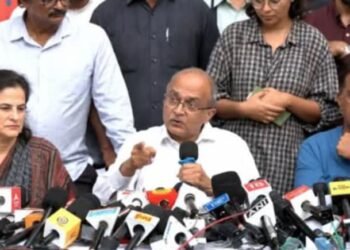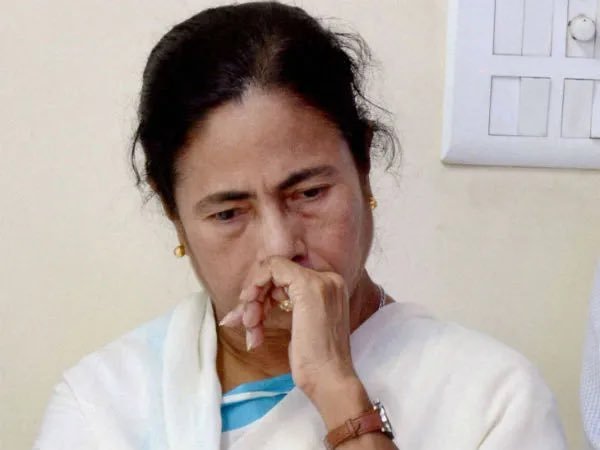
The closely watched contest saw Mamata Banerjee initially leading by a significant margin, but the advantage slipped as counting progressed, with Adhikari overtaking her in later rounds to secure a decisive win.
BY PC Bureau
New Delhi/Kolkata, May 4, 2026 — In a dramatic political reversal, West Bengal Chief Minister Mamata Banerjee has lost the high-profile Bhabanipur Assembly seat to Suvendu Adhikari of the Bharatiya Janata Party, marking one of the most significant upsets of the 2026 election cycle.
According to Election Commission trends and multiple projections, Adhikari defeated Banerjee by a margin estimated between roughly 11,000 and 15,000 votes, in what was long considered a stronghold of the ruling All India Trinamool Congress.
A High-Stakes Contest Turns
Bhabanipur, a key constituency in Kolkata, has traditionally been a safe seat for Banerjee. She had shifted here after her narrow defeat to Adhikari in Nandigram during the 2021 elections and had since reinforced it as her political base.
The 2026 rematch between the two leaders—once close allies and now fierce rivals—quickly emerged as the most closely watched battle in the state.
Early counting trends initially favoured Banerjee, who built a lead of over 15,000 votes in the opening rounds. However, as counting progressed through multiple rounds, the margin narrowed steadily before Adhikari overtook her and consolidated a decisive lead by the final stages.
READ: Vijay Storms Tamil Nadu Politics with Blockbuster Debut
Vote Share and Final Trends
Latest available figures indicate:
- Suvendu Adhikari (BJP): ~67,000 votes (around 52%)
- Mamata Banerjee (TMC): ~56,000 votes (around 43%)
Other candidates, including those from the Left and Congress, remained marginal players in the contest.
The result reflects a clear swing in an urban Kolkata constituency that had, until now, remained firmly with the TMC.
Part of a Larger Bengal Shift
Banerjee’s defeat comes amid a broader surge by the BJP across West Bengal, with the party crossing the majority mark in early trends in the 294-seat Assembly.
If sustained, the outcome would mark the end of over a decade of Trinamool rule and the formation of the first BJP government in the state.
Political observers attribute the shift to a mix of anti-incumbency, urban voter churn, and sustained BJP expansion across multiple regions of the state.
Reactions and Immediate Fallout
The result triggered sharp reactions from both camps.
Leaders of the All India Trinamool Congress raised concerns over the counting process, alleging irregularities and delays at various counting centres. Party workers were urged to remain vigilant through all rounds.
On the other hand, the BJP celebrated the result as a symbolic victory, particularly given Adhikari’s earlier win over Banerjee in Nandigram.
Political Implications
The loss of Bhabanipur carries both electoral and symbolic weight. For Banerjee, who has dominated West Bengal politics since 2011, defeat in her own constituency raises immediate questions about her political path if the TMC also falls short at the state level.
Constitutionally, she would need to secure a seat in the Assembly or explore alternative routes, such as the Rajya Sabha, to remain in active office.
More broadly, the result underscores a potential realignment in West Bengal’s political landscape, with the BJP making deep inroads into regions previously considered TMC strongholds.
A Defining Moment
With counting still in its final stages, the Bhabanipur outcome has already emerged as one of the defining moments of the 2026 elections.
From an early lead to a late reversal, the contest encapsulated the volatility of this election cycle—and the scale of the challenge faced by the TMC as the BJP pushes toward a historic breakthrough in the state.