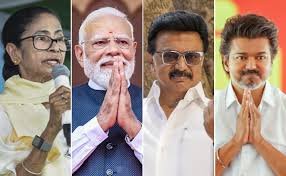
In a dramatic political shift, the BJP ended Mamata Banerjee’s long-standing dominance in West Bengal, securing an unprecedented majority. The outcome reflects deep anti-incumbency, effective political messaging, and a consolidation of voter support around development and identity narratives.
Annpurna Nautiyal
May 5, 2026: Elections in India always command attention, both domestically and globally, but the April 2026 assembly polls in five states carried unusual weight. They were viewed as a critical referendum on the political authority, reliability, and election-winning prowess of Prime Minister Narendra Modi and the BJP.
There was widespread curiosity about whether the BJP would be able to make a decisive dent in the Trinamool Congress (TMC) fortress in West Bengal, and whether the seemingly invincible Mamata Banerjee and her party would face a serious setback. The results, however, went far beyond expectations. The BJP not only made deep inroads into West Bengal but delivered a decisive blow to both the TMC and the Congress.
The party demonstrated that it has mastered not only the art of winning elections but also of retaining power and repeating victories, leaving little room for the opposition to consolidate. The massive defeat of Mamata Banerjee and the sweeping victory of the BJP, after nearly fifteen years of TMC rule, also highlight the party’s endurance and resilience despite earlier setbacks in the state.
READ: Vijay-led TVK stakes claim to form government in Tamil Nadu
The TMC has been reduced to 79 seats, while the BJP secured a sweeping and unprecedented majority with 208 seats out of 293. This marks a historic shift in the political landscape of West Bengal.
While the BJP had already been in power in Assam and part of the ruling alliance in Puducherry, it had never managed to form a government in states like West Bengal, Kerala, or Tamil Nadu due to the strong presence of regional parties. The 2026 results have altered that perception significantly.
In Assam, the BJP retained power convincingly, winning 101 seats out of 126. The Congress, despite making ambitious claims, managed to secure only 22 seats. The criticism directed at Assam Chief Minister Himanta Biswa Sarma—ranging from his alleged anti-Muslim rhetoric to accusations of authoritarianism—did not significantly influence voters. Instead, the electorate appeared to prioritize development over political rhetoric.

Concerns regarding migration, identity, undocumented immigration, and demographic change, especially in areas bordering Bangladesh, were prominent during the campaign. Despite these anxieties, the BJP maintained its hold over the state, completing a decade in power. Meanwhile, the Congress attempted to build its campaign around governance, economic development, and regional identity but failed to gain sufficient traction.
Prime Minister Modi had predicted a hat-trick victory for the BJP in Assam during an election rally, and this prediction proved accurate. Under the saffron wave, even prominent Congress leader Gaurav Gogoi failed to retain his seat, reflecting the scale of the BJP’s dominance.
The BJP has been steadily working to transform itself into a truly national party by consolidating its position in the Northeast, particularly in Assam and Tripura, while also strengthening its base in the Hindi belt. The party is believed to be following a strategic framework often described as the Anga, Bang, and Kalinga approach—aimed at expanding its influence across eastern India.
This framework encompasses Bihar (Anga), Odisha (Kalinga), and West Bengal (Bang), regions historically shaped by tribal cultures, maritime trade, agrarian expansion, and shared socio-economic dynamics. The BJP’s success in these regions signifies a broader political realignment. Prime Minister Modi’s assertion that from Gangotri to Ganga Sagar the BJP’s influence now spans the region reflects this transformation.
Historic Day’: PM Modi Hails BJP Breakthrough in Bengal https://t.co/vUbZggdKWE #ModiSpeech #BJPVictory #WestBengalResults #LotusBloom #ElectionResults2026 #IndiaPolitics
— POWER CORRIDORS (@power_corridors) May 4, 2026
The NDA government’s inability to implement the Nari Shakti Vandan Adhiniyam 2023, which proposes reservation for women in legislatures, was nevertheless turned into a political narrative by the BJP. The party effectively portrayed the opposition as anti-women, and this messaging resonated strongly, particularly among women voters in West Bengal.
At the same time, the counter-narratives of the TMC and other opposition parties, including allegations of anti-Muslim politics, failed to gain traction against the broader appeal of Hindu identity and cultural assertion.
The elections across five states, covering 824 assembly seats, were also marked by controversy over the Special Intensive Revision (SIR) of electoral rolls. This exercise aimed to remove duplicate and outdated entries while adding legitimate voters. However, the TMC and Congress alleged that it was designed to disenfranchise millions, particularly Muslims and women who often change surnames and locations after marriage.
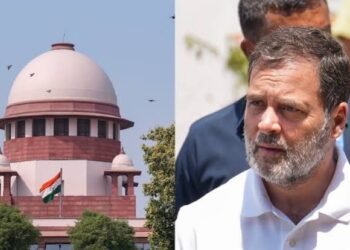
Mamata Banerjee even approached the Supreme Court of India, but the intervention did not alter the course of events. Both the BJP and the Election Commission strongly denied the allegations. However, Mamata Banerjee’s persistent opposition to central initiatives and her confrontational stance appear to have contributed to voter fatigue.
The Modi versus Mamata Banerjee contest evolved into a high-stakes political battle. Issues such as the alleged non-implementation of central welfare schemes, especially those targeting women and weaker sections, along with concerns about infrastructure and economic development, played a significant role in shaping voter perception.
The TMC government also faced criticism over corruption, unemployment, and women’s safety. Public outrage intensified after the 2024 rape and murder of a trainee doctor at R.G. Kar Medical College and Hospital in Kolkata, further eroding trust in the state administration.
In the 2021 elections, the BJP had already emerged as the principal opposition, overtaking the Communist Party, which had ruled West Bengal for decades. By 2026, the BJP capitalized on its developmental narrative and organizational strength, convincing voters that it represented a viable alternative.
The TMC continued to portray the BJP as an outsider party that threatened West Bengal’s linguistic and cultural identity. It also accused the BJP of targeting Indian Muslims under the guise of curbing illegal immigration from Bangladesh. The BJP, on the other hand, framed its agenda in terms of national security and governance reform.
Ultimately, strong anti-incumbency, coupled with perceptions of political arrogance within the TMC, contributed to Mamata Banerjee’s defeat. In his victory address, Prime Minister Modi described the BJP’s triumph in West Bengal as historic and unprecedented, symbolizing democracy, transformation, and development.
In Kerala, a state known for its high literacy, healthcare standards, and life expectancy, power has traditionally alternated between the Communist Party of India (Marxist)-led LDF and the Congress-led UDF. In 2026, the UDF secured 99 seats, while the LDF was reduced to 35 out of 140, indicating a clear shift in voter preference.
Tamil Nadu presented a more complex picture. The state has long been dominated by regional parties such as the DMK and the AIADMK. In this election, the DMK secured 52 seats, while the AIADMK, in alliance with the BJP, won 54 seats. However, a new political force led by actor Thalapathy Vijay emerged dramatically, winning 108 seats—the highest among all parties.
The absence of a clear majority makes government formation in Tamil Nadu particularly intriguing. For the BJP, even limited gains in the state are strategically important, given its long-standing efforts to expand its footprint in southern India.
In Puducherry, which has a 30-member assembly, the BJP-led National Democratic Alliance retained power by winning 18 seats. The Congress secured 6 seats, while others accounted for the remaining 6. The NDA’s campaign focused on welfare, employment, development, and strong coordination with the central government.
These results also reflect a broader national trend. The BJP’s growing presence across states is likely to strengthen its position in the Rajya Sabha and reinforce its image as a pan-India political force. Despite setbacks in the 2024 general elections, where it fell short of a majority, the party has used subsequent state elections to rebuild momentum.
At present, the BJP governs 21 out of India’s 29 states, a significant indicator of its expanding political dominance and organizational reach.
(The writer is Former Vice Chancellor and Professor of Political Science, HNB Garhwal (Central) University, Srinagar, Garhwal, Uttarakhand)