Escalating tensions in the Strait of Hormuz pushed Brent crude near $113 per barrel, intensifying pressure on India’s import bill and weakening the rupee further.
BY PC Bureau
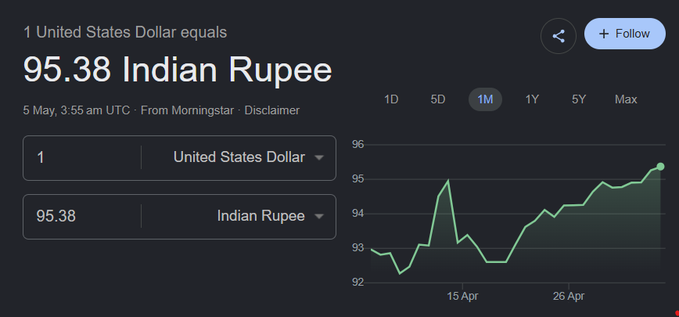
May 5, 2026: The Indian rupee plunged to a fresh all-time low of 95.40 against the US dollar in early trade on Tuesday, extending its sharp slide as global uncertainties and elevated crude oil prices continued to weigh on the currency.
The domestic unit opened on a weak note and quickly lost another 17 paise from its previous close, breaching the 95.35 level. On Monday, the rupee had already fallen 39 paise to settle at a record closing low of 95.23—its weakest finish until then.
Drivers Behind the Slide
The latest bout of weakness is being driven largely by external factors. Intensifying geopolitical tensions in the Middle East, particularly disruptions in the Strait of Hormuz—a route that carries nearly 20% of global oil trade—have kept energy markets volatile. Brent crude was hovering near $113 per barrel on May 5, following sharp gains in recent sessions amid concerns over supply disruptions linked to US-Iran tensions.
For India, which imports over 85% of its crude oil needs, higher oil prices translate directly into a larger import bill, widening trade deficit, and renewed pressure on the current account. The situation is further compounded by persistent demand for dollars from importers and intermittent foreign fund outflows from domestic equities.
Market Reaction on Dalal Street
The cautious sentiment was reflected in early equity market trade:
- The BSE Sensex slipped 179.28 points, or 0.23%, to 77,090.12
- The NSE Nifty50 declined 63.85 points, or 0.26%, to 24,036.95
Broader markets remained subdued despite some political clarity emerging from recent state election results.
Indian Rupee hits ₹95.38 against USD 🚨
It’s now heading towards a record low.
• Down over 5% in 2026 so far
• $20B+ foreign outflowsRBI is considering 2013-style emergency measures. pic.twitter.com/UQBwbMJhOu
— Karan Singh Arora (@thisisksa) May 5, 2026
Expert View
Dilip Parmar, Senior Research Analyst at HDFC Securities, said the rupee’s decline reflects a combination of global and domestic pressures. “The rupee has weakened sharply as the dollar index strengthens and crude oil prices remain elevated. This combination is exerting sustained pressure on India’s external balances,” he noted.
READ: Mamata Loses to Suvendu Adhikari In a Major Upset
He added that continued dollar demand could keep the currency under strain in the near term, with the USD/INR pair likely to trade in the 95.35–95.70 range in the coming sessions.
Other analysts point to structural factors as well. “India’s dependence on imported energy makes the rupee particularly sensitive to oil shocks. Unless crude stabilises, the currency may remain vulnerable despite strong forex reserves,” said a Mumbai-based currency strategist.
Foreign Investor Activity
Foreign Institutional Investors (FIIs) were marginal net buyers on Monday, purchasing equities worth ₹2,835.62 crore, according to provisional exchange data. However, cumulative outflows earlier in the year have contributed to underlying pressure on the rupee.
Outlook and Implications
Analysts warn that if crude prices sustain above $110 per barrel, the pressure on India’s macroeconomic fundamentals could intensify, potentially prompting more active intervention by the Reserve Bank of India. With foreign exchange reserves estimated at around $700 billion, the central bank has room to smooth volatility, though it may avoid defending any specific level.
A weaker rupee has mixed implications. While it raises the cost of imports—especially fuel, electronics, and industrial inputs—thereby feeding into inflation, it can also support exporters by improving price competitiveness.
The breach of the 95 mark carries psychological significance, underscoring the challenges facing the Indian economy in a volatile global environment. Going forward, market participants will closely track crude oil movements, capital flows, inflation trends, and any geopolitical de-escalation for cues on the rupee’s trajectory.