In a coordinated intelligence-led operation, Delhi Police Special Cell, Manipur Police, and central agencies apprehended a top insurgent leader linked to multiple UAPA cases and militant activities in the Northeast.
BY PC Bureau
New Delhi, May 28, 2026: In a major counter-insurgency breakthrough, security agencies arrested a senior commander of the banned Kangleipak Communist Party (KCP) in Delhi, leading to the recovery of a massive cache of sophisticated weapons and explosives in Manipur’s Kakching district.
The arrest of Haobijam Dilip Singh, carried out through a coordinated operation involving the Delhi Police Special Cell, Manipur Police, and central intelligence agencies, has triggered concerns over possible militant networks operating beyond the Northeast and potential plans for large-scale violence.
Haobijam Dilip Singh, a top functionary of the proscribed insurgent outfit, was arrested during a joint operation carried out by the Delhi Police Special Cell, Manipur Police, and central intelligence agencies. Officials said Singh had travelled to the national capital for a clandestine meeting and had been under surveillance for some time before his apprehension.
According to security officials, the operation was launched based on specific intelligence inputs regarding Singh’s movement and suspected plans. The coordinated effort culminated in his arrest without incident, though authorities described the mission as “sensitive” given the potential threat perception linked to the militant leader.
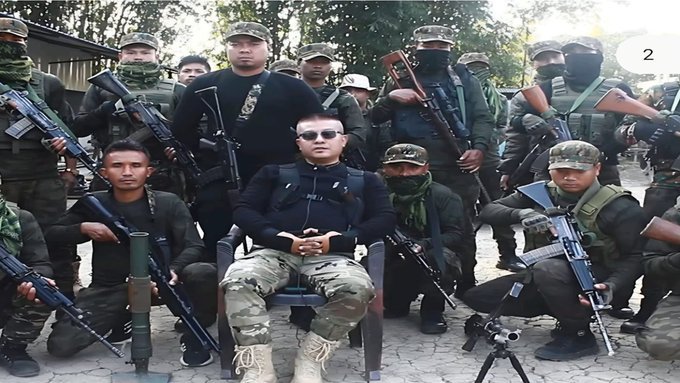
The Kangleipak Communist Party (KCP), one of Manipur’s long-active insurgent organisations, has been involved in armed violence, extortion, recruitment, and attempts to destabilise the region. Over the years, the outfit has splintered into several factions, including the KCP-MC and Taibanganba groups, complicating counter-insurgency efforts in the Northeast.
Singh, who has reportedly operated under aliases in earlier intelligence records, is believed to be a seasoned operative with deep links across insurgent networks in the region. Investigators say he faces more than a dozen criminal cases under the Unlawful Activities (Prevention) Act (UAPA), along with charges related to militant activities, conspiracy, and acts of violence.
READ: SC Backs SIR Exercise, Says It Strengthens Democracy
Security officials believe his arrest could provide crucial leads into the operational and logistical structure of underground militant organisations functioning in and around Manipur.
The interrogation of Singh soon led to one of the most significant arms recoveries in recent months in Manipur’s Kakching district. Acting on information extracted during questioning, security forces recovered a massive cache of sophisticated weapons, explosives, and ammunition suspected to have been stored for future militant operations.
The recovered arsenal included one AK-56 rifle, one Amogh rifle, one AI rifle, and one M4 rifle fitted with a scope. Agencies also seized a large quantity of empty magazines compatible with INSAS, AK-series, SLR, M4, and LMG rifles.
Even more alarming was the recovery of explosive materials, including 51 high explosive (HE) bombs, two para bombs, 11 detonators, and four lethod shells. Officials also recovered nearly 2,000 live rounds of ammunition meant for multiple weapon systems, including AK-series rifles, INSAS rifles, SLRs, Amogh rifles, and .303 rifles.
Investigators believe the scale of the recovery points to preparations for large-scale violence, either in Manipur or potentially in other regions. Security experts described the seizure as a major disruption of militant operational capability.
Alongside the weapons and explosives, forces recovered several logistical items including bags, plastic sheets, tarpaulin covers, and a Redmi 13C mobile phone containing Airtel and Jio SIM cards. Forensic and cyber teams are currently analysing the device to trace communication patterns, identify contacts, and uncover possible links to sleeper cells or accomplices operating in different states.
The arrest of a senior insurgent commander in the national capital has also raised fresh concerns within security agencies over the possibility of militant groups attempting to establish urban support networks outside the Northeast.
Central agencies are now probing whether Delhi itself could have been a potential target, or whether Singh’s visit was aimed at coordinating logistics, recruitment, funding, or operational planning connected to unrest in Manipur and neighbouring states.
Officials have not ruled out the possibility of a broader network extending beyond the Northeast, especially given increasing intelligence inputs suggesting attempts by insurgent groups to regroup using urban hideouts, digital communication channels, and covert support structures.
The development comes amid intensified counter-insurgency operations across Manipur over the past several months. Security forces have arrested hundreds of militants associated with groups such as KCP, UNLF(P), PREPAK, and other valley-based insurgent organisations. Several operations have also resulted in major recoveries of arms, explosives, and communication equipment.
Officials described the arrest of Haobijam Dilip Singh as a “significant operational success” that could help dismantle militant supply chains and disrupt planned insurgent activities.
Further investigations are underway, with agencies focusing on digital evidence, financial trails, and potential interstate links connected to the seized materials and suspected militant operatives.
The case is being viewed as another indication that insurgent groups from the Northeast continue attempting to adapt their methods and expand logistical networks beyond traditional conflict zones, even as coordinated efforts by state and central forces intensify against them.