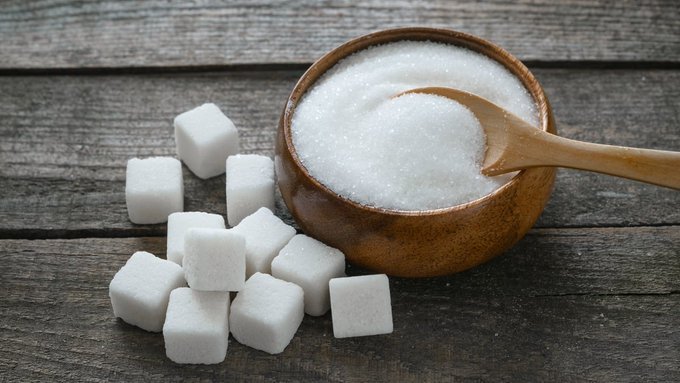
.Sugar prices are soaring as India confronts a supply squeeze caused by weaker cane yields, lower sugar recovery, ethanol diversion, earlier exports and rising festival demand. The government is now considering imports and curbs on cane-based ethanol to cool prices.
BY Navin Upadhyay
New Delhi, August 20, 2026: India’s sugar market is facing an unusual supply squeeze, with prices surging to record levels as lower production, depleted stocks, diversion of sugarcane for ethanol, weather-related crop stress, earlier exports and the approaching festival season converge to tighten domestic supplies.
The price shock has been sharp. Wholesale sugar prices in Maharashtra’s Kolhapur market, one of the country’s key trading centres, have climbed to about ₹5,350 per quintal, nearly 20% higher than at the beginning of August. The average retail price reported by the Consumer Affairs Department was around ₹52.30 a kg on August 18, while prices in some markets have risen substantially higher. In Mumbai, retail prices have touched about ₹58 a kg, with reports indicating that they could move towards ₹60 or more.
The surge is particularly striking because India has traditionally been a major sugar producer and exporter. The country is now considering limited duty-free imports to augment domestic availability — a sign of how rapidly the market balance has changed.
At the centre of the debate is a policy trade-off that has been building for years: how much sugarcane should India use to make sugar and how much should be diverted to ethanol?
#CNBCTV18Market | #Sugar stocks extend gains, rise up to 3% as govt tightens sugar stockholding limits on record high prices pic.twitter.com/hmHBSSJbjW
— CNBC-TV18 (@CNBCTV18Live) August 20, 2026
READ: Delhi Dismantles Pak Mission Barriers After Islamabad Move
Ethanol creates a new demand for sugarcane
India’s ambitious ethanol-blending programme has transformed the economics of the sugar industry.
The government has encouraged sugar mills to divert cane juice, B-heavy molasses and other sugar-derived feedstocks towards ethanol as part of its drive to reduce dependence on imported crude oil and achieve the 20% ethanol-blending target, or E20.
The policy helped address an earlier problem faced by the sugar industry: persistent surplus production, depressed sugar prices and mounting arrears owed by mills to sugarcane farmers.
But the same policy has introduced another demand for sugarcane.
Every tonne of cane diverted towards ethanol is cane that is not fully available for sugar production. During the current sugar year, mills are estimated to have diverted about 3 million tonnes of sugar equivalent towards ethanol, equivalent to roughly 10% of sugar output, according to industry estimates.
That diversion would not necessarily have caused a crisis when India had large sugar surpluses. But with production weakening and stocks falling, the reduction in sugar availability has become much more consequential.
Sugar production has taken a hit
The immediate supply problem is not simply that cane has been diverted.
Sugar production itself has weakened because of a combination of lower cane availability, poor weather conditions and reduced sugar recovery in some major producing areas.
Maharashtra and Karnataka, India’s two major sugar-producing states, have experienced deficient or uneven rainfall, raising concerns about cane yields and sugar recovery for the coming season. The prospect of weaker production has encouraged mills and traders to hold a tighter view of available stocks.
The 2025-26 crushing season has also ended earlier than normal in several areas. More than 90% of mills in Maharashtra had reportedly closed by the end of the season, while cane availability in Uttar Pradesh was also under pressure.
The result is a market in which the amount of sugar available for immediate sale has become increasingly tight.
Ethanol versus sugar: the policy dilemma
The ethanol programme was designed to give sugar mills an alternative revenue stream.
When sugar prices were weak, diverting cane towards ethanol allowed mills to earn better returns, improve cash flows and support timely payments to farmers.
But the economics have now reversed.
With sugar prices soaring, mills can earn more by producing and selling sugar than by diverting the same cane towards ethanol. Industry reports indicate that the price rally is already encouraging mills to favour sugar production over ethanol wherever economics and policy allow.
That creates an unusual situation: a policy originally intended to protect the sugar industry from surplus production is now being reconsidered because the domestic market has swung towards shortage.
The government is examining whether to restrict the amount of sugarcane that can be diverted towards ethanol in the 2026-27 season, beginning in October.
One possible approach is to prioritise sugar production and rely more heavily on C-heavy molasses, after sugar has already been extracted, for ethanol. The government could also increase the contribution of alternative feedstocks such as maize and rice to keep the E20 programme running without putting as much pressure on sugar supplies.
Stocks are becoming the biggest worry
The production squeeze is being amplified by declining inventories.
The sugar market does not depend only on the crop being harvested; it also depends on how much sugar mills carry forward from one season to the next.
With production lower, ethanol diversion continuing and some sugar having been exported, the cushion available to the domestic market has become progressively thinner.
Industry estimates have warned that closing stocks could fall to exceptionally low levels. That has made traders more sensitive to any sign of a supply disruption and contributed to the rapid rise in wholesale prices.
The government has already tightened stockholding restrictions in an attempt to prevent excessive accumulation by bulk dealers.
From September 1 to November 30, dealers using more than 10 tonnes of sugar a month will be prohibited from holding stocks for more than 15 days. The measure is aimed at improving market availability and discouraging hoarding as demand rises during the festival season.
Exports add another layer
Sugar exports have also contributed to the tightening balance.
India has historically used exports as an outlet when domestic production exceeds consumption. But when the domestic crop weakens, every tonne exported reduces the quantity available to consumers and industry at home.
The government has therefore restricted exports and is now considering measures to increase domestic availability.
The prospect of reversing the direction of trade is particularly significant. India, traditionally a sugar exporter, is now considering limited duty-free imports to cool domestic prices.
Under proposals being examined, sugar mills could potentially import up to 1 million tonnes duty-free, while port-based refineries could release another 300,000 tonnes into the domestic market.
Such imports would be aimed at bridging the gap until fresh domestic production becomes available.
Festival demand could make the squeeze worse
The timing of the price shock is another concern.
India is entering the period when sugar consumption normally increases sharply. Ganesh Chaturthi, Dussehra and Diwali are approaching, bringing increased demand for sweets, confectionery, beverages and processed foods.
That seasonal demand is arriving precisely when inventories are under pressure.
The government is therefore facing the possibility that an already expensive commodity could become even costlier over the next several months.
Retail sugar has already risen sharply in several cities. In Mumbai, for example, prices have climbed by around ₹8 a kg in a week, reaching approximately ₹58 a kg.
A further increase could feed into the prices of sweets, bakery products, beverages and other sugar-intensive food products.
Cane prices have also risen
Another part of the equation is the price paid to sugarcane farmers.
The government has steadily increased the Fair and Remunerative Price (FRP) for cane over the years. Higher cane prices are important for farmer incomes but increase the cost base of sugar mills.
When sugar prices are low, that creates pressure on mill margins. Ethanol provides a valuable alternative outlet because it can improve mill economics.
But when sugar prices rise dramatically, the higher cost of cane becomes easier for mills to absorb.
The result is a more complicated relationship between farmer payments, sugar prices, ethanol prices and mill profitability.
Why the crisis is not solely an ethanol story
The role of ethanol is significant, but blaming the entire price shock on cane diversion would oversimplify the problem.
The current surge is the result of several forces operating simultaneously:
First, sugarcane has been diverted to ethanol. That has reduced the quantity of sugar that could otherwise have been produced.
Second, sugar production has fallen. Weather stress, lower cane availability and weaker recovery have reduced output in important producing regions.
Third, inventories have tightened. Lower production has reduced the buffer available between seasons.
Fourth, exports have contributed to the depletion of domestic stocks. Even limited exports matter when the domestic balance becomes tight.
Fifth, festival demand is approaching. Consumption typically rises sharply between August and November.
Sixth, mills and traders are responding to the shortage. Expectations of higher prices can encourage tighter selling and stockholding.
Seventh, higher cane prices have raised production costs.
Finally, the ethanol programme has created an alternative market for cane. When sugar prices were low, that alternative helped the industry. Now, however, policymakers are having to decide whether the same diversion is aggravating a domestic sugar shortage.
Government caught between food and fuel
The government now faces a difficult balancing act.
India wants to maintain the E20 programme because ethanol reduces the country’s dependence on imported crude oil and provides an additional market for farmers and sugar mills.
But sugar is also a politically sensitive food commodity.
A sharp increase in its price directly affects household budgets and indirectly raises the cost of sweets, beverages and processed foods.
The government therefore has several possible levers: reduce cane diversion to ethanol, encourage alternative ethanol feedstocks, release or import sugar, tighten stock limits, adjust mill sales quotas and manage exports.
The challenge is ensuring that one intervention does not create another problem.
Restricting cane-based ethanol could increase sugar availability but reduce ethanol supplies. Large-scale imports could cool consumer prices but hurt domestic mills and farmers if international sugar becomes cheaper. Tight stock limits could discourage hoarding but could also disrupt established supply chains.
From surplus to shortage
India’s sugar story has therefore turned almost full circle.
For years, the central problem was surplus sugar. Mills struggled with excess stocks, weak prices and delayed payments to farmers. Ethanol offered a way to absorb some of that surplus and improve the financial health of the industry.
Now the problem is almost the opposite.
Lower production + ethanol diversion + depleted inventories + exports + festival demand = a rapidly tightening domestic sugar market.
That explains why the government is considering curbing the use of sugarcane for ethanol just as India is trying to consolidate its E20 fuel programme.
The current crisis is thus more than a temporary rise in the price of a kitchen staple. It is a test of India’s broader policy balancing food security against energy security.
For consumers, the immediate question is simple: how high will sugar prices go?
For policymakers, the more difficult question is whether India can continue expanding ethanol without allowing the diversion of cane to create periodic shortages in the sugar market.
With the festive season approaching and the next crushing season still weeks away, the government is now trying to find that balance before an already bitter sugar shock becomes a broader food-inflation problem