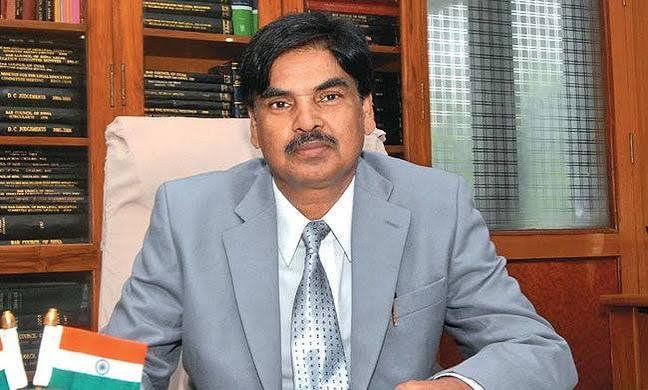
Mishra’s apology came after the BCI withdrew its controversial directive and after the Supreme Court sharply questioned the council’s intervention in what Justice Surya Kant described as a matter between him and the students.
In a three-page letter issued on Independence Day, Mishra expressed regret for any distress caused by his words or communications and acknowledged that students’ concerns should be heard with “patience, sensitivity and respect”.
“If anything connected with the present controversy, any of my words, or letter, has hurt the feelings of our law students, I sincerely regret and apologise for the same,” he wrote.
The episode has raised broader questions about the limits of the Bar Council’s regulatory powers, the right of law students to dissent and the relationship between India’s legal education institutions and the bodies that regulate entry into the profession.
How the NALSAR dispute began
The controversy began at Hyderabad’s NALSAR University of Law after a section of students objected to the university’s decision to invite CJI Surya Kant as chief guest for its convocation.
The students’ objection was linked to remarks attributed to the Chief Justice during proceedings concerning alleged police excesses against protesters at Delhi’s Jantar Mantar.
Reports about the episode initially suggested that Justice Kant had declined to urgently list a plea seeking intervention over alleged police action. He subsequently clarified that no formal petition had actually been filed and that the court had received only a lawyer’s representation.
The clarification did not end the controversy among students.
Around 450 NALSAR students reportedly wrote to university authorities asking that the invitation to the CJI be reconsidered.
Their objection was framed around questions of judicial accountability, constitutional values and the right to protest rather than opposition to the institution of the Chief Justice itself.
BCI enters the controversy
The dispute took a dramatic turn when the BCI issued a directive to state bar councils asking them not to enrol graduates from NALSAR’s 2026 batch until further orders.
The council said a law student who showed no regard or respect for the country’s highest judicial office could not be expected to become a responsible advocate, teacher or judge.
The order effectively threatened the professional future of an entire graduating class over the actions attributed to a section of students.
That response triggered immediate criticism from lawyers, academics and students.
The Supreme Court Bar Association described the action as arbitrary, illegal and disproportionate, while NALSAR alumni challenged the legality and procedure behind the directive.
The BCI subsequently withdrew the order.
Bar Council chief Manan Kumar Mishra apologises after row over order ‘banning’ NALSAR law graduates’ enrolment. pic.twitter.com/GJgsTOw9KL
— News Arena India (@NewsArenaIndia) August 15, 2026
CJI: ‘It’s a dialogue between me and the students’
Justice Surya Kant then made his position unusually clear.
Criticising the BCI intervention, he said the controversy was a matter between himself and the students and questioned the council’s authority to intervene.
“Absolutely uncalled for. I myself was a student who was actively engaged in protests. It’s a dialogue between me and the students. Who are they (Bar Council) to interfere?” he said.
The remark effectively shifted the focus from the original convocation dispute to a larger question: whether a regulatory body could collectively penalise students because of a campus protest.
The Supreme Court’s intervention also provided relief to students whose entry into the legal profession had suddenly been put at risk.
Mishra changes tone
Mishra’s Saturday letter struck a markedly conciliatory tone.
He said law students are educated in constitutional principles and should not be treated as people incapable of making independent judgments.
Peaceful disagreement, questioning and protest, he said, are essential elements of a constitutional democracy.
He also stressed that legal institutions must be willing to reconsider decisions when additional facts or explanations emerge.
“The Bar Council of India regards law students as the future of the legal profession. Their dignity, independence of thought and legitimate concerns must always be respected,” Mishra said.
He urged all sides to move forward in a spirit of reconciliation and warned against allowing the dispute to acquire a political character.
READ: From Sonia to Meloni: The Italian Connection Comes Back to Haunt BJP
NALSAR has a long tradition of student participation
The controversy is also significant in the context of NALSAR’s institutional culture.
NALSAR was established in 1998 and has explicitly identified constitutionalism, the rule of law and social justice as central elements of its academic mission.
Student participation in university affairs is also formally embedded in its structure. The university constituted its first Student Bar Council in July 2000, describing student participation in administration and management as an essential component of legal education.
That tradition has periodically translated into students taking positions on wider constitutional and political questions.
In December 2019, during protests against the Citizenship Amendment Act and alleged police action against students at Jamia Millia Islamia and Aligarh Muslim University, NALSAR’s Student Bar Council publicly condemned the use of force.
The students argued that dissent was a necessary component of a healthy democratic and political environment and invoked constitutional protections for peaceful expression.
The 2026 controversy therefore did not emerge in an institutional vacuum. NALSAR students have previously used their collective voice on questions involving civil liberties, constitutional rights and the conduct of state authorities.
A wider question about law students and dissent
The episode has now evolved beyond the question of who should attend a convocation.
At its heart lies a more fundamental issue: Can students of law peacefully disagree with a constitutional authority without risking their future professional careers?
The answer is particularly consequential at a law university.
Students preparing to become advocates, judges, academics and public officials are expected to understand that constitutional democracy does not eliminate disagreement. It provides mechanisms through which disagreement can be expressed.
The Supreme Court’s response suggests that student dissent, by itself, cannot be treated as professional misconduct.
The BCI’s initial response, meanwhile, exposed the dangers of treating criticism of a judicial authority as equivalent to disrespect for the institution itself.
From confrontation to reconciliation
What began as a disagreement over a convocation invitation escalated within days into a confrontation involving the country’s legal regulator and the Supreme Court itself.
The BCI first threatened the professional enrolment of an entire graduating batch, then withdrew the directive amid mounting criticism. The CJI publicly rejected the intervention, and Mishra subsequently apologised to the students.
The immediate crisis may now be over.
But the episode has left behind a larger debate about academic freedom, student activism, institutional autonomy and the limits of regulatory authority.
For NALSAR’s graduating students, the most important outcome is that their professional futures are no longer collectively threatened by the controversy.
For the legal profession, however, the episode may endure as a cautionary example of how quickly a dispute over a ceremonial invitation can become a constitutional argument about dissent, authority and the freedom to disagree.