From the US-Iran conflict and the strategic battle over the Strait of Hormuz to NATO’s uncertain future and China’s military ambitions, the piece explores the emerging geopolitical order and its implications for global stability.
Annpurna Nautiyal
July 10,2026: The rate at which shocking events have unfolded in 2026 has been alarming. A devastating earthquake in Venezuela recently claimed nearly 50,000 lives. Before that, the abduction of the country’s President by the United States sent shockwaves across the world.
Extreme heat conditions across several European countries have also claimed many lives, triggering an intense debate on climate change and responsibility for the worsening climate crisis. Trump’s grand celebration marking the 250th anniversary of America’s founding was disrupted by extreme heat, thunderstorms, and the cancellation of several live programmes. In contrast, the successful inauguration of the Obama Presidential Center in Chicago a few days ago was another striking development, particularly as Trump has consistently been critical and dismissive of Obama’s presidency.
New geopolitical equations are also emerging amid an increasingly fragile peace in West Asia. Oman, long considered a close ally of the United States and a mediator in peace talks between Washington and Tehran, alongside Pakistan, is now keen to partner with Iran in charging service fees from ships passing through the Strait of Hormuz.
This presents a lucrative opportunity, as Iran’s strategic weaponisation of the Strait has reinforced its position as one of the world’s most critical maritime choke points, capable of disrupting oil supplies to Asian and other countries.
Iran’s lengthy funeral procession for the late Supreme Leader Ayatollah Ali Khamenei, who was killed in a US airstrike at the beginning of Operation Epic Fury, coincided with July 4, the 250th anniversary of the founding of the United States. The timing was noteworthy and appeared to signal Iran’s resolve.
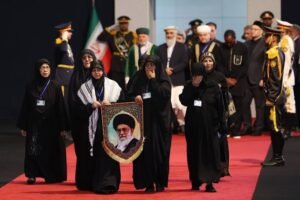
The funeral took place despite US warnings regarding the safety of Iran’s negotiators and political leadership amid alleged Israeli plots to assassinate them. Nevertheless, three sons of Ayatollah Khamenei, Iranian negotiators, officers of the Islamic Revolutionary Guard Corps (IRGC), and nearly one crore mourners, including several foreign dignitaries, participated in the ceremonies.
The presence of Pakistan’s Prime Minister, who described the slain leader as a great scholar and statesman, prompted US Senator Rick Scott to criticise Pakistan’s role in the US-Iran peace process and question its credibility as a mediator.
President Trump mocked the massive turnout at Khamenei’s funeral, remarking that he was “being nice” by granting Iran a one-week break from negotiations to conduct the ceremonies. However, Iran subtly demonstrated that its influence remains intact and that it continues to enjoy considerable international goodwill despite its repressive political system.
Many Iranians have not forgotten Trump’s policies. Placards reading “Death to Trump” and “Death to Netanyahu” were widely displayed during the funeral. Iran’s Joint Military Command also warned Israel against any attempt to assassinate Mojtaba Khamenei.
Iran’s steadfast resistance despite prolonged hardships appears to have compelled the United States to consider unfreezing Iranian assets and granting waivers on oil export sanctions in an effort to secure a quick peace agreement.
It was remarkable to witness how a global superpower appeared increasingly eager to reach a deal. This suggested that the United States had failed to achieve its stated objectives of dismantling Iran’s repressive regime, pushing the country “back to the Stone Age,” and eliminating its nuclear capabilities. Iran’s nuclear programme, the Strait of Hormuz, and the wider regional conflict have consequently emerged as the principal sticking points in negotiations.
Pakistan’s intensive mediation, alongside Qatar and several West Asian countries, resulted in a 14-point Memorandum of Understanding (MoU) and a 60-day halt in hostilities to facilitate negotiations on contentious issues, particularly the future of Iran’s nuclear programme, which Tehran remains unwilling to abandon.
To end the 110-day conflict, President Trump signed the framework agreement after several rounds of intense negotiations during a dinner hosted by French President Emmanuel Macron at the Palace of Versailles.
The choice of Versailles was deliberate, evoking memories of the 1919 Treaty of Versailles, which ended the First World War and reshaped Europe and global politics.
Unlike the 1919 treaty, where the distinction between victor and vanquished was unmistakable, the 14-point Memorandum of Understanding signed on June 17, 2026, by US President Donald Trump and Iranian President Masoud Pezeshkian lacked such clarity. Both sides have claimed victory.
Pakistan’s active diplomatic role has undoubtedly earned it President Trump’s favour. Nevertheless, the conflict has not truly ended. Commercial vessels continue to face attacks, making navigation through the Strait of Hormuz hazardous.
In response to Iranian attacks on three commercial ships and the revocation of the oil-sale waiver, the US military struck nearly 80 sites across Iran, including air defence systems, command-and-control facilities, anti-ship missile capabilities, and the Bushehr nuclear power plant.
Iran’s armed forces, in turn, claimed responsibility for attacks on US military installations in Bahrain and Kuwait.
These renewed hostilities threaten to derail negotiations aimed at ending the conflict. Iran has denied responsibility for attacks on oil tankers, while its chief negotiator has accused both the United States and Israel of violating the Memorandum of Understanding, which had enabled the reopening of the Strait of Hormuz.
If coercive tactics continue, energy supplies could once again face serious disruption.
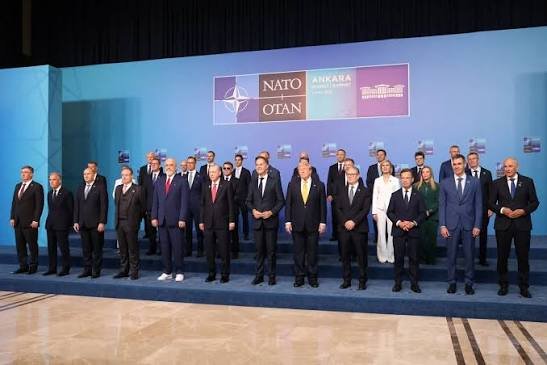
In this uncertain global environment, an important NATO summit was held in Ankara, Turkey, amid growing concerns over the alliance’s future following the proposed withdrawal of the United States. The summit also focused on the concept of NATO 3.0, under which European members are expected to shoulder greater responsibility for the continent’s security.
The Trump administration has announced plans to withdraw American troops from Europe in order to strengthen its military presence in the Middle East and the Indo-Pacific. Trump also criticised Denmark over Greenland and complained that Britain, France, and Italy had not done enough to support the United States during its conflict with Iran.
At the same time, calls for a stronger US role have intensified following China’s test of a long-range, nuclear-capable intercontinental ballistic missile launched from a nuclear-powered submarine into the Pacific Ocean on July 6, 2026. The test was condemned by Australia, Japan, Taiwan, and New Zealand because of the heightened security risks it posed.
It was China’s first such launch in nearly two years. Earlier, Kyiv had also been hit by Russian missile and drone attacks, making European security concerns even more acute and reinforcing the desire for continued American engagement. However, Trump’s policies suggest that European countries may increasingly have to strengthen their own defence capabilities against an assertive and heavily armed Russia.
The US Supreme Court’s decision to end the birthright citizenship issue dealt a setback to Trump’s anti-immigration policies. Meanwhile, France hosted the G-7 Summit, where India participated as an invited nation.
After a prolonged period of diplomatic distance, Prime Minister Narendra Modi and President Trump finally met, helping ease tensions between the two leaders. Trump described Modi as a great friend and a tough negotiator and expressed his willingness to visit India in the future.
The gesture came as a surprise, given Trump’s earlier approach, which had often strained relations with India.
Modi combined his G-7 visit with a trip to Slovakia, becoming the first Indian Prime Minister to visit the country since its independence in 1993. On the sidelines of the summit, he also discussed the India-UK Free Trade Agreement (FTA), negotiations with the European Union, and persuaded Canadian Prime Minister Mark Carney to work towards concluding negotiations on a bilateral economic partnership within this year.
Against the backdrop of changing geopolitical and power equations, countries across the world are recalibrating their foreign policies. India is also pursuing this course, as reflected in its recent hosting of Japanese Prime Minister Sanae Takaichi and Myanmar’s President U Min Aung Hlaing in view of the strategic challenges posed by China in the Indo-Pacific.
India and Japan agreed to deepen cooperation in energy, technology, and defence while expanding collaboration in connectivity, agriculture, tourism, skill development, and infrastructure across India’s North-East. These initiatives are intended to support Japan’s vision of a Free and Open Indo-Pacific while strengthening links between South Asia and Southeast Asia.
Both countries agreed that maintaining regional peace and a rules-based international order requires diplomatic engagement, military preparedness, and resilient economic ecosystems. These objectives complement India’s MAHASAGAR vision and Japan’s Free and Open Indo-Pacific strategy in addressing strategic challenges posed by China and Russia.
The two sides also criticised China’s dominance over rare earth and critical mineral supply chains, describing their use as instruments of economic coercion. They agreed to jointly develop the UNICORN defence system under Japan’s defence export policy and India’s Make in India initiative.
The project is intended to showcase Japan’s transformation from a traditionally pacifist nation into an active security provider while highlighting India’s emergence as a reliable defence manufacturing partner.
India’s discussions with Myanmar covered trade, defence, border security, healthcare, artificial intelligence, and cooperation in the space sector.
India also hosted the 11th QUAD Foreign Ministers’ Meeting in New Delhi in May 2026, attended by Australia, India, Japan, and the United States. The meeting announced several initiatives aimed at strengthening maritime security, combating transnational threats, enhancing economic resilience, promoting critical and emerging technologies, and improving humanitarian assistance and disaster response across the Indo-Pacific.
READ: Argentina Flight Instructor Dies After Jumping From Training Aircraft, Student Lands Plane Alone
India is also scheduled to host the 18th BRICS Summit in September 2026 under its presidency, with the theme “Building for Resilience, Innovation, Cooperation and Sustainability.”
Prime Minister Modi’s visits to Seychelles, the UAE, the Nordic countries, Indonesia, Australia, and New Zealand assume particular significance in the current geopolitical climate. These engagements are aimed at ensuring energy security, advancing India’s Act East Policy, and responding to China’s growing strategic influence in the Indo-Pacific, especially as the United States appears increasingly reluctant to shoulder greater regional responsibilities.
India’s close partnership with Seychelles forms an important pillar of its SAGAR and MAHASAGAR visions, which seek to establish India as the principal net security provider in the Indian Ocean region.
During Modi’s visit to Indonesia, the two countries finalised agreements for the joint development of the strategically located Sabang Port at the entrance to the Strait of Malacca. They also concluded agreements relating to the supply of India’s BrahMos cruise missile system and Astra air-to-air missiles, further strengthening bilateral defence cooperation.
(The author is former Vice Chancellor and Professor of Political Science, HNB Garhwal, (Central) University, Srinagar, Garhwal, Uttarakhand)