



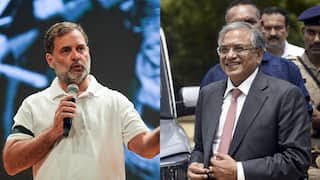
Rahul Gandhi accused Gyanesh Kumar of changing Form 6 “illegally and unilaterally”, while the Election Commission rejected the charge as misleading. The Supreme Court’s latest clarification makes clear that its earlier Bihar SIR judgment did not adjudicate the revised form.
BY Navin Upadhyay
The clarification comes against the backdrop of a sharp exchange between Gandhi and the Election Commission. On October 5, Gandhi asserted that it was “established beyond doubt” that Gyanesh Kumar had changed Form 6 “illegally and unilaterally”. The ECI rejected the allegation as misleading, maintaining that the Bihar SIR order had received unanimous approval from the Commission before being upheld by the Supreme Court.
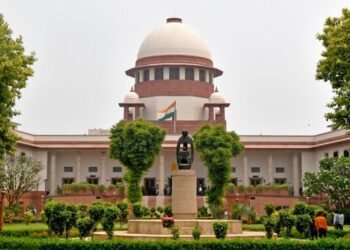
A Bench comprising Chief Justice of India Surya Kant and Justices Joymalya Bagchi and V. Mohana clarified on Monday that the revised Form 6 did not exist when the Supreme Court delivered its May 2026 judgment on the Bihar Special Intensive Revision (SIR) of electoral rolls. The Court, therefore, had not adjudicated the legality of the revised declaration, which requires new voters to state whether they or their parents were included in an earlier SIR.
READ: SC Rebuts ECI Claim on Revised Form 6, Says Its Validity Remains Open
Fact Check
❌The statement made in this post is misleading
✅1) The order for SIR in Bihar issued on 24 June 2025 was issued with the unanimous approval of the Commission. This order has been upheld by the Hon’ble Supreme Court of India in its judgment dated 27 May 2026
✅2) In its Press Note No. 120 dated 26 September 2026, in Point 1(iii), ECI has stated that, “The declaration attached to Form 6 for SIR has been upheld by the Hon’ble Supreme Court.”
#ECIFactCheck
— Election Commission of India (@ECISVEEP) October 5, 2026
Justice Bagchi stressed that the Court’s earlier observations could not be construed as either an endorsement or a rejection of the revised form. “That does not either say it is approved or disapproved by the Supreme Court. We will examine it,” he said.
The Bench cautioned against selectively interpreting its observations and scheduled the matter, along with connected petitions concerning the Election Commission and CEC Gyanesh Kumar, for October 27.
Monday’s clarification follows the Court’s October 5 observations, when the CJI stated that “any modified Form 6 has not been approved by us” and indicated that the records would be examined to establish who had modified the form. The latest remarks reinforce the distinction between the Court’s earlier judgment on Bihar’s SIR and the revised declaration introduced subsequently.
The clarification, however, does not establish that the revised form was introduced illegally or that Gyanesh Kumar acted unilaterally. Equally, it does not validate the ECI’s defence. The central point is that the Supreme Court has not yet ruled on the revised Form 6, and its earlier Bihar SIR judgment cannot be cited as judicial approval of the subsequent changes.
That distinction is significant because the ECI has invoked the earlier judgment in defending its position, while Gandhi has cited the absence of judicial approval to challenge the legitimacy of the revised declaration. The form’s legality remains open to judicial scrutiny, with the matter scheduled to come up on October 27.
Whether Gyanesh Kumar will apologise to Rahul Gandhi is a separate question. The Supreme Court has not found that the CEC acted illegally, nor has it directed him to apologise. Any apology would therefore be a political or institutional decision, not a consequence required by Monday’s clarification.
For now, the Court has drawn a clear distinction between what it has adjudicated and what the two sides have claimed about its earlier ruling. The October 27 hearing could bring greater clarity on the legal status of the revised Form 6. Whether the CEC acknowledges Gandhi’s criticism or offers an apology, however, remains an open political question.



Comments 1