


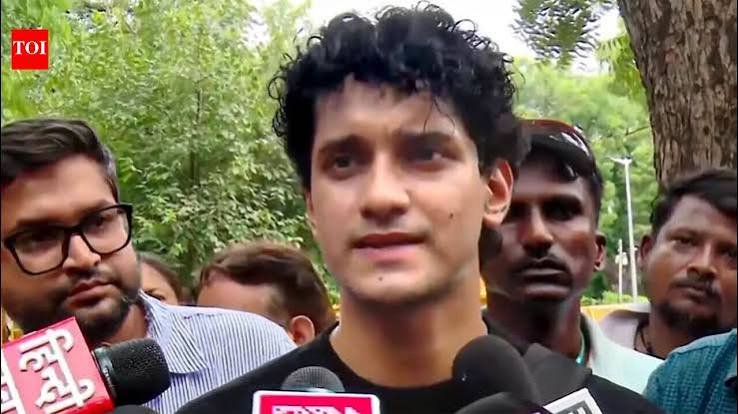
Saurav Das says immigration officials stopped him from boarding a London-bound flight after informing him that his passport had been flagged. With an Oxford Union panel scheduled for December 1, the question now is whether he can participate online.
BY PC Bureau
NEW DELHI / November 24: After allegedly preventing Cockroach Janta Party (CJP) co-convenor Saurav Das from flying to London for a scheduled engagement at the Oxford Union, the government could face a different question: can it also stop him from addressing students at Oxford through an online platform?
Saurav was scheduled to participate in a panel discussion on the Cockroach Janta Party at the Oxford Union on December 1. However, his planned journey to Britain was disrupted late Monday night after immigration officials at Delhi’s Indira Gandhi International Airport allegedly informed him that his passport had been flagged, preventing him from boarding his London-bound flight.
Saurav Das subsequently accused the Narendra Modi government of deliberately stopping him from travelling to Britain to speak before an international academic audience.
Could Zoom or Microsoft Teams Offer a Way Around the Travel Restriction?
Technically, there is no obstacle to Das addressing the Oxford audience through Zoom, Microsoft Teams or another video-conferencing platform. The Oxford Union could arrange a live video link, allowing him to participate in the discussion, deliver his presentation and answer questions from students.
A hybrid format, in which other panellists attend in person while Das joins remotely, is another possibility. Alternatively, organisers could arrange a pre-recorded address followed by a live question-and-answer session.
The Oxford Union’s published event schedule lists the CJP discussion for December 1, between 2 pm and 3 pm, with Das and CJP founder Abhijeet Dipke among the named panellists.
Whether the organisers will offer a virtual arrangement has not been announced. But the option could keep the engagement alive despite the disruption to Das’s travel plans.
🚨This coward government did not allow me to board my flight to London where I was invited by prestigious universities like Oxford, Cambridge, LSE, Edinburgh to deliver talks on the cockroach movement. Indian students put their heart and soul to organise the events but this anti-intellectual govt was scared of me going to these prestigious institutions!
@Cockroachisback
— Saurav Das (@SauravDassss) November 23, 2026
Can the Government Prevent an Online Address by Saurav Das?
Preventing someone from boarding an international flight and preventing that person from speaking to an audience through the internet involve different legal and administrative questions.
A passport-related travel restriction, even if lawfully imposed, does not automatically amount to a prohibition on communicating with people abroad through digital platforms.
For the government to prevent an online address, there would have to be a separate legal or regulatory basis for restricting the communication or the platform through which it is delivered.
India’s Information Technology Act and the rules governing online content provide mechanisms for the government to issue blocking directions in specified circumstances. Section 69A of the IT Act, for instance, permits the government to direct the blocking of public access to online information on specified statutory grounds and subject to prescribed procedures.
However, the existence of these powers does not mean that an individual’s participation in an online academic discussion can automatically be prohibited because the person has been stopped from travelling abroad.
Oxford Engagement and Questions Over Freedom of Expression
The scheduled discussion comes amid a series of controversies involving the CJP and its activists.
Saurav Das has previously faced police action in connection with protests in Delhi. He was among CJP activists detained ahead of a proposed demonstration against Chief Election Commissioner Gyanesh Kumar and was subsequently arrested following another protest at Jantar Mantar in October.
He was released after spending seven days in judicial custody.
The latest airport incident has added an international dimension to the controversy, particularly because the proposed Oxford engagement would have provided an opportunity to discuss the CJP’s political campaign before students and an academic audience in Britain.
Das has questioned why the government would prevent an Indian citizen from participating in an intellectual discussion abroad.
The immediate question, however, is whether the Oxford Union will facilitate his participation remotely.
If it does, Das could address the students without boarding a flight, while the circumstances surrounding the alleged passport restriction would remain a separate matter requiring clarification from the authorities.