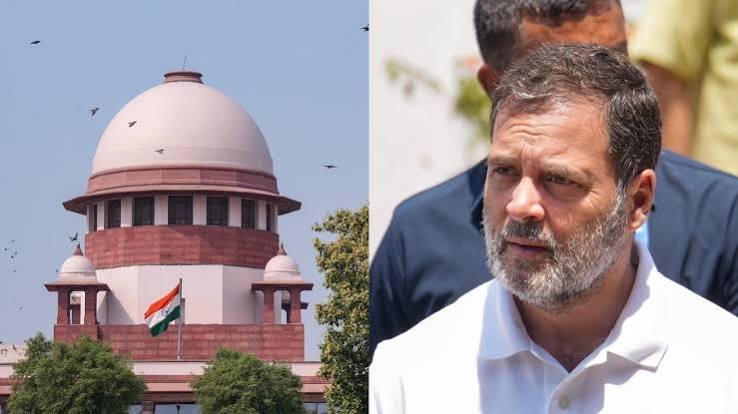
The petition seeks an independent audit of voter deletions, disclosure of Election Commission records and safeguards against the wrongful exclusion of eligible voters.
BY PC Bureau
New Delhi/ October 12: Opposition parties in the INDIA bloc, led by Rahul Gandhi, moved the Supreme Court on Monday seeking an interim stay on the ongoing Special Intensive Revision (SIR) of electoral rolls, alleging procedural irregularities and questioning the legality of decisions taken by the Election Commission of India (ECI).
The petition was filed by the Congress legal team after Gandhi failed to reach the Supreme Court before the 4.30 pm deadline. Filed by advocate S. Prasanna under the title Rahul Gandhi v. Election Commission of India, it seeks ten forms of relief, including a halt to the SIR, disclosure of official records, an independent audit of electoral roll changes and safeguards against the arbitrary deletion of voters.
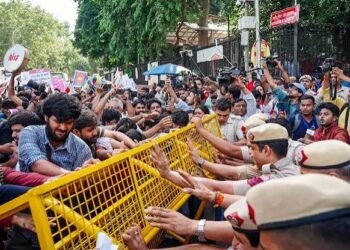
The legal challenge followed a massive INDIA bloc march to the Supreme Court, with opposition leaders including Congress president Mallikarjun Kharge, Priyanka Gandhi Vadra, Samajwadi Party chief Akhilesh Yadav, West Bengal Chief Minister Mamata Banerjee and RJD leader Tejashwi Yadav joining the protest. The opposition has also demanded the resignation of Chief Election Commissioner Gyanesh Kumar over allegations surrounding the conduct of the SIR.
READ: Under Fire Over ‘Vote Chori’, EC Launches Drive to Restore ‘Left-Out’ Voters
READ: Will Gyanesh Kumar Apologise to Rahul Gandhi After SC’s Fresh Take on Form 6?
A day earlier, Chief Justice of India Surya Kant had declined to meet Rahul Gandhi, citing the pendency of related cases before the Court and indicating that the opposition leader could approach the judiciary through a formal petition.
The petition by Rahul Gandhi before Supreme Court against SIR and ECI has 10 INDIA bloc leaders as co-petitioners. https://t.co/MrhTAUnb6M
— Bar and Bench (@barandbench) October 12, 2026
Ten Key Demands in the Petition
The petition seeks a series of directions aimed at scrutinising the Election Commission’s decisions, ensuring transparency in the revision of electoral rolls and protecting eligible voters from wrongful exclusion.
1. Disclosure of SIR records: The petition asks the Supreme Court to direct the ECI to produce all files, minutes, agreements, objections, official notings and relevant ECINET and ERONET access logs relating to the decision to launch the SIR on June 24, 2025. It invokes constitutional protections under Articles 14, 19 and 21, along with the Election Commission’s powers and responsibilities under Article 324.
2. Judicial scrutiny of the ECI’s decisions: The petition seeks an examination of whether the decisions relating to the SIR comply with Article 324, Section 18 of the Chief Election Commissioner and Other Election Commissioners Act, 2023, and the principles laid down in Seshan v. Union of India (1995). It asks that decisions found to lack legal authority be set aside.
3. Action against officials for violations: The petition seeks appropriate action against officials found responsible for violations of laws governing electoral rolls, including, where applicable, under Section 32 of the Representation of the People Act, 1950.
4. Properly recorded decisions: It asks the Court to ensure that the Election Commission considers the petition and related matters in accordance with Section 18 of the 2023 Act, with decisions on SIR-related issues properly documented.
5. Changes to online Form 6: The petition seeks directions to bring the online Form 6 into conformity with the format prescribed under the Registration of Electors Rules, 1960, arguing that deviations should not be introduced without formally amending the applicable rules.
6. Independent audit of electoral rolls: The petition proposes an independent committee headed by a retired Supreme Court judge, assisted by technical experts and eminent citizens. The proposed panel would audit voter deletions and other changes made during the SIR, examine access to databases such as ECINET and ERONET, review EVM design and election-related policies and protocols, and consider international best practices for ensuring free and fair elections.
7. Publication of deletion lists: The petition asks the ECI to publish booth-wise lists of voters deleted during the SIR, specifying the reasons for each deletion and providing age- and gender-wise classifications. It also seeks an effective mechanism to restore the names of eligible voters who have been wrongly excluded.
8. Safeguards against arbitrary deletions: It seeks a direction that no voter’s name be deleted without proper notice and a reasonable opportunity to be heard. In states facing upcoming elections, including Punjab, the petition also seeks to ensure that eligible voters can apply for inclusion until the applicable statutory cut-off date.
9. Interim stay on the SIR: The petition asks the Supreme Court to suspend the ongoing SIR across states until the case is heard and decided, arguing that a stay is necessary to protect eligible citizens’ voting rights and preserve the integrity of the electoral process.
10. Further relief: The petition seeks any additional directions the Court considers necessary to protect voters’ rights and ensure the fairness and transparency of elections.
The petition places the Election Commission’s handling of the SIR, the legal basis for changes to electoral procedures and the risk of eligible voters being excluded at the centre of the opposition’s challenge. The Supreme Court will have to consider the reliefs sought and the ECI’s response before deciding whether to grant any interim or final directions.