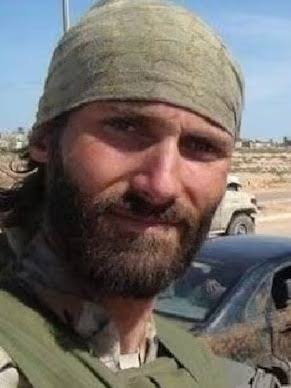
The case began under UAPA Section 18, but the September 8 chargesheet cites only immigration and border offences. The NIA says its terror probe remains open.
BY PC Bureau
NEW DELHI, Seprember 9: The National Investigation Agency’s decision to chargesheet American national Matthew Aaron Van Dyke and six Ukrainians only under the Immigration and Foreigners Act, 2025, has raised questions over the trajectory of a case that was initially presented as a serious national-security investigation under the Unlawful Activities (Prevention) Act.
The NIA filed the chargesheet on September 8, the day the 180-day statutory period for completing a UAPA investigation while keeping the accused in custody expired. The accused have been charged with alleged visa violations, unauthorised travel into a Protected Area and illegal entry into India.
What has drawn attention is that the original FIR registered in March had invoked Section 18 of the UAPA, which deals with conspiracy to commit a terrorist act.
That creates an obvious question: if the investigation began with a terrorism-related provision, why has the NIA, at the crucial 180-day stage, filed charges only over immigration and border violations?
The answer, according to government and agency sources, is that the UAPA investigation has not been closed. Investigators are continuing to examine digital devices, financial transactions and overseas connections, and a supplementary chargesheet under the UAPA could be filed if further evidence establishes a terrorist conspiracy directed against India.
But the explanation does not entirely remove the questions surrounding the case.
READ: Two-Year Plot Behind Red Fort Blast? NIA Names Umar Un Nabi
READ: KLA vs NSCN (I-M): Manipur Double Standard on Armed Groups
From terror probe to immigration offences
The March arrests were significant because investigators suspected that Van Dyke and the Ukrainians had entered India, travelled through the Northeast and crossed into Myanmar, where they allegedly participated in drone-related military training.
The NIA had initially examined whether the activities could have implications for Indian security, particularly because of the volatile situation along the India-Myanmar border and the presence of several armed groups in the region.
The Northeast has a porous border with Myanmar, where drones have become an increasingly important element of warfare. Indian agencies have long been concerned about the movement of weapons, cadres and technology across the frontier and possible links between Myanmar-based armed organisations and insurgent networks in India’s Northeast.
VIDEO | Delhi: Advocate Rohit Dhandhyal, counsel for American national Matthew Vandyke, shares an update on the NIA chargesheet in the Myanmar-linked terror conspiracy case, saying, “It is like after 180 days they come to this conclusion that this is only a Foreigners Act… pic.twitter.com/mnabSqsFRx
— Press Trust of India (@PTI_News) September 8, 2026
The investigation into Van Dyke therefore acquired significance far beyond an alleged visa violation.
Yet the chargesheet now before the court does not contain UAPA charges against him or the six Ukrainians.
That is the central reason the case has attracted scrutiny.
The 180-day deadline
The timing is particularly important.
Under the UAPA framework, an accused can remain in custody for an extended period while a terrorism investigation is being completed, subject to the statutory conditions and court orders. If the investigation is not completed within the prescribed period, the accused can potentially invoke statutory default bail.
By filing the immigration-related charges before the deadline, the agency has secured prosecution on offences it says are presently established while retaining the possibility of continuing the investigation into the more serious allegations.
Legally, therefore, the September chargesheet does not necessarily mean that the UAPA case has disappeared.
But from the standpoint of the original allegations, it represents a striking change in the immediate legal posture of the case.
What investigators initially suspected
Van Dyke, a 46-year-old American from Baltimore, is a documentary filmmaker and founder of Sons of Liberty International. He has previously involved himself in armed conflicts overseas, including Libya and Ukraine, and has described his organisation as providing training to groups fighting authoritarian governments.
The six Ukrainians named in the case are Petro Hurba, Taras Slyviak, Ivan Sukmanovskyi, Marian Stefankiv, Maksim Honcharuk and Viktor Kaminskyi.
According to the investigation, they entered India on tourist visas in December 2025, travelled from Guwahati towards Mizoram without the required Protected Area Permit and subsequently crossed the international border into Myanmar.
They allegedly conducted drone warfare training there for ethnic armed organisations fighting Myanmar’s military authorities.
That activity, by itself, does not establish a terrorist conspiracy against India. Nor does participation in a conflict outside India automatically constitute an offence under the UAPA.
This distinction is crucial.
The missing India link
The fundamental legal question for a UAPA terrorism case is not simply whether the accused engaged in armed activity or provided military training abroad. Investigators would need to establish the required nexus with a terrorist act or prohibited activity covered by Indian law.
According to government sources cited after the chargesheet, investigators have so far found no conclusive evidence of an India-directed conspiracy, although the possibility has not been ruled out.
That may explain why the NIA has proceeded with offences that are easier to establish on the available evidence.
It also explains why the case cannot simply be described as the NIA “dropping” terror charges.
At the same time, the initial invocation of UAPA Section 18 inevitably invites scrutiny over what evidence led investigators to invoke the provision in the first place and whether subsequent investigation failed to establish the suspected India connection.
A case caught between security and evidence
The Van Dyke case highlights a difficult problem for Indian security agencies.
The government cannot afford to ignore foreign military veterans, weapons networks or drone technology moving through the Northeast and into Myanmar. The region’s proximity to an active civil war makes such activity a legitimate security concern.
But national-security concerns cannot by themselves substitute for evidence required to sustain a terrorism prosecution.
That is where the case has reached an awkward point.
The NIA appears to have enough evidence, at least for now, to prosecute the accused over immigration and border violations. Whether it has enough evidence to establish a terrorist conspiracy against India remains an open question.