By PC Bureau
September 10, 2026: Iran has struck a key US military base in Jordan, damaging multiple American warplanes, in a sharp escalation of the six-month US-Iran conflict and a sign that Tehran is increasingly taking the fight directly to US military assets across the region.
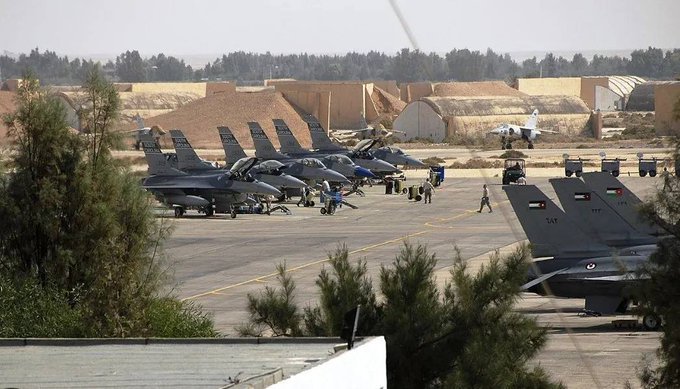
An Iranian missile attack overnight on Muwaffaq Salti Air Base near Al Azraq damaged an A-10 Thunderbolt so severely that the aircraft was left without a wing, while about eight F-15 fighter jets suffered lighter damage, according to CBS News. The F-15s were later returned to service.
Jordan said its air defences intercepted 18 of 20 Iranian missiles fired at the country, while the remaining two fell in unpopulated areas. No casualties were reported.
The strike came hours after the United States destroyed five Iranian oil tankers in the Gulf of Oman and near Iran’s Kharg Island. Washington said the attacks followed repeated Iranian missile strikes on a US Navy warship. The warship evaded the attacks and suffered no casualties.
Iran’s Islamic Revolutionary Guard Corps subsequently claimed attacks on US military positions and vessels in the Gulf, including the base in Jordan.
READ: Trump Promises $5k to Every US Adult if Republicans Win Midterms
Iran’s ballistic missile attack on Muwaffaq Salti Air Base in Jordan last night damaged several American aircraft -CBS
Roughly eight F-15s suffered light damage and one A-10 was severely damaged, losing a wing. pic.twitter.com/DQydfG4WYH
— OSINTtechnical (@Osinttechnical) September 10, 2026
US-Iran Retaliation Widens
The latest exchange marks a significant expansion of the conflict. US forces are targeting Iranian oil shipments and attempting to restrict Tehran’s ability to generate revenue, while Iran is responding by attacking US military positions and threatening commercial shipping around the Strait of Hormuz.
Iran claimed on Wednesday that it had attacked 10 vessels near the strait following the US destruction of the five tankers. Washington denied that its warships had been hit.
The tit-for-tat attacks are now creating risks well beyond the immediate battlefield.
Brent crude rose above $100 a barrel as shipping disruptions intensified. The Strait of Hormuz normally carries roughly a fifth of global oil and gas supplies, and traffic through the waterway has fallen sharply during the conflict.
Jordan Drawn Deeper Into Conflict
The attack also puts Jordan in an increasingly difficult position.
A close US security partner, Jordan hosts American military forces and has become an important part of Washington’s regional military network. Repeated Iranian attacks on bases in the kingdom are therefore turning Jordan into a frontline state despite Amman’s efforts to avoid being drawn deeper into the conflict.
Iran’s ability to damage American aircraft despite Jordanian and US air defences also highlights the growing threat to US forces stationed across the region.
For Washington, the latest strike raises pressure to strengthen protection for its bases and potentially respond more forcefully. For Tehran, targeting American assets outside Iran offers a way to raise the cost of the US campaign without engaging the full weight of American forces directly inside Iran.
Oil and Regional Security at Risk
The military escalation is already spilling into the energy market.
Iran-backed Houthi forces have intensified attacks on Saudi Arabia, threatening another major regional energy corridor and adding pressure to alternative routes for Gulf oil exports. Reuters reported that Brent has risen nearly 30% from its early-August lows as the conflict disrupts regional supplies.
That carries consequences far beyond the Middle East. Prolonged disruption around the Gulf could push up fuel, transport and food costs globally, with major Asian oil importers particularly exposed.
Trump Warns Iran
President Donald Trump has warned Iran against further escalation and separately threatened to strike Pickaxe Mountain, a fortified Iranian site near the damaged Natanz nuclear facility, saying the US would hit it “very hard” if Tehran continues what he described as provocative activity.
Trump has also said he expects the war to end after the November US midterm elections, accusing Iran of attempting to influence the vote.
The latest strike, however, suggests the opposite: the conflict is becoming more geographically dispersed and increasingly focused on US military assets, Iranian oil exports and the region’s vital shipping routes.
With American warplanes now damaged on a key base in Jordan and oil prices above $100 a barrel, the danger is that the cycle of retaliation could produce a much wider regional confrontation before either side is ready to step back.