Investigators have named Umar Un Nabi as the alleged mastermind, claiming he revived an Ansar Ghazwat-ul-Hind module and ultimately triggered a vehicle-borne IED inside a Hyundai i20.
BY PC Bureau
NEW DELHI/ September 9: The November 10, 2025 explosion near Delhi’s Red Fort was allegedly the culmination of a nearly two-year conspiracy rather than a hastily executed attack, with the National Investigation Agency claiming that the accused had been rebuilding an extremist network, conducting reconnaissance of the target and preparing explosives long before the blast.
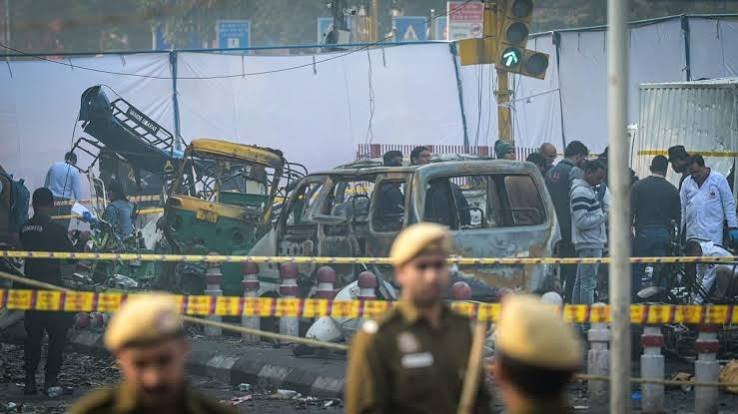
In its chargesheet filed before a special NIA court, the agency has named Umar Un Nabi as the alleged mastermind and “operational in-charge” of a revived Ansar Ghazwat-ul-Hind (AGuH) module linked by investigators to Al-Qaeda in the Indian Subcontinent. The blast, involving a Hyundai i20 allegedly converted into a vehicle-borne improvised explosive device (VBIED), killed 11 people and injured several others, according to the agency.
The NIA alleges that Nabi was inside the car when the explosion occurred and deliberately triggered the device through a command mechanism.
Investigators say DNA analysis of biological material recovered from the scene placed Nabi inside the vehicle at the time of the blast. Forensic examination of debris and swabs, according to the chargesheet, detected traces of TATP and ammonium nitrate.
Network allegedly rebuilt from 2022
According to the NIA, Nabi began attempting to revive a dormant AGuH network in early 2022 and gradually assembled a group capable of executing terrorist attacks.
Investigators allege that the group held secret meetings, recruited and radicalised members, arranged training and finances, procured weapons and identified hideouts. Communication among members was allegedly conducted through encrypted platforms, including Signal.
The meetings, according to the chargesheet, took place at locations in Jammu and Kashmir as well as the Delhi-NCR region.
Red Fort reconnaissance allegedly began in 2023
The NIA says reconnaissance of the Red Fort began as early as December 2023, with Nabi and other accused allegedly visiting the area on multiple occasions.
Investigators claim the historic monument was selected because of its symbolic significance and was viewed by the conspirators as a representation of the Indian state.
The agency says the exact date of the attack was not fixed nearly two years in advance. Instead, the plot allegedly accelerated after arrests in Srinagar, with Nabi fearing that the wider network was at risk of being exposed.
The NIA alleges that the accused then moved towards executing the attack using the vehicle converted into a VBIED.
READ: Adani, Reliance: Where Retired Babus Find a Corporate Haven
READ: KLA vs NSCN (I-M): Manipur Double Standard on Armed Groups
Explosives and laboratory equipment
The chargesheet also refers to chemicals and laboratory equipment allegedly recovered during the investigation, which the agency says point to attempts to manufacture and store explosive material.
Forensic findings cited by investigators include traces of TATP and ammonium nitrate in material recovered from the blast site.
The NIA has also relied on literature allegedly recovered from members of the module as evidence of the ideological influence behind the conspiracy.
Among the material cited is Lone Mujahid Pocket Book / How to Become an Assassin, which the agency has linked to Al-Qaeda in the Arabian Peninsula. Other documents listed by investigators include Definition of Jihad, The Requirements of Jihad, The 21 Aims and Objectives of Jihad, 39 Ways to Serve and Participate in Jihad and 44 Ways to Support Jihad.
The agency alleges that such material was used to promote extremist ideology, justify violence and encourage lone-wolf and suicide attacks.
NIA’s case against Nabi
The agency alleges that Nabi played a central role in recruiting and radicalising members, organising clandestine meetings, arranging funds and training, procuring illegal weapons and securing locations for the group.
It further claims that the network operated clandestinely and relied on encrypted communications to avoid detection.
The NIA’s case is that the Red Fort attack was therefore not an isolated act but the outcome of a structured conspiracy involving recruitment, ideological indoctrination, reconnaissance, procurement and preparation.
The chargesheet also seeks to establish a chain linking the alleged extremist module to the November 10 attack and the wider conspiracy.
However, all these claims remain allegations contained in the NIA chargesheet and have yet to be established before a court of law. The accused will have the opportunity to contest the charges and evidence during the trial.