From a taxpayer-funded crematorium in Patna to over 1,000 acres for a thermal power plant in Bhagalpur, two high-profile projects have one thing in common: both have been leased on token ₹1 terms—to Isha Foundation’s outreach arm and Adani Power, respectively. The decisions have sparked intense debate over the government’s approach to public assets and private partnerships.
By Navin Upadhyay
June 30, 2026 — Welcome to the shining “New Bihar,” where development isn’t measured by jobs, education, or healthcare, but by how creatively the government can hand over public assets to friendly giants at Re 1 — one to handle electricity, the other to handle the final journey toward it.
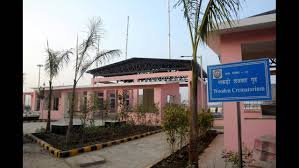
In a move that perfectly captures the state’s vision of progress, Patna’s iconic Bansghat crematorium, Asia’s largest modern funeral complex, has been entrusted to Sadhguru Jaggi Vasudev’s Isha Foundation. The price: a token Rs 1.
Around six months ago, Gautam Adani’s group secured over 1,000 acres for a massive power plant at roughly the same magical rate. Adani will generate the power; Jaggi will run the crematorium. The dead, it seems, can rest easy knowing their last rites are now part of a synergistic, transparent, sustainable, and thoroughly spiritual business model. As one local wit put it on social media: “In Bihar, even death has been outsourced to inner engineering.”
The Deal That Made Headlines
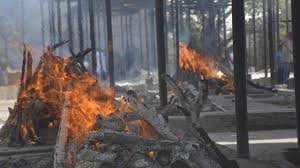
The Bansghat crematorium, spread across 4.5 acres on the banks of the Ganga, was redeveloped by the Patna Smart City Mission at a cost of nearly ₹90 crore in public money. It now has 18 cremation platforms, electric furnaces, eco-friendly options, air-conditioned waiting halls, Ganga-water ponds, and the capacity to handle dozens of cremations a day.
Previously run by the Patna Municipal Corporation at heavily subsidised rates, the facility has now been leased to Isha Outreach, the social arm of the Isha Foundation, for a five-year term at just ₹1. Similar token leases, often running 33 years for a total of Re 1, have been extended to Isha for crematoriums in several other Bihar cities, including Munger.
Critics were quick to cry foul: a public utility built with taxpayer money, now run by an out-of-state spiritual organisation on remarkably generous terms. Under PMC management, an electric cremation cost around ₹300, heavily subsidised for ordinary families. Under Isha Outreach, the base fee now starts at ₹3,500. In one of India’s poorest states, that jump has triggered real anger, with many calling the new rates simply unaffordable.
The Fee Structure: Transparency, Sustainability, and a Few Extra Charges
User charges sit at the heart of the controversy. Isha Foundation says the ₹3,500 fee for electric cremation falls within municipal limits and is among the lowest permitted, with the money going toward electricity and maintenance. Traditional wood-based cremation carries the same ₹3,500 service charge, on top of which families must buy firewood separately. Critics have also pointed to extra charges for services like the Dom Raja and priests, fuelling accusations that a civic utility is being run more like a commercial enterprise.
The foundation insists the fee structure balances transparency with the facility’s long-term sustainability, and that families below the poverty line will get concessions or free services, mirroring its model in Tamil Nadu, where it operates more than 30 crematoriums. Still, the shift is hard to miss: a basic civic service has become a premium experience.
Allegations of Commercialisation and Questions of Equity
Critics aren’t convinced by the “service, not business” framing. They point to the lease itself: a prime riverside facility, built with ₹90 crore in public funds, handed over for five years at ₹1. Similar token deals reportedly cover land for new Isha crematoriums in six Bihar cities. Many find it hard to square heavy state subsidy for a private foundation’s operations with ongoing land acquisition and displacement disputes affecting poorer residents elsewhere in Bihar.
“Public money built it, private hands now profit from it” has become something of a refrain. Some appreciate the air-conditioned halls and eco-friendly technology; others ask why the same upgrades couldn’t have stayed under public management at the old subsidised rates. With daily wages for labourers often below ₹300–400, a ₹3,500 fee for last rites feels to many less like sustainability and more like a tax on grief.
The Foundation’s Defence: Dignity Above All
According to media reports, Isha Outreach has maintained that its objective is to provide dignified, transparent and environmentally sustainable funeral services, not to generate profits. The foundation says the user charges are meant to cover the operating and maintenance costs of the upgraded facility, including electric cremation furnaces, modern amenities and staff. It has also pointed to its experience in Tamil Nadu, where it says it has managed crematoriums while offering free or subsidised services to Below Poverty Line (BPL) families. The foundation argues that its model combines improved civic infrastructure with greater transparency, efficiency and reduced environmental impact by encouraging cleaner electric cremations over traditional wood pyres.
READ: Crude Oil Tumbles, But Don’t Expect a Discount at the Pump
Social Media Divided Over Bihar’s Decision
The decision has triggered a sharp debate on social media, with opinions split between those who see the move as an example of the privatization of public assets and those who argue it is a proven model for improving civic services.
Pragnya Gupta (@GuptaPragnya), in a post on X, criticized the decision, writing:
“This is not ‘religious tourism’. This is cronyism dressed in saffron robes. This is how public resources are privatized for spiritual businesses while the state begs for funds for education, health, and employment. Where is the transparency? Where was the auction? Where is the accountability for this sweetheart deal on land acquired with public money? Bihar deserves development for its people, not discounted prime land for private spiritual empires. This is daylight robbery of the public exchequer. Anything and everything is being looted in the name of God, religion and spirituality. Wasn’t all the land Jaggi Vasudev grabbed and usurped in Tamil Nadu and other regions not enough for him? It’s a massive scam.”
Others strongly disagreed. X user Gargi (@gargiuvacha), who supports the initiative, argued that the arrangement builds on Isha Foundation’s established record of managing crematoriums efficiently.
“A decade-plus track record of dignity, efficiency, transparency, and corruption-free functioning is precisely why governments are trusting Isha with more such crematoriums. Bihar is not a random experiment. It is an expansion of a successful model. Similar requests have come from many other places too, because the need is real. The purpose is simple: dignity in death. A fixed standard fee, decided by the government, is charged to prevent exploitation. This fee is not randomly decided by Isha. It goes towards operation and maintenance of the facility. That means the family knows the cost upfront.”
The contrasting reactions reflect the broader public debate surrounding the project. While critics question the transparency of leasing a taxpayer-funded public facility to a private charitable organisation on nominal terms and the resulting increase in user charges, supporters contend that professional management, standardized pricing and better maintenance justify the arrangement.
Adani Power Meets Isha Pyres: The Ultimate Synergy
No account of New Bihar would be complete without the Adani angle. In a controversial deal without inviting any tender, the state government leased roughly 1,020–1,050 acres in Bhagalpur’s Pirpainti area to Adani Power for a 2,400 MW thermal plant, at about Rs 1 per acre per year for 25–33 years. In exchange, the company promises major investment, jobs, and reliable power.
The neatness of it is hard to ignore: electric cremations at Bansghat will run on power that Adani generates, on land secured for next to nothing, feeding furnaces that in turn generate ₹3,500 per cremation. Coal, or supercritical technology, becomes kilowatts, becomes ash. Both companies got land and assets for essentially nothing — one set of critics calls it cronyism, supporters call it visionary public-private partnership, and locals in Bhagalpur worry mainly about lost farmland, felled trees, and delayed compensation.
What Does Jaggi Vasudev Have to Do with Bihar Anyway?
That remains the one-rupee question. Sadhguru and Isha have deep roots and a proven record with crematoriums in Tamil Nadu. Bihar, with its own long spiritual history around the Ganga and Bodh Gaya, apparently still needed Coimbatore’s expertise. As one observer put it: “Inner Engineering was incomplete without Outer Cremation Management.” Jaggi’s visits to the state, his meetings with leaders, and his “Conscious Planet” messaging now extend, it seems, to ensuring the departed leave consciously — and with a paid receipt.
बोधगया: आषाढ़ पूर्णिमा के पावन अवसर पर ईशा फाउंडेशन के संस्थापक और प्रसिद्ध आध्यात्मिक गुरु सद्गुरु ने बोधगया स्थित पवित्र महाबोधि महाविहार में भगवान बुद्ध की पूजा-अर्चना की।#Sadhguru #BodhGaya #MahabodhiTemple #MahabodhiMahavihar #Buddha #AshadhaPurnima pic.twitter.com/IhfkXpwfmO
— DD News Bihar | डीडी न्यूज बिहार (@ddnewsBihar) June 29, 2026
Broader Vision for New Bihar: Everything at Re 1
This isn’t an isolated case but a pattern: land for power, crematoriums for closure, rivers presumably next for rejuvenation. The template is consistent — the government funds expensive public infrastructure, then hands operational control to private or quasi-private entities at nominal rates. The state avoids the day-to-day headaches, claims credit for “development,” and leaves the new operators to handle revenue recovery. The citizen, meanwhile, gets modern facilities at market-plus prices, with promises of efficiency and free services for the very poorest. Whether it’s electricity tariffs from the new plant or funeral fees at Bansghat, the cost eventually finds its way back to ordinary families, often at their most vulnerable moments.
Picture the scene: a bereaved family arrives at Bansghat, sits in air-conditioned comfort, performs the rites as Isha volunteers chant, cremates their loved one using Adani-powered furnaces, and receives a tidy, transparent bill. The ashes go into a hopefully cleaner Ganga, and the family leaves spiritually consoled and financially lighter, while Adani’s plant hums on in the background, powering not just cremations but the larger “New Bihar” dream.
The Final Punchline
Sadhguru has taught that death is not an end but a transformation. In New Bihar, it has also become a revenue stream, a synergy project, and a talking point. Adani supplies the volts; Isha manages the journey from volts to ashes; the government takes the credit. And the people of Bihar pay for it, one dignified, sustainable, ₹3,500 farewell at a time.
Perhaps this is the real enlightenment of the moment: realising that in the 21st century, even the road to moksha now comes with maintenance charges and a public-private handshake. The Ganga flows on, carrying the ashes downstream, while the machinery of progress, powered by Adani and sanctified by Isha, keeps turning.
Welcome to New Bihar, where life remains uncertain, but death, at least, is now efficiently managed, transparently priced, and strategically partnered.