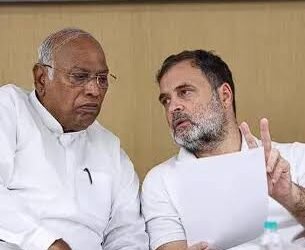
A planned protest by young lawyers against BCI chairman Manan Kumar Mishra has put the regulator’s accountability mechanisms under scrutiny. The demonstration follows the withdrawal of a controversial directive targeting the graduating batch of NALSAR University of Law.
BY PC Bureau
NEW DELHI, August 19 — A planned protest by young lawyers against Bar Council of India Chairman Manan Kumar Mishra has brought renewed attention to the powers of the BCI, its disciplinary framework and the limits of accountability available within the statutory body.
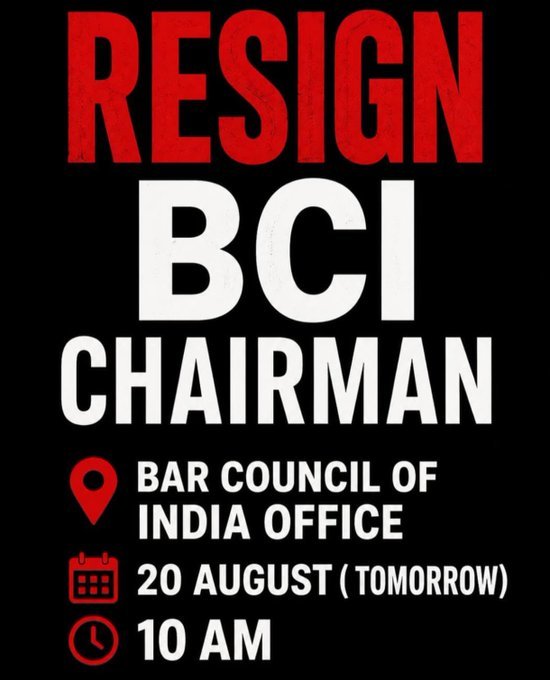
Members of the All India Young Advocates Association (AIYAA) are scheduled to demonstrate on Thursday over the BCI’s now-withdrawn directive concerning the graduating batch of NALSAR University of Law. The protesters are demanding accountability from Mishra, with supporters of the demonstration calling for his resignation.
CJP national spokesperson Saurav Das said participants identifying themselves as “Legal Cockroaches” would join the protest, while the party’s legal affairs head Ratna Singh also backed the demonstration.
The controversy arose after the BCI directed State Bar Councils not to enrol students from NALSAR’s graduating batch amid an examination of allegations concerning a campaign opposing Chief Justice of India Surya Kant’s participation as chief guest at the university’s convocation.
The directive was withdrawn within hours following criticism. A subsequent communication clarified that the overwhelming majority of students were innocent and should not be penalised for the alleged conduct of a few.
Mishra later apologised if his words or the BCI’s communication had hurt law students.
The episode has nevertheless raised a larger institutional question: what is the formal mechanism for disciplinary action against an advocate or a member of a Bar Council, and can the BCI chairman himself be removed through that process?
What the Advocates Act provides
The statutory framework begins with the Advocates Act, 1961. Section 35 deals with disciplinary proceedings against advocates accused of “professional or other misconduct”. When a State Bar Council has reason to believe that an advocate on its roll has committed misconduct, it refers the matter to its disciplinary committee.
The disciplinary committee must give the advocate an opportunity to be heard. It can dismiss the complaint, reprimand the advocate, suspend the advocate from practice or remove the advocate’s name from the State roll. A suspension bars the advocate from practising before courts or authorities during the suspension period.
Importantly, this disciplinary machinery is primarily designed to regulate advocates’ professional conduct. It is not, by itself, a general-purpose mechanism for removing the elected or nominated office-bearer of a Bar Council.
It seems the Legal Cockroaches have united and will be protesting against the Chairman of the Bar Council of India tomorrow at 10 AM and demanding his resignation.
The protest has been called by the All India Young Advocates Association. I support any form of… pic.twitter.com/NLJuXR7fpU
— Saurav Das (@SauravDassss) August 19, 2026
What happens when the BCI itself becomes involved?
Section 36 gives the BCI disciplinary committee powers in specified circumstances. The BCI disciplinary committee can withdraw a disciplinary proceeding pending before a State Bar Council for inquiry before itself, either on its own motion, on a State Bar Council report or on an application by an interested person. It can then exercise the disciplinary powers available under Section 35.
The BCI also has a broader statutory role. Section 7 authorises it to lay down standards of professional conduct and etiquette, prescribe disciplinary procedures and exercise general supervision and control over State Bar Councils.
That distinction matters in the present controversy. A complaint that an advocate committed professional misconduct is different from a political or institutional demand that the chairman of the BCI resign because of a controversial administrative decision.
Is there an automatic procedure to remove the BCI chairman?
The Advocates Act does not establish a simple “vote of no confidence” or disciplinary procedure under which a protest by lawyers automatically removes the BCI chairman.
Therefore, a demand for Mishra’s resignation is fundamentally different from a Section 35 disciplinary complaint against an advocate.
Any challenge to the legality of a particular BCI decision would potentially have to be pursued through the appropriate legal or institutional route depending on the nature of the decision, rather than treating the disciplinary provisions as an automatic removal mechanism.
The BCI itself is a statutory body constituted under the Advocates Act, and its internal composition, elections and functioning are governed by the Act and applicable rules. The Act separately empowers the BCI to make rules concerning matters including professional conduct and disciplinary procedure.
What are the safeguards in disciplinary proceedings?
The legislation provides several procedural safeguards.
A disciplinary committee must provide the advocate concerned with notice and an opportunity to be heard. The committee also possesses powers comparable to those of a civil court for matters such as summoning witnesses, requiring documents, receiving affidavit evidence and requisitioning public records.
There is also a statutory timeline. Under Section 36B, a State Bar Council disciplinary committee is expected to conclude proceedings within one year. If it fails to do so, the matter is transferred to the BCI for disposal.
An aggrieved person can appeal a State Bar Council disciplinary decision to the BCI under Section 37. The appeal must ordinarily be filed within 60 days.
A further appeal lies to the Supreme Court against an order of the BCI disciplinary committee under Section 38, again ordinarily within 60 days.
READ: NRC Before Census: Meitei Protesters to Boycott Govt Offices
What does this mean for the NALSAR controversy?
The controversy over the withdrawn NALSAR directive does not automatically constitute a disciplinary case against Mishra.
For disciplinary action to follow under the Advocates Act, there would need to be a legally recognised basis for treating the conduct of the person concerned as professional or other misconduct within the statutory framework. A controversial policy decision, administrative directive or public statement is not automatically equivalent to professional misconduct.
The withdrawal of the NALSAR directive and Mishra’s subsequent expression of regret are therefore significant politically and institutionally, but they do not, by themselves, establish a disciplinary offence.
The planned AIYAA demonstration is consequently better understood as a demand for institutional and political accountability, rather than as the commencement of a statutory disciplinary proceeding.
The episode has nevertheless exposed a difficult question for the legal profession: what mechanism should exist when the regulator itself faces allegations of overreach or an exercise of power that lawyers believe undermines due process?
That question goes beyond the immediate NALSAR controversy. It concerns the balance between the BCI’s regulatory authority, the autonomy of legal education institutions, the rights of law students and the accountability of those who exercise statutory power.
The protesters may demand Mishra’s resignation, but under the present statutory framework, a protest or resignation demand is not the same thing as a disciplinary proceeding, and the Advocates Act does not provide a straightforward disciplinary route for removing the BCI chairman from office merely because of a disputed administrative decision.