With rainfall nearly 40 per cent below normal, delayed crop sowing, shrinking reservoirs and growing concerns over food inflation have exposed the vulnerabilities of an economy still deeply tied to the rhythm of seasonal rains.
By PC Bureau
When the India Meteorological Department (IMD) announced on June 30 that India had just experienced its fifth driest June since 1901, it was more than a startling weather statistic. It was a reminder of how profoundly the country’s fortunes remain tied to the monsoon.
June is when India’s agricultural economy awakens. Farmers prepare their fields, sow the kharif crop, reservoirs begin to refill, and hopes for a good harvest take shape. But this year, those hopes were repeatedly dashed as rain-bearing clouds hesitated, retreated and stalled.
The numbers tell a grim story. India received just 99.5 mm of rainfall against the long-period average of 165.3 mm—a deficit of nearly 40 per cent. Only four Junes in more than 125 years have been drier: 1905, 1926, 2009 and 2014.
Yet the real story lies beyond the statistics.
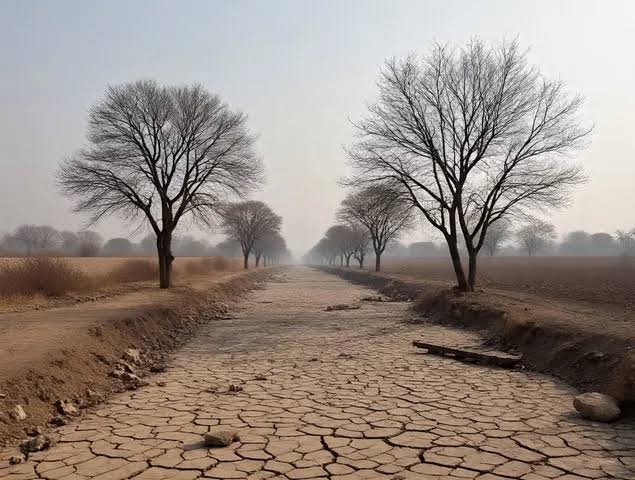
From delayed paddy transplantation in eastern India to shrinking reservoir levels in western states, from anxious farmers watching cracked fields to economists recalculating inflation forecasts, the weak monsoon has exposed how deeply India’s economy remains vulnerable to the vagaries of the weather.
The late arrival of rains has also revived an uncomfortable question: despite decades of investment in irrigation, forecasting and climate resilience, is India still dangerously dependent on a good monsoon?
June was dry (-39.8% rain deficit).
Now IMD says July – which carries 70%+ of the monsoon season’s rain will also come in below normal at 94% of LPA.
Reservoirs at 26% capacity. Kharif sowing already down 23% YoY.
Worth watching: food inflation + rural consumption stocks over… pic.twitter.com/snWIYE7k5q
— nse bse mani (@nse_bse_mani) July 1, 2026
When the Monsoon Stumbled
The southwest monsoon normally arrives over Kerala around June 1 before sweeping northward, covering the country over the next four weeks. This year it arrived three days late and then appeared to lose momentum.
For weeks, the monsoon advanced only in fits and starts. Large parts of central and western India remained under scorching skies while farmers postponed sowing in anticipation of rain that refused to arrive.
Meteorologists point to a combination of adverse atmospheric conditions.
A strengthening El Niño in the Pacific Ocean weakened the large-scale circulation that drives India’s summer rains. At the same time, the Madden-Julian Oscillation—a tropical weather system that influences rainfall—remained in an unfavourable phase. Equally significant was the absence of low-pressure systems over the Bay of Bengal, depriving the subcontinent of the rain-bearing depressions that usually energise the monsoon during June.
The IMD had already forecast below-normal rainfall for the month. Even then, the eventual shortfall proved substantially worse than expected.
The First Casualty: Agriculture
No sector feels the impact of a weak June more immediately than agriculture.
Nearly half of India’s cultivated land remains dependent on rainfall rather than assured irrigation. For millions of farmers, every week of delay reduces flexibility and increases uncertainty.
By the end of June, kharif sowing had fallen sharply behind last year’s pace. Paddy transplantation—the backbone of India’s food security—declined significantly as farmers waited for sufficient soil moisture. Cotton, soybean, pulses and coarse cereals also recorded slower planting.
The consequences extend beyond delayed sowing.
A compressed crop calendar leaves plants more vulnerable to dry spells later in the season. Lower soil moisture affects germination and root development, while delayed transplantation often translates into lower yields.
For small and marginal farmers, who account for the overwhelming majority of India’s agricultural households, such delays are not merely agronomic problems—they are financial crises.
Every postponed sowing decision means uncertainty over seed purchases, fertiliser use, labour costs and future income.
The Water Equation
Monsoon rainfall is India’s largest annual recharge mechanism.
Every good monsoon replenishes reservoirs, rivers, lakes and groundwater aquifers that sustain cities, industries and agriculture through the rest of the year.
A weak June therefore has implications that extend well beyond agriculture.
Several reservoirs entered the season after an exceptionally hot summer that had already depleted water storage. Without adequate early rainfall, irrigation authorities face increasing pressure over allocation decisions, while urban centres become more dependent on dwindling reserves.
Groundwater presents an even greater concern.
Across large parts of Punjab, Haryana, Rajasthan, Karnataka and Maharashtra, groundwater extraction already exceeds natural recharge. Another deficient monsoon could deepen long-term water stress in regions that are already among the world’s most overexploited aquifers.
Climate experts argue that India’s future water security will depend less on building more dams and more on improving groundwater management, watershed development and efficient irrigation technologies.
Inflation’s Silent Threat
For economists, weak monsoons rarely remain confined to farms.
Poor rainfall eventually reaches consumers through food prices.
Vegetables become more expensive.
Pulse production declines.
Edible oil imports increase.
Rural incomes weaken.
Consumption slows.
Although agriculture now contributes less than one-fifth of India’s GDP, it continues to support nearly half the country’s workforce. A weak agricultural season therefore affects demand across sectors ranging from consumer goods to motorcycles and farm equipment.
Fortunately, India enters this season better prepared than during earlier droughts.
Government warehouses hold comfortable rice stocks, procurement systems are stronger, and supply chains are more resilient than they were two decades ago.
These buffers reduce—but do not eliminate—the inflationary risks associated with deficient rainfall.
Why This Monsoon Matters More
Every drought tells a story.
The drought of 2009 exposed India’s vulnerability to climate variability.
The weak monsoon of 2014 highlighted the importance of irrigation expansion.
June 2026 raises a different concern.
Climate scientists increasingly warn that climate change is altering not only how much rain falls, but how it falls.
Rather than a gradual seasonal progression, India is witnessing longer dry spells interrupted by short episodes of extremely intense rainfall.
This new pattern creates a paradox.
Annual rainfall may appear close to normal.
Yet agriculture suffers because rainfall arrives at the wrong time.
Reservoirs overflow briefly while groundwater receives less recharge.
Urban flooding becomes more frequent even as drought conditions persist elsewhere.
In other words, climate variability is becoming as significant as rainfall totals themselves.
Signs of Hope
The picture, however, is far from hopeless.
Towards the end of June and the beginning of July, the monsoon regained strength.
Heavy rainfall returned to parts of western, central and northern India. The monsoon advanced rapidly across remaining regions, providing much-needed relief to farmers.
Agriculture experts point out that June accounts for only part of the four-month monsoon season.
If July and August deliver sustained rainfall, much of the initial damage can still be mitigated.
Government contingency plans have already been activated across vulnerable districts. Farmers are being encouraged to adopt short-duration crop varieties, drought-tolerant seeds and improved water-management practices.
Meanwhile, India’s substantial grain reserves provide an important cushion against immediate food shortages.
Beyond Weather
Perhaps the most important lesson from June 2026 is that India’s monsoon is no longer merely a weather event.
It is an economic indicator.
A public-health issue.
A climate challenge.
A fiscal concern.
And increasingly, a test of governance.
Each deficient monsoon now raises questions about crop insurance, irrigation policy, groundwater regulation, disaster preparedness and climate adaptation.
The challenge is no longer simply responding to drought but building resilience before drought arrives.
READ: Dr. Trump Shares AI-Generated Video Mocking Julia Roberts, Robert De Niro
A Defining Test
India has weathered weak monsoons before.
What distinguishes the current moment is that the country enters it with better forecasting systems, stronger food reserves, improved irrigation infrastructure and more sophisticated agricultural planning than ever before.
Yet it also faces a rapidly changing climate where historical patterns offer diminishing certainty.
The fifth driest June since 1901 should therefore be seen neither as a catastrophe nor as an isolated anomaly.
It is a warning.
A reminder that the monsoon remains India’s most important economic institution—one that no budget, policy reform or technological innovation has yet replaced.
Whether the rains recover in the coming weeks will determine the fate of this year’s harvest.
How India responds will determine its resilience for decades to come.