BY PC Bureau
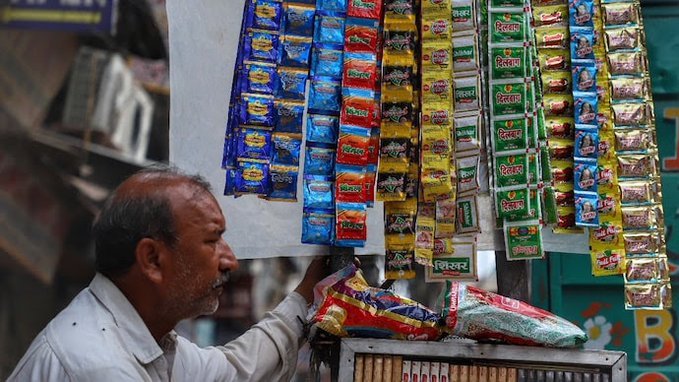
August 12, 2026: The Food Safety and Standards Authority of India (FSSAI) has banned the use of plastic and other synthetic materials in the packaging of pan masala.
Under the new rules, manufacturers will have to use packaging materials that meet the revised safety and environmental standards.
The amendment to the Food Safety and Standards (Packaging) Regulations, 2018 was notified on August 7, 2026, and came into effect from the date of its publication in the Official Gazette. The move is in line with the Plastic Waste Management Rules.
READ: Ronaldo, Georgina Marry in Private Portugal Ceremony
READ: Ladakh Hosts India’s First Black-Necked Crane Festival
What is banned?
Pan masala can no longer be packed using materials such as:
- Polyethylene
- Polypropylene
- Polyester
- PVC
- Other synthetic polymers and copolymers
- Plastic laminates
- Aluminium foil and metallised layers
This is significant because many pan masala products are currently sold in small plastic sachets.
What can manufacturers use?
Companies can use tin or glass containers for pan masala. Paper, paperboard, cellulose and other naturally derived materials are also allowed, as long as they contain no plastic.
The final rules follow a draft notification issued by FSSAI on April 28, 2026. The draft was circulated for comments from stakeholders, including manufacturers and other industry representatives.
FSSAI said the changes are part of its wider effort to promote safer and more environmentally friendly packaging while taking into account practical and technological issues faced by the industry.
Wider scrutiny of plastic packaging
In a separate development, Indian inspectors seized around 18,000 boxes of whisky and vodka bottles linked to Diageo India during a safety crackdown. The action was reportedly connected to concerns that the bottles did not carry markings confirming that the recycled plastic used in them met the required safety standards.
Diageo India, however, said the bottles had been sourced from an FSSAI-approved recycler. The company said the bottles were quarantined pending further directions and that mandatory tests had been conducted by its suppliers.
🚨 BREAKING: India’s food safety regulator has seized thousands of Diageo liquor bottles — Smirnoff vodka, whisky and more — at the company’s Bengaluru factory, in a widening crackdown on the world’s biggest spirits group.
🥃 What has happened? FSSAI Home officials visited…
— Aditya Kalra (@adityakalra) August 10, 2026
The episode highlights an important distinction in India’s evolving packaging rules: regulators are not only concerned with reducing plastic waste but are also examining whether recycled plastic used in products and packaging meets prescribed safety and traceability requirements.
For manufacturers, this means that switching to recycled or alternative materials may not by itself be enough. Companies will increasingly have to demonstrate that the materials they use are safe, compliant and properly certified.
Impact on the industry
Pan masala manufacturers will now have to redesign their packaging, identify suitable alternatives and make changes to production and distribution systems.
The transition could involve additional investment in packaging machinery, testing and new materials. Companies will also need to ensure that their new packaging complies fully with FSSAI requirements.
For consumers, the change may initially be most noticeable in the appearance and format of pan masala products. For the industry, however, the bigger change is likely to be the growing regulatory emphasis on both plastic reduction and the safety of materials used in food and beverage packaging.
| For manufacturers | For consumers |
|---|---|
| Plastic sachets will have to be replaced. | The familiar small plastic pan masala sachet may gradually disappear. |
| Companies will need to develop new packaging. | Pan masala may increasingly be sold in tin, glass or plastic-free paper-based packs. |
| Production and packaging processes may have to change. | The new packaging could be more rigid or different in size and appearance. |
| Companies may face higher packaging and transport costs during the transition. | Prices could rise if the additional packaging costs are passed on to consumers. |
| Products will have to meet the revised FSSAI packaging standards. |