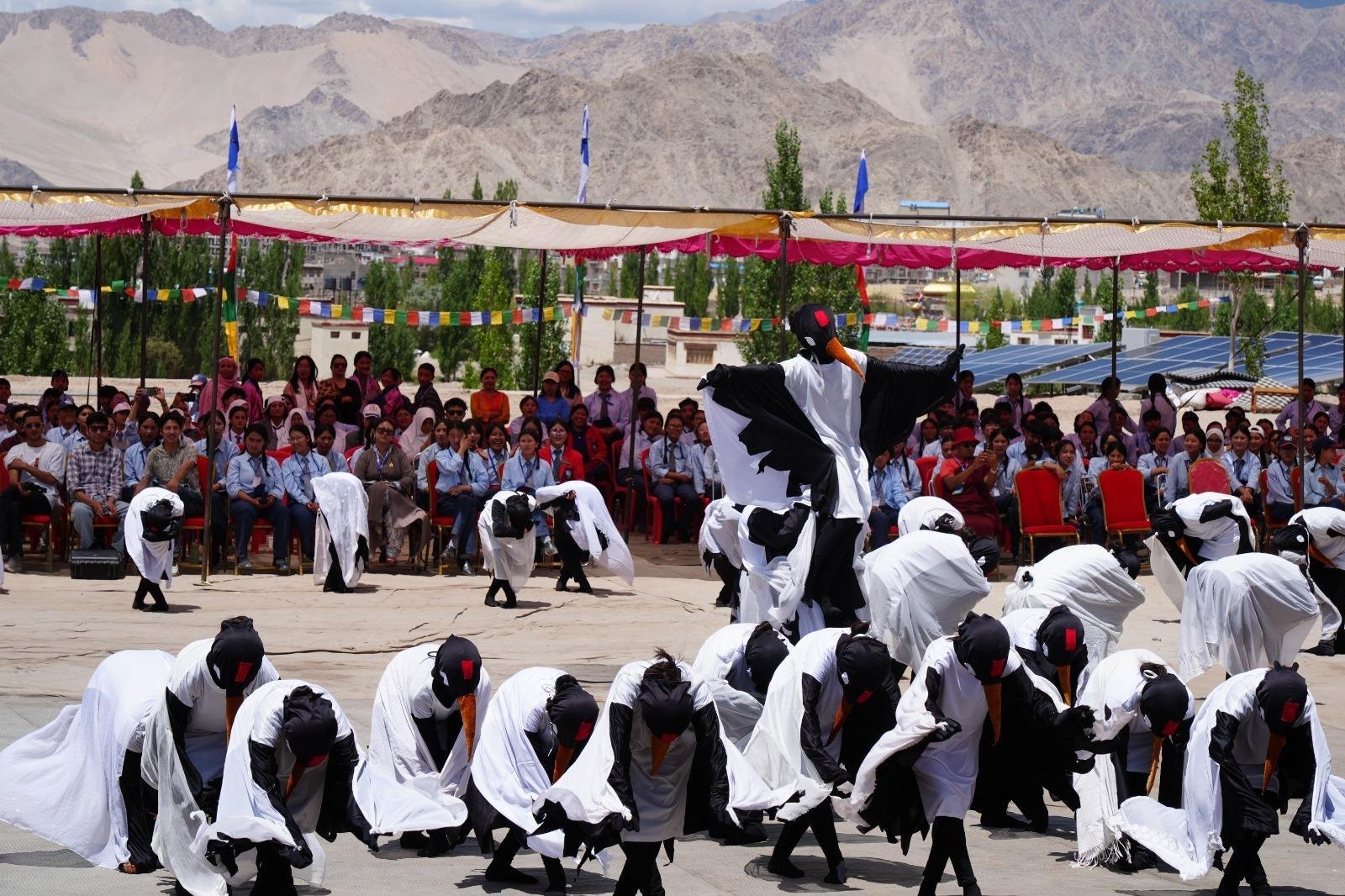
Ladakh has hosted India’s first Black-Necked Crane Festival, bringing together conservationists and experts to protect the endangered species and its fragile high-altitude habitat
BY PC Bureau
August 11, 2026: Ladakh on Tuesday hosted the country’s first Black-Necked Crane Festival, bringing together conservationists, researchers and wildlife experts to promote the protection of the endangered species while exploring ways to link conservation with local livelihoods and community-led tourism.
Lieutenant Governor Vinai Kumar Saxena inaugurated the Black-Necked Crane Festival 2026, which seeks to strengthen the connection between wildlife conservation, protection of fragile high-altitude ecosystems and sustainable economic opportunities for local communities.
The event brought together experts and conservationists from India and abroad, including representatives associated with the United Nations. Researchers and specialists from Bhutan and Nepal, both of which have significant populations of black-necked cranes, are also participating in the festival.
An estimated 16,000 black-necked cranes are found across India, Bhutan, China and Nepal. The species is the world’s only alpine crane and is adapted to some of the highest and most challenging environments on the planet.
Ladakh is the only breeding ground of the black-necked crane in India, giving the Union Territory a critical role in the species’ conservation.
READ: Delhi Capitals Cricketer Abishek Porel Arrested in Rape Case
Recognising its ecological and cultural importance, the Ladakh administration has designated the black-necked crane as the Union Territory’s state bird. The species is also regarded as a symbol of peace and is seen as an emblem of Ladakh’s distinctive natural heritage.
Conservation and livelihoods
Addressing the festival, Saxena said the future of the black-necked crane was inseparable from the protection of Ladakh’s wetlands, grasslands and high-altitude ecosystems.
He pointed to Tso Kar, Hanle and other breeding landscapes, saying these areas serve not only as wildlife habitats but also as larger ecological systems that support biodiversity, regulate water resources and sustain pastoral communities.
Protecting the crane, he said, therefore also meant protecting the environment and livelihoods dependent on these landscapes.
Saxena stressed that local residents should be treated as active partners and custodians of conservation rather than merely as beneficiaries of government programmes.
He called for traditional community knowledge to be combined with modern scientific approaches to strengthen conservation efforts.
“The Black-Necked Crane is much more than a bird. It is a symbol of peace, an ambassador of our high-altitude ecosystem and a bridge between wildlife conservation and the well-being of our communities,” Saxena said.
“Our goal must be to protect nature while creating sustainable opportunities for the people who have safeguarded these landscapes for generations.”
The Lieutenant Governor also highlighted opportunities in responsible birdwatching, nature-based tourism, wildlife photography, handicrafts and traditional products, saying these activities could generate income while encouraging communities to protect their natural surroundings.

Focus on community-led conservation
The festival features initiatives such as the Community Knowledge Circle and Community Eco-Market, aimed at connecting conservation with Ladakh’s cultural traditions and local economic activity.
Saxena said the region should follow the principle of “more value from nature, with less pressure on nature”, particularly as tourism expands across Ladakh.
He stressed that economic activity and tourism should not damage the fragile ecosystems that attract visitors to the region in the first place.
The festival has also drawn attention to threats facing the crane’s breeding grounds, including pollution, unregulated tourism and other pressures on wetlands and high-altitude habitats.
Knowledge resources released
A series of publications and conservation resources were released during the festival.
These included the Black-necked Crane: India Book, Black-necked Crane: Bhutan Book, a coffee-table book on the species, an action plan for black-necked crane and habitat conservation, and reports covering the species’ status and distribution.
A Bird Economy Status Report for Leh, Ladakh was also released, along with a special postal cover and cancellation issued in collaboration with India Post.
The administration also released the Ladakh Declaration for Black-Necked Crane Conservation, outlining its commitment to strengthening conservation of the species and its habitat.
The festival is intended to position the black-necked crane not only as a conservation priority but also as a symbol of the relationship between Ladakh’s fragile environment, cultural heritage and the economic well-being of communities living in the region.