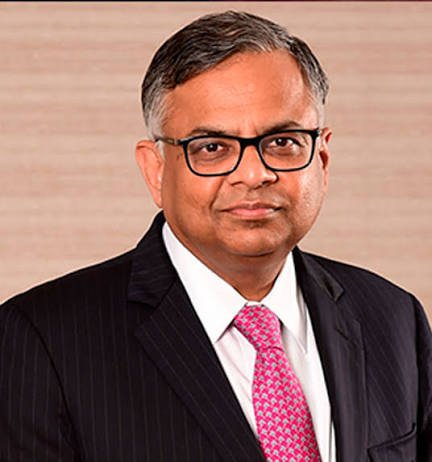
Chandrasekaran spent nearly a decade at the helm of Tata Sons, overseeing major expansion into aviation, semiconductors, electronics, batteries and digital businesses. His resignation now puts succession at the centre of attention as the Tata Group enters a new phase.
By PC Bureau
New Delhi/August 12, 2026: Natarajan Chandrasekaran has resigned as chairman of Tata Sons but will complete his current term, according to a source familiar with the matter, bringing fresh uncertainty to the leadership of one of India’s most prominent business groups.
Chandrasekaran’s decision comes less than a week before the Tata Sons annual general meeting (AGM) scheduled for August 18, where his reappointment as a director had been due to come up for consideration. His current term as chairman runs until February 2027.
The resignation effectively ends the immediate question over whether he would seek another term as chairman. It also opens a new chapter for Tata Sons, the principal holding company of the Tata Group, amid reported differences between the professional management and the Tata Trusts, which own about 66% of Tata Sons.
READ: Ronaldo, Georgina Marry in Private Portugal Ceremony
READ: FSSAI Bans Plastic Packaging for Pan Masala
Nearly a decade at the helm
Chandrasekaran became chairman of Tata Sons in February 2017, succeeding Ratan Tata. He had joined the Tata Group in 1987 and rose through Tata Consultancy Services (TCS), eventually becoming its chief executive before taking over the group’s holding company.
During his tenure, Chandrasekaran pushed the group towards a more integrated strategy, with greater emphasis on scale, investment and coordination among its businesses.
The group expanded significantly into aviation, electronics, semiconductors, batteries and other emerging sectors while consolidating its presence in established businesses such as information technology, automobiles, steel, power and consumer products.
READ: N_Chandrasekaran_Full_Statement_On_Resignation
His tenure also included the return of the Tata Group to aviation through the acquisition and restructuring of Air India, along with major investments in new technology and manufacturing businesses.
The expansion, however, has not been without challenges. Several newer ventures have required substantial capital and some have reported sizeable losses, while established businesses have faced their own operational and market pressures.
Reappointment had remained uncertain
Questions over Chandrasekaran’s future had been building for several months.
Tata Sons had deferred a decision on his continuation earlier this year, amid discussions involving Tata Trusts Chairman Noel Tata and other board members. Reports indicated that concerns had been raised about the performance of some newer businesses and about conditions that could be attached to any extension of Chandrasekaran’s tenure.
Among the reported issues was the future status of Tata Sons as an unlisted company. There were also continuing questions surrounding the holding of shares by the Shapoorji Pallonji Group and the need to provide liquidity to the minority shareholder.
Chandrasekaran’s continuation as chairman was linked to his reappointment as a director. His retirement by rotation at the August 18 AGM had therefore made the meeting particularly important for the future of the group’s leadership.
His decision to resign now removes the uncertainty surrounding a potentially contentious shareholder vote.
Tata Trusts’ crucial role
The development once again puts the unusual governance structure of the Tata Group under the spotlight.
Tata Sons is the principal holding and promoter company of the group and owns stakes in several major Tata businesses. About 66% of Tata Sons is held by Tata Trusts, giving the philanthropic entities significant influence over the group’s direction.
The relationship between the professional management of Tata Sons and the Trusts has occasionally produced tensions, most famously during the 2016 removal of Cyrus Mistry as Tata Sons chairman.
The latest developments suggest that questions over governance, strategic priorities and the performance of newer businesses remain important factors in determining the group’s future leadership.
What happens next?
Chandrasekaran is expected to remain in office until the end of his current term in February 2027, providing the group with time to work out a succession plan. No successor has been publicly announced so far.
The August 18 AGM will go ahead on other scheduled matters, but Chandrasekaran’s departure changes the significance of the meeting. The focus will now shift from whether shareholders will approve his continuation to what kind of leadership Tata Sons wants for the next phase of the conglomerate.
The succession process will be closely watched because the next chairman will inherit a group that has expanded aggressively into new businesses while simultaneously facing questions over capital allocation, profitability and the pace at which some of its major investments can generate returns.
The transition also comes at a sensitive time for several major Tata companies. Air India remains in the middle of a large-scale transformation, while the group continues to invest heavily in electronics, semiconductors, batteries and digital businesses.
Chandrasekaran’s resignation therefore represents more than a change at the top of Tata Sons. It could mark a significant shift in the balance between the group’s professional management and its controlling Trusts, while setting the direction of the Tata conglomerate for the next decade.