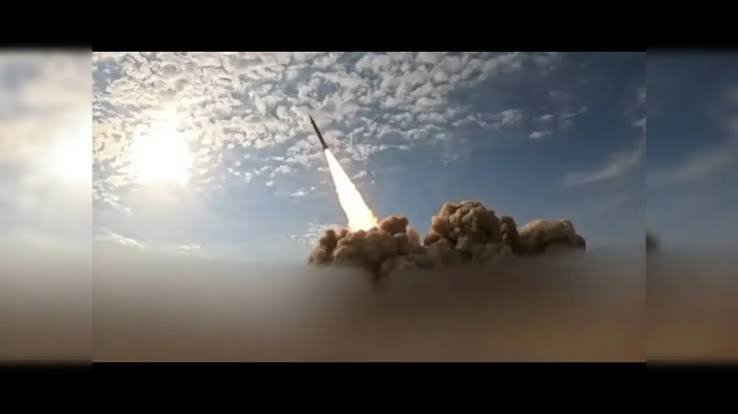
Iran shut the strategic waterway following an incident involving a foreign vessel, while US said it struck Iranian targets in response to attacks on commercial shipping.
BY PC Bureau
July 12, 2026 —July 12, 2026 — The United States and Iran traded fresh military blows early Sunday after Washington struck Iranian targets over Tehran’s closure of the Strait of Hormuz, while explosions in Qatar and missile alerts in Bahrain and the United Arab Emirates pointed to an expanding regional confrontation.
Iran’s Revolutionary Guards said naval units intercepted several vessels that had entered what they called an “unauthorised route” through the Strait of Hormuz. According to a statement carried by state news agency IRNA, one vessel was struck by a warning shot and forced to stop after ignoring repeated instructions.
“Following this incident, the Strait of Hormuz will be closed until further notice and until the end of American interventions in this region,” the Guards said, warning that any attempt to challenge the closure would trigger a “severe response.”
READ: Ladakh Launches Centre of Excellence for Smart Energy
The United States responded within hours with what officials described as its third round of strikes against Iran this week.
CENTCOM said a Cyprus-flagged commercial container ship suffered extensive engine-room damage after the alleged Iranian attack, leaving one civilian crew member missing and the vessel unable to continue its voyage.
“Iran was provided yet another opportunity to demonstrate adherence to the Memorandum of Understanding after being held accountable for earlier attacks on commercial vessels but has again failed,” CENTCOM said in a statement.
“In response, the United States is imposing a heavy cost by continuing to degrade Iran’s ability to attack civilian mariners and commercial ships freely transiting the strait.”
U.S. Defense Secretary Pete Hegseth endorsed the operation in a brief post on X, writing: “Iran made a poor choice. Now they pay.”
Iranian state media later reported explosions in several southern cities, including Bushehr, Asalouyeh, Bandar Abbas, Bandar-e Dayyer and the Sirik region overlooking the Strait of Hormuz. Authorities did not immediately provide information on casualties or damage.
The escalation also prompted security alerts across the Gulf. The United Arab Emirates said its air defence systems were engaging incoming missile and drone threats, while Bahrain activated air raid sirens and urged residents to seek shelter. Missile alerts were also reported in Qatar after explosions were heard in parts of the country.
The Strait of Hormuz remains one of the world’s most important energy corridors, carrying a significant share of global oil and liquefied natural gas exports. Any prolonged disruption to shipping through the narrow waterway could have far-reaching consequences for global energy markets and international trade.
The latest confrontation further undermines diplomatic efforts aimed at ending the conflict, with the future of navigation through the Strait of Hormuz emerging as one of the central disputes between Washington and Tehran.