


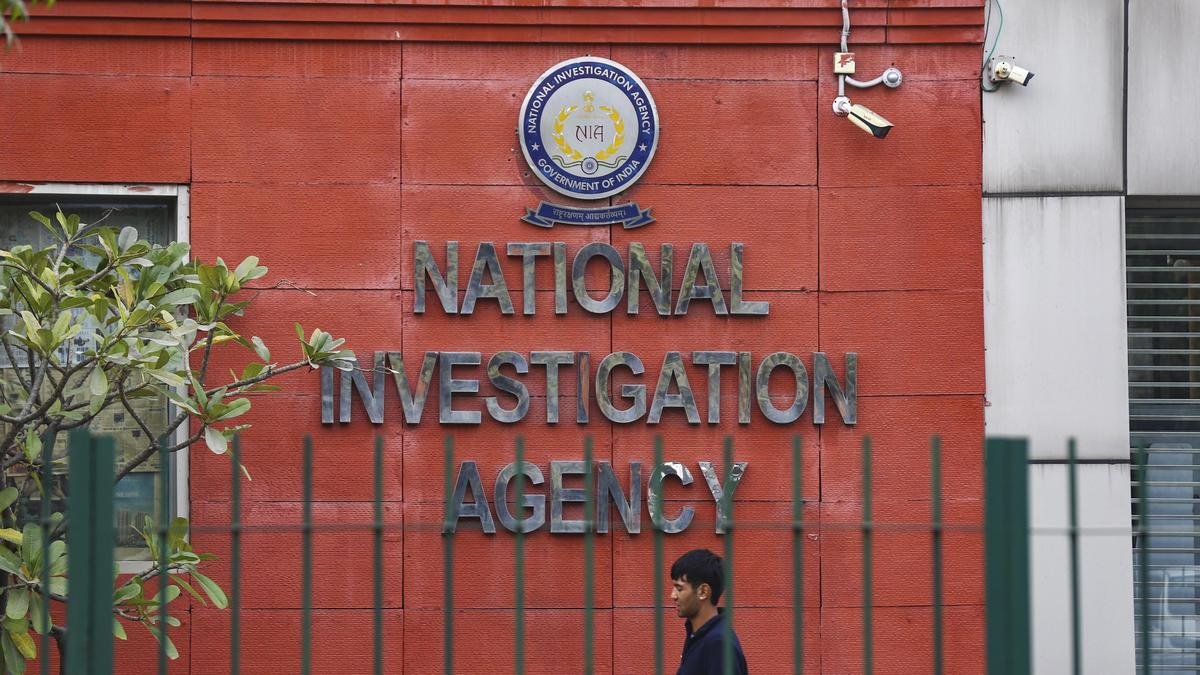
The repeated transfer of cases involving the killing of Kuki-Zo civilians to the National Investigation Agency (NIA), without visible breakthroughs or arrests, has raised questions about the effectiveness of the investigative process.
BY PC Bureau
November 10: The decision to hand over the investigation into the killing of two Kuki-Zo youths in Manipur’s Senapati district to the National Investigation Agency (NIA) has revived concerns over a recurring pattern: cases involving Kuki-Zo civilians or security personnel are transferred to the central agency, while families and communities continue to wait for arrests, accountability and justice.
The latest decision was announced by Chief Minister Yumnam Khemchand Singh on Monday, November 9, when he met the families of Paoginlal Hangshing and Tinginlun Chongloi. The two men, residents of Taphou Kuki village, went missing on October 28. Their bodies were recovered on November 1 during a joint search operation by security forces in Senapati district.
Singh assured the families that everyone involved in the killings would be arrested, while cautioning that the investigation could take time. He appealed to the public to cooperate with the probe.
But the announcement raises a more fundamental question: how many suspects have actually been arrested in connection with the killings of nearly 40 Kuki-Zo civilians over the past six months? How many of these cases have produced tangible investigative breakthroughs? How many more killings will be referred to the NIA without any visible progress? And what action has the Manipur Police taken before handing over these investigations to the central agency?
The concern is not that the NIA should not investigate serious crimes. Its mandate and resources can be important, particularly in cases involving organised armed groups and wider conspiracies. The problem is that transferring a case to the central agency cannot become a substitute for immediate police action, local intelligence gathering, arrests where evidence permits, and public accountability.
The killing of three Thadou Baptist Association church leaders on May 13 is an important example. The victims were returning from Churachandpur after attending a religious congregation when armed assailants ambushed two vehicles near Zero Point, between Kotzim and Kotlen in Kangpokpi district. Three people were killed and four others injured.
The Manipur Police registered a case on the day of the attack. On June 24, the NIA took over the investigation following a directive from the Union Home Ministry, which cited the gravity of the offence, its wider ramifications and the need to uncover a possible larger conspiracy.
However, more than three months after the NIA assumed the investigation, there were no publicly known arrests, according to a September 4 statement by Thadou Inpi Manipur. The organisation expressed concern over what it described as the absence of progress and questioned the transparency and credibility of the investigation.
The latest transfer involving the two Kuki-Zo youths has revived these concerns. For their families, an announcement that the NIA will investigate is only the beginning. What they need is a credible investigation, identification of the perpetrators and prosecution.
A pattern of investigations without visible outcomes
The May 13 killings are not an isolated case. Several violent incidents in Manipur have been referred to the NIA, raising questions about whether the state police are able or willing to pursue investigations independently and deliver results.
The pattern is particularly concerning because the initial responsibility for responding to a crime rests with the state police, irrespective of whether the case is subsequently transferred to a central agency.
The same questions have arisen in cases involving security personnel in the conflict-affected hill districts.
On April 10, BSF Constable Mithun Mandal was killed after being struck by a bullet during an exchange of fire between armed groups in the Mongkot Chepu area of Ukhrul district.
In a separate incident on July 6, two Assam Rifles personnel, Warrant Officer Balwant Singh and Havildar Chandra Mohan Singh, were killed in an ambush in Ukhrul. The latter case was registered by the NIA as RC-10/2026/NIA/IMP.
These incidents underline the continuing failure to establish accountability for armed attacks in the state’s hill districts. They also demonstrate that the problem extends beyond individual cases to the larger question of law enforcement and the ability of security agencies to prevent recurring violence.
The question is whether the state police are conducting meaningful investigations before cases are transferred, or whether handing them over to the NIA has increasingly become the default response to politically and ethnically sensitive killings.
READ: Russell Brand sentenced to 10 years in prison for rape, sexual assaults
State police cannot abdicate responsibility
The repeated reliance on the NIA risks creating an impression that the Manipur Police have become a secondary player in investigating serious crimes, particularly those involving Kuki-Zo victims.
There is little publicly visible evidence of a sustained pattern of arrests, coordinated searches, interrogations or other decisive investigative action by the state police in several of these cases before they are transferred to the central agency.
This does not necessarily mean that no investigative work is taking place behind the scenes. Nor does the absence of publicly announced arrests establish that the NIA has made no progress. But the authorities have an obligation to provide credible updates, particularly when victims’ families and entire communities are waiting for justice.
The police cannot simply register an FIR, conduct preliminary formalities and leave the rest to the NIA. Even after a case is transferred, the state police retain an important role in providing intelligence, identifying suspects, facilitating field investigations and maintaining law and order.
The Chief Minister’s latest assurance to the families of Paoginlal Hangshing and Tinginlun Chongloi that all those involved would be arrested is welcome. But assurances will carry little weight unless followed by concrete action.
His reference to the Tronglaobi bomb attack, in which two children were killed, is also instructive. Singh said the NIA had taken four months to arrest those responsible after gathering sufficient evidence. That may explain why investigations take time, but it cannot become a blanket justification for prolonged uncertainty in every case.
Justice cannot become a series of official announcements
Manipur has been struggling with an erosion of public confidence in law enforcement institutions since the outbreak of ethnic violence in May 2023. In such circumstances, the credibility of investigations is as important as the eventual outcome.
For the Kuki-Zo community, repeated announcements about NIA investigations, without publicly visible progress in cases involving the killing of its civilians, risk deepening the perception that justice remains elusive.
The government must recognise that transferring investigations is an administrative decision, not an achievement in itself. The success of an investigation must be measured by its ability to identify perpetrators, establish the chain of responsibility, secure admissible evidence and bring the accused before a court.
The NIA, for its part, must demonstrate that its involvement adds value to investigations rather than merely shifting responsibility from one agency to another.
Ultimately, the question is not whether the NIA or the state police should investigate these killings. Both have responsibilities. The question is why, despite repeated interventions by central agencies and assurances from successive state administrations, so many victims’ families are still waiting for answers.
In Manipur, the transfer of a murder investigation to the NIA should mark the beginning of a credible search for justice, not the end of visible police action.