India’s television news industry is confronting one of its toughest phases, marked by declining profits, widening losses and shrinking public trust. As audiences migrate to digital platforms, critics argue that the “Godi media” tag has further deepened the credibility crisis facing several mainstream news channels. This is Part One of a three-part series examining the financial, editorial and structural challenges confronting India’s TV news industry.
BY NAVIN UPADHYAY
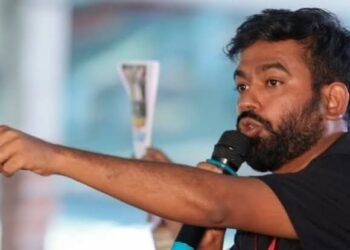
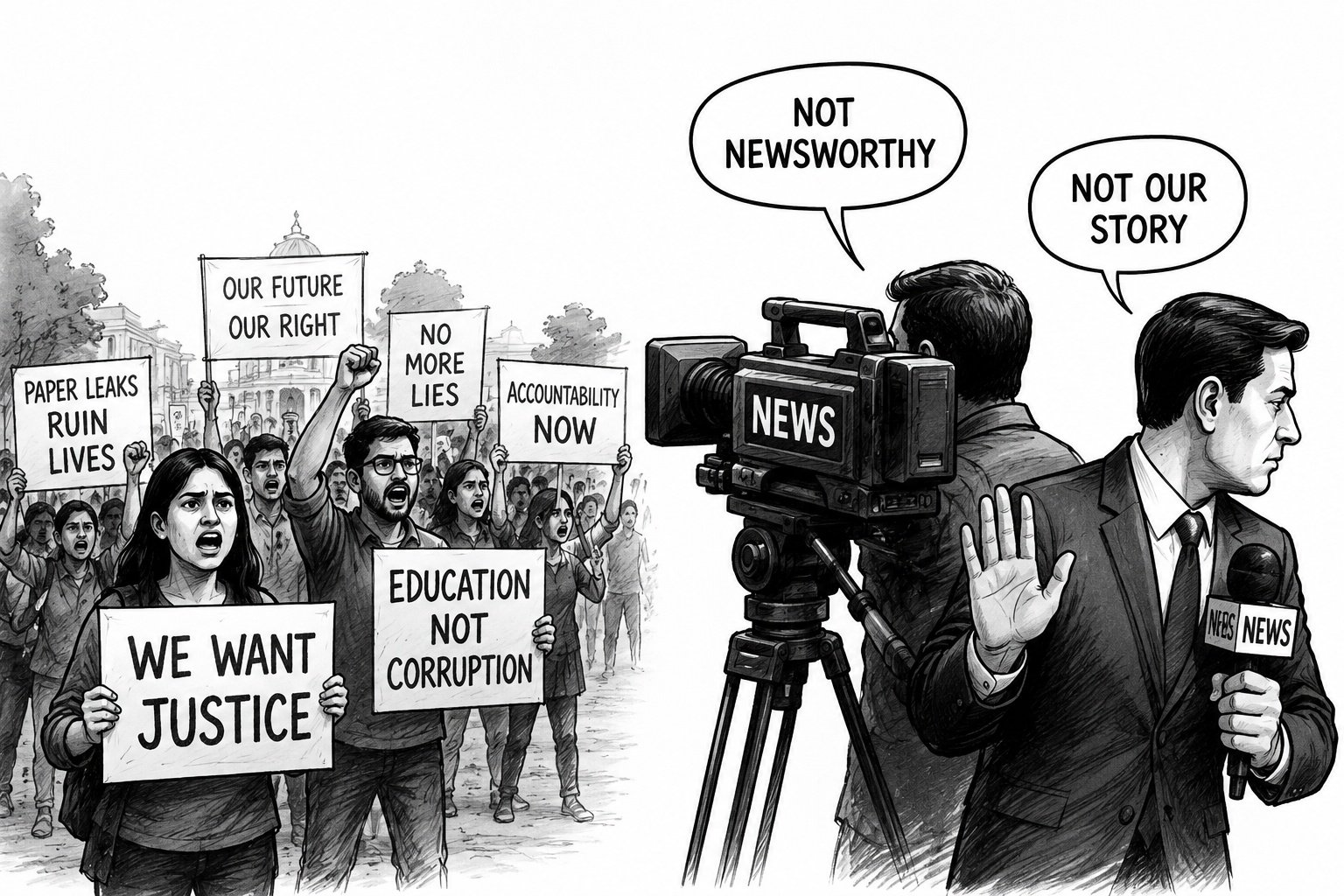
New Delhi/July 26, 2026: Two seemingly unrelated developments have once again thrown the spotlight on the deepening crisis confronting India’s television news industry. The first was TV Today Network’s recent decision to lay off nearly 10 per cent of its workforce—its third major round of job cuts in as many years. The second was the hostile reception television reporters received at the Cockroach Janta Party’s protest site at Jantar Mantar, where several protesters openly questioned the credibility of mainstream news channels.
Taken together with declining profits, widening losses at several listed broadcasters, and a steady migration of audiences to digital platforms, these episodes paint a bleak picture of an industry grappling not only with financial stress but also with an erosion of public trust. Once the country’s most influential source of news, television journalism now finds itself fighting a multi-front battle for relevance, credibility and commercial survival.
For decades, television news occupied a dominant position in India’s media landscape. Prime-time debates shaped political discourse, star anchors commanded celebrity status, and news channels competed fiercely for ratings and advertising revenue. Today, however, the industry is confronting one of its most challenging phases. Several leading broadcasters have reported declining profits—or widening losses—even as they continue to invest heavily in content, technology and distribution.
Recent financial results underscore the trend. NDTV has reported widening annual losses despite recording steady revenue growth over the past three financial years. TV Today Network, the broadcaster of Aaj Tak and India Today TV, witnessed an over 80 per cent plunge in net profit in FY2026 as revenue declined sharply amid a weak advertising environment. While diversified media groups such as Network18 have fared relatively better, the broader television news business is under increasing financial pressure.
The reasons extend well beyond company-specific management decisions. Analysts point to a structural transformation of the media ecosystem that is fundamentally reshaping how Indians consume news and where advertisers choose to spend their money.
“It is a global phenomenon. Across the world, more and more people are consuming news on digital platforms rather than traditional television,” veteran journalist Paranjoy Guha Thakurta said. “However, in India’s case, the erosion of credibility has become an equally important factor.”
Referring to the hostile reception television journalists received during the Cockroach Janta Party (CJP) protests at Jantar Mantar, Guha Thakurta said the incident reflected a growing disconnect between mainstream television news and younger audiences. “You saw how unwelcome many TV reporters were at Jantar Mantar. The Gen Z protesters held up a mirror to the industry. The perception that sections of television news have become ‘Godi media’ has obvioulsy damaged public trust.”
He went on to add, “While declining viewership cannot be attributed to that factor alone, the erosion of credibility is certainly contributing to audiences drifting away. Ultimately, falling viewership affects advertising revenue and is reflected in the balance sheets of news broadcasters.”
Incidentally, the Reuters Institute’s Digital News Report 2026 found that overall trust in news in India had fallen to 39%, while a majority of respondents said they now access news online and 58% rely on YouTube for news. Analysts say that as confidence in traditional television news becomes increasingly contested, many viewers—particularly younger audiences—are turning to digital platforms, independent journalists and social media for information.
Whether India’s low ranking on global press freedom indices or perceptions of political bias have directly contributed to the financial decline of television news broadcasters remains open to debate, and there is no conclusive evidence establishing a causal link. However, many media observers believe that a combination of declining public trust, concerns over editorial independence, changing consumption habits and the migration of audiences and advertisers to digital platforms has accelerated the industry’s challenges.
Among these, critics argue that the “Godi media” label—used to describe channels perceived as being overly aligned with the ruling establishment—may have inflicted the greatest damage by eroding the credibility of sections of the television news industry, particularly among younger viewers.
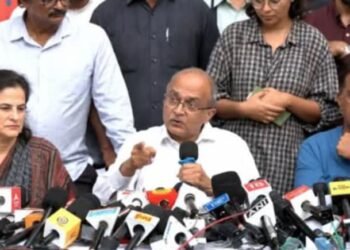
“The television channels have invited this backlash upon themselves. When you begin acting as a mouthpiece of the government and seek to discredit every protest against the establishment, people are bound to react,” said Manish Kumar, a former senior journalist with NDTV.
Kumar said the hostile reception some television reporters received at the CJP protest site reflected a growing disconnect between sections of the television news industry and the public. “It is time for TV channels to undertake some serious soul-searching. Unless they rebuild public trust and reaffirm their editorial independence, it will become increasingly difficult for their reporters to work freely among ordinary people,” he said.
Talking about what is often described as pro-establishment coverage of major events by sections of the television news media, Jayant Bhattacharya, former Chief of Bureau at Times Now, said news channels operate under significant structural and commercial constraints.
“Television news channels have their own compulsions to function this way. Beyond the pressure to generate revenue, they have become heavily dependent on the government for operational approvals and regulatory clearances, such as uplinking and downlinking permissions. That dependence inevitably makes it more difficult to maintain complete editorial independence,” Bhattacharya said.
“TV channels depend on the government for a range of permissions—from uplinking and downlinking to other regulatory approvals. That dependence creates an environment where many are reluctant to take positions perceived as being against the government,” Bhattacharya said.
He also argued that the ownership structure of India’s media industry influences editorial priorities. “Corporate ownership is another important factor shaping news coverage. There needs to be a serious national debate on restricting cross-media ownership. As long as large corporate groups own media organisations, it is unrealistic to expect that their commercial or strategic interests will never influence editorial decisions. Stronger safeguards are needed to protect the independence and credibility of journalism,” he said
The Great Migration to Digital
Perhaps the biggest challenge confronting television news is the migration of audiences—particularly younger viewers—to digital platforms.
A generation that once relied on television bulletins now consumes breaking news through YouTube, Instagram Reels, X, WhatsApp channels, podcasts and mobile news applications. News is increasingly discovered through algorithms rather than scheduled broadcasts.
The shift has altered consumption habits. Instead of sitting through hour-long prime-time debates, viewers increasingly prefer short clips, live streams, explainers and on-demand videos that can be watched at any time. Smartphones have effectively replaced television as the primary news device for millions of Indians under the age of 35.
This transformation has fragmented audiences. Television no longer enjoys the monopoly it once had over live news consumption, forcing broadcasters to compete not only with each other but also with digital-native creators, influencers, independent journalists and global technology platforms.
Advertising Is Following the Audience
The migration of audiences has inevitably influenced advertising patterns.
Although television remains one of India’s largest advertising mediums, growth has slowed considerably. Digital advertising, by contrast, continues to expand rapidly, attracting brands with its ability to target consumers precisely and measure campaign performance in real time.
As advertisers allocate larger portions of their budgets to Google, Meta, YouTube and other digital platforms, television news channels have found it increasingly difficult to sustain revenue growth. Rising distribution costs, inflation in content production and expensive marketing campaigns have further squeezed margins.
The result is visible in corporate balance sheets. Several listed broadcasters have reported shrinking profitability despite maintaining sizeable viewer reach.
A Growing Debate Over Credibility
Economics, however, is only part of the story.
Media scholars, political analysts and journalism researchers have increasingly argued that television news is also facing a credibility challenge.
Over the past decade, critics have popularised the term “Godi media” to describe news outlets perceived as being overly supportive of the ruling Bharatiya Janata Party (BJP) government. The phrase, now deeply embedded in India’s political vocabulary, reflects concerns that sections of television news have become less adversarial and more aligned with those in power.
Critics argue that highly partisan prime-time debates, sensationalist programming and a perceived reluctance to scrutinise governments have eroded public confidence in television journalism.
Supporters of these channels reject the label, arguing that it has become a political slogan used to delegitimise media organisations that do not share the opposition’s viewpoint. They contend that editorial choices naturally vary across newsrooms and that accusations of political bias are themselves politically motivated.
The debate remains intensely polarised.
RT if you want Arnab Goswami should visit Jantar Mantar to support CJP protest.
Nyvaan 🔥 🔥
— Lala Rahul (@lalarahul25) July 24, 2026
Trust Matters
While there is no conclusive evidence that perceptions of political bias alone have caused television news viewership or revenues to decline, research suggests that trust plays an important role in determining how audiences consume news.
Successive editions of the Reuters Institute’s Digital News Report have found that trust in news organisations remains a significant factor influencing audience behaviour worldwide. Consumers who perceive news outlets as credible are generally more likely to engage with them regularly, while declining trust often encourages audiences to seek alternative sources.
In India, those alternatives increasingly exist outside traditional television. Independent digital news organisations, YouTube channels, newsletters, podcasts and social media creators now compete directly with established broadcasters for attention.
The New Information Ecosystem
Television news is also confronting a fundamental change in how information spreads.
Breaking news no longer originates exclusively from television studios. Videos appear first on social media. Political speeches are streamed live on YouTube. Government announcements are posted directly on X. Citizens increasingly encounter news through recommendations, shares and messaging apps before turning to television for additional context—if they turn to television at all.
This has diminished the agenda-setting power once enjoyed by television broadcasters.
The rise of artificial intelligence, personalised news feeds and algorithm-driven content discovery is likely to accelerate this transformation even further.
READ: Aaj Tak, India Today TV Broadcaster Cuts Nearly 10% Workforce
Financial Pressure Meets Editorial Pressure
The financial pressures facing television news are therefore the product of multiple overlapping trends.
Digital platforms are attracting younger audiences. Advertisers are shifting budgets online. Viewing habits are changing from appointment television to on-demand consumption. Competition has expanded dramatically. At the same time, persistent public debates about journalistic credibility, editorial independence and political alignment have added another layer of complexity.
Analysts caution against reducing the industry’s challenges to any single explanation. While critics argue that the “Godi media” perception has alienated some viewers, there is no definitive evidence establishing it as the primary driver of declining financial performance. Rather, it is one of several factors operating alongside technological disruption, changing consumer behaviour and economic pressures.
Reinvention or Decline
The future of television news may depend less on ratings battles and more on reinvention.
Many broadcasters are investing aggressively in digital-first content, podcasts, mobile video, multilingual platforms and subscription-based products. Traditional television is increasingly becoming just one component of a broader news ecosystem rather than its centrepiece.
The industry’s next chapter will be determined not only by its ability to monetise digital audiences but also by its capacity to rebuild public trust in an era of political polarisation and information overload.
For Indian television news, the challenge is no longer merely to attract viewers. It is to remain relevant—and credible—in a media environment that is changing faster than at any point in its history.
A related factor frequently cited by media analysts is the broader debate over press freedom and editorial independence in India. The country ranked 157th out of 180 nations in the 2026 World Press Freedom Index published by Reporters Without Borders (RSF), reflecting concerns over the legal, political and economic environment in which journalists operate. While the government has repeatedly questioned RSF’s methodology and rejected the rankings as subjective, the perception of declining media independence has become part of the public discourse.
TV News Broadcasters: Financial Performance at a Glance
| Broadcaster | FY2024 | FY2025 | FY2026 | Trend |
| NDTV | Net Loss: ₹61.4 crore | Net Loss: ₹218 crore | Net Loss: ₹323.2 crore | Losses widened sharply despite revenue growth |
| TV Today Network (Aaj Tak, India Today TV) | Net Profit: ₹56.4 crore | Net Profit: ₹74.5 crore | Net Profit: ₹14.3 crore | Profit plunged 81% in FY26 |
| Network18 Media & Investments (CNN-News18, News18 India, CNBC-TV18) | Net Profit: ~₹59 crore | Net Profit: ~₹31 crore | Net Profit: ~₹67 crore | Profit recovered in FY26 after FY25 dip |
| Zee Entertainment (Zee News parent group) | Net Profit: ₹141 crore | Net Profit: ₹679 crore | Net Loss: ₹104 crore | Swung from profit to loss in FY26 |
| Republic TV (ARG Outlier Media) | Not publicly disclosed | Not publicly disclosed | Not publicly disclosed | Private company; audited financials unavailable |
Key Takeaways
- NDTV: Annual losses rose more than fivefold in two years—from ₹61.4 crore (FY24) to ₹323.2 crore (FY26).
- TV Today Network: Net profit collapsed 81% in FY26 as revenue declined amid a weak advertising market.
- Network18: The only major listed news broadcaster to report a recovery in profitability in FY26.
- Zee Entertainment: Returned to losses in FY26 despite a sharp profit rebound a year earlier.
- Republic TV: As an unlisted private company, it does not publish audited annual profit and loss figures, making direct comparisons impossible.
Part Two to Follow: